


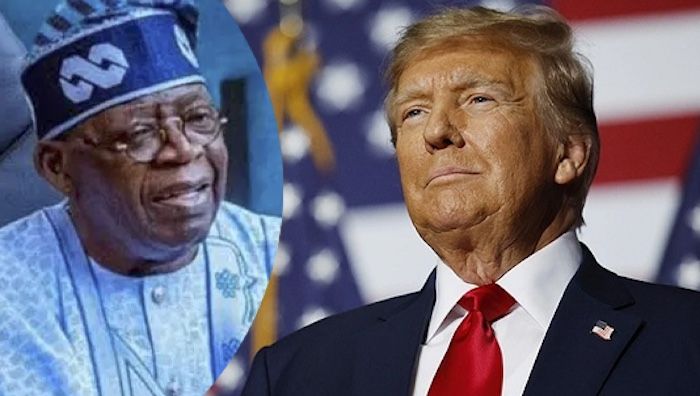
Trump government has unveiled a new visa policy targeting people accused of enabling or driving violent attacks on Christian communities in Nigeria and other parts of the world.
Announcing the measure on Wednesday, December 3, America Secretary of State Marco Rubio said the action followed reports of “mass killings and violence against Christians by radical Islamic terrorists, Fulani ethnic militias, and other violent actors in Nigeria and beyond.”
Rubio explained that the policy, applied under Section 212(a)(3)(C) of the Immigration and Nationality Act, empowers the United States Department of State to refuse visas for individuals who have “directed, authorised, significantly supported, participated in, or carried out violations of religious freedom,” including, in certain cases, members of their immediate families.
Referencing President Donald Trump’s position on rising religious violence, Rubio said it “cannot stand by while such atrocities are happening in Nigeria, and numerous other countries.” The policy, he added, would be activated against “Nigeria and any other governments or individuals engaged in violations of religious freedom.”
The announcement follows heightened political attention in Washington on Nigeria’s internal security conditions.
Earlier this week, American lawmakers held a rare multi-committee briefing on what some members of Congress referred to as an “alleged Christian genocide” in the country. The hearing was convened to gather testimony for a report earlier ordered by Trump and coordinated by senior members of the United States House Committee on Appropriations, the House Committee on Foreign Affairs, and the House Committee on Financial Services.
Although the new visa policy signals diplomatic pressure, security cooperation between both countries continues.
The New Daily Prime reported that President Bola Tinubu recently approved Nigeria’s participation in the new US–Nigeria Joint Working Group, coordinated by National Security Adviser Nuhu Ribadu.
The working group comprising senior federal ministers and security officials was created to deepen collaboration on counter-terror operations, intelligence exchange, border safety, and joint humanitarian-protection planning.
The development also revives earlier policy positions by Trump, who in 2020 had listed Nigeria as a Country of Particular Concern for alleged religious-freedom violations—a designation later reversed by his successor, Joe Biden.
On October 31, Trump again pointed to “alleged grave violations of religious freedom” and warned that Christian communities faced systematic pressure, describing the crisis as a scenario in which America “could take action,” including “military intervention if Nigeria failed to address the issue.”

