


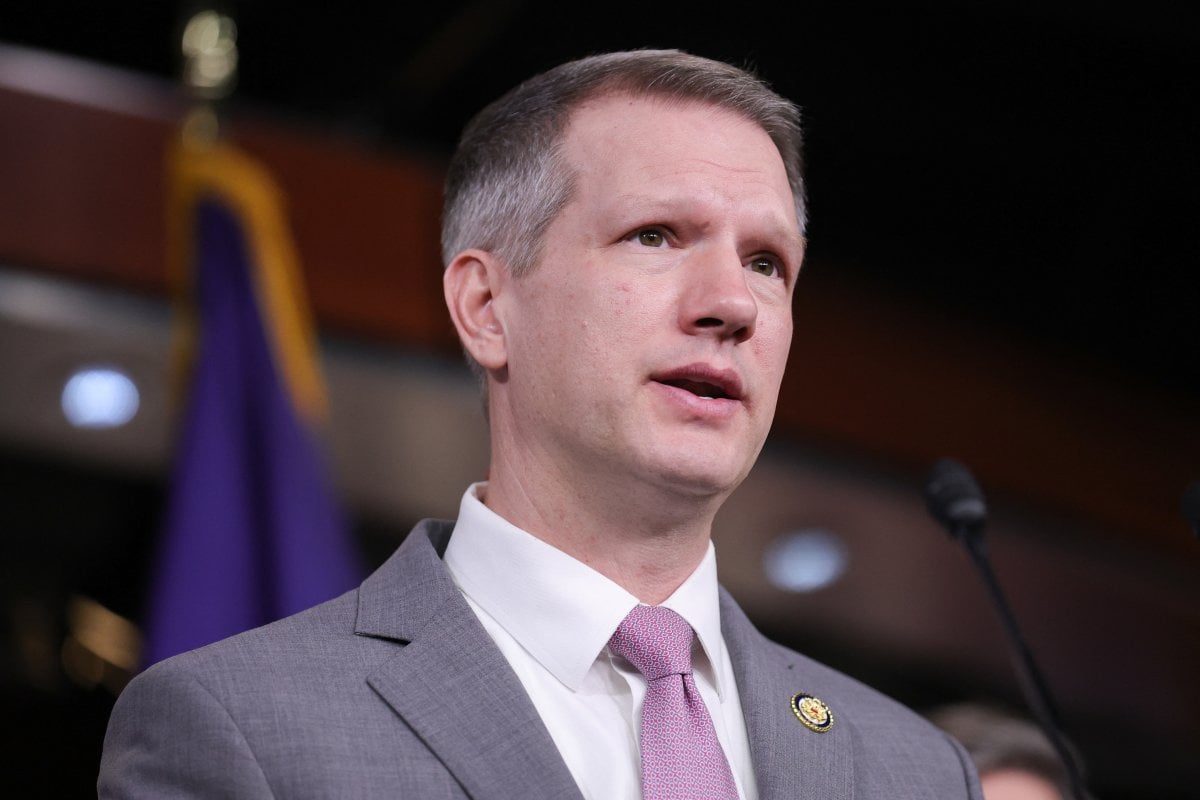
A member of the United States House of Representatives, Riley Moore, has warned that any attempts to strengthen separatist movements seeking Nigeria’s break-up would ultimately put Christians at greater risk.
Moore visited Nigeria in December on what he described as a “fact-finding mission” to assess claims of a Christian genocide, following remarks by US President Donald Trump, who had threatened to deploy troops to Nigeria “guns-a-blazing” to confront alleged perpetrators.
During the visit, the lawmaker held talks with Nigeria’s national security adviser, Nuhu Ribadu, and travelled to Benue State, where he met Governor Hyacinth Alia, as well as religious and traditional leaders, humanitarian organisations and internally displaced persons.
Reflecting on his engagements, Moore said calls for the country’s division did not feature prominently in his discussions.
“In my discussions, the idea of dividing the country has not come up in any serious way,” he said in a post on X on Saturday.
He warned that pushing separatist agendas would have serious consequences for Christians, particularly in vulnerable regions.
“Efforts to embolden separatists hurt Christians in Nigeria – especially in the North and Middle Belt. A destabilised Nigeria would embolden terrorists and make Christians less safe in Nigeria and across the continent.”
In January, the Biafra Republic Government in Exile (BRGIE) disclosed that it had entered into a lobbying agreement with Washington & Madison, a Washington DC–based firm led by Elias Gerasoulis.
Gerasoulis previously worked as a partner and vice president at Moran Global Strategies, where he advocated pro-Biafra positions within political circles close to Trump. He later carried those clients over to Washington & Madison.
Under the contract, which reportedly costs $66,000 per month, the firm was tasked with portraying governors in Nigeria’s south-east as “complicit in Christian genocide and highly dangerous to U.S. interests”, while also pushing for US engagement with a proposed Biafran administration.
The move followed a separate development in which Nigeria’s federal government hired a lobbying firm under a $9 million contract to help communicate its efforts to protect Christians to US authorities.
Moore noted that the United States and Nigeria have since entered into a security cooperation agreement, describing it as a significant step toward addressing insecurity and deepening bilateral ties between both countries.

