


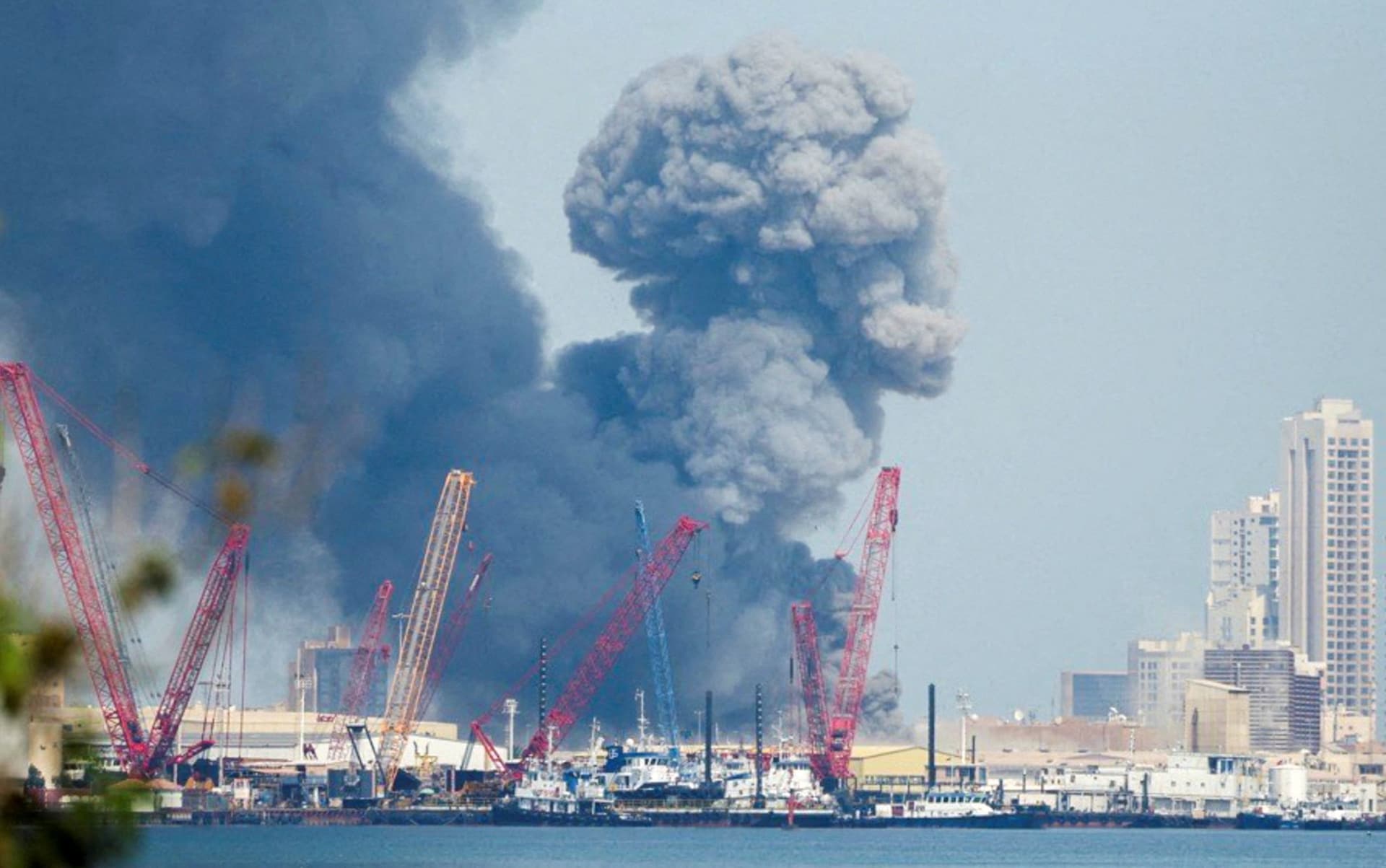
The United States and Israel have launched a sweeping military assault on Iran, triggering retaliatory missile strikes across the Gulf and raising fears of a wider regional war.
In a recorded address, Donald Trump confirmed that “major combat operations” were under way in what he described as a multi-day campaign named Epic Fury. He said the objective was to dismantle Iran’s missile capability and weaken its military infrastructure.
“We are going to destroy their missiles and raze their missile industry to the ground,” Trump said, urging Iranians to “take over” their government. “It will be yours to take. This will be probably your only chance for generations.”
The offensive marks the most direct US-Israeli military action against Iran in decades.
Iran Strikes Back Across the Gulf
Within hours, Iran launched retaliatory missile and drone attacks targeting American military installations in Bahrain, Qatar, Kuwait and the United Arab Emirates.
The Islamic Revolutionary Guard Corps said it had initiated “Operation True Promise Four”, striking the headquarters of the United States Navy Fifth Fleet in Bahrain along with other American bases and Israeli military targets.
Missiles were reported near Shiraz, Tehran, Isfahan, Qom, Kermanshah and the strategic Kharg oil terminal. Iranian state media said five schoolgirls were killed in a strike in Minab, while another student died in Abyek after a missile hit near a water facility.
In the UAE, authorities confirmed that at least one person was killed in Abu Dhabi after Iranian missiles were intercepted. The UAE described the attack as a “flagrant violation of national sovereignty” and temporarily closed parts of its airspace.
Iran’s armed forces warned that any regional base assisting the United States or Israel would be targeted.
Israel Declares Emergency
The Israel Defense Forces confirmed that Iran had launched two barrages of retaliatory missiles. Israel’s defence minister declared a “special and permanent state of emergency” as air defence systems were activated nationwide.
The first US-led strike reportedly landed near offices linked to Ali Khamenei, Iran’s supreme leader, though there was no immediate confirmation of casualties among senior officials.
The assault follows weeks of mounting US military build-up in the Middle East. Washington had increased pressure on Tehran to accept a revised nuclear agreement, with Trump saying he was “not happy” with Iran’s negotiating stance.
Around 20% of the world’s Catholics live in Africa, but it is oil-rich Gulf states and major shipping lanes that now sit on edge as missiles fly across the region.
The UK government said it was not involved in the strikes and stressed it did not want to see “a wider regional conflict”.
In a move likely to inflame tensions further, Trump openly called for regime change in Tehran, telling Iranian security forces to lay down their weapons “or face certain death”.
Videos circulating online showed demonstrators in parts of Iran chanting against the country’s leadership, though the scale of unrest remains unclear. Tehran has activated Basij militia patrols across all 22 districts of the capital.
This marks the most significant escalation between Washington, Tel Aviv and Tehran in recent history. With missiles striking multiple Gulf states and threats issued against regional bases, the conflict risks drawing in neighbouring countries.
Oil markets reacted sharply to the news, and diplomatic channels are scrambling to prevent further escalation.
Whether Epic Fury remains a limited operation or spirals into a broader Middle East war will depend on the next moves from Tehran — and how far Washington and Israel are prepared to go.

