


The United States has announced plans to assume indefinite control over the sale of sanctioned Venezuelan oil, a move that marks a significant shift in Washington’s long-standing restrictions on the South American nation’s energy sector and its broader geopolitical strategy in the region.
According to the White House, the plan will initially involve the sale of between 30 million and 50 million barrels of Venezuelan crude, with all proceeds deposited into US-controlled accounts. Officials said the arrangement is designed to give Washington leverage over the Venezuelan government while ensuring that oil revenues are managed under strict oversight.
US Energy Secretary Chris Wright said the administration believes maintaining control over oil sales is essential to driving political and economic reforms in Venezuela. Speaking at an energy conference in Miami, Wright said the funds would ultimately be directed toward stabilising the country’s economy and supporting reforms that “must happen” for Venezuela’s recovery.
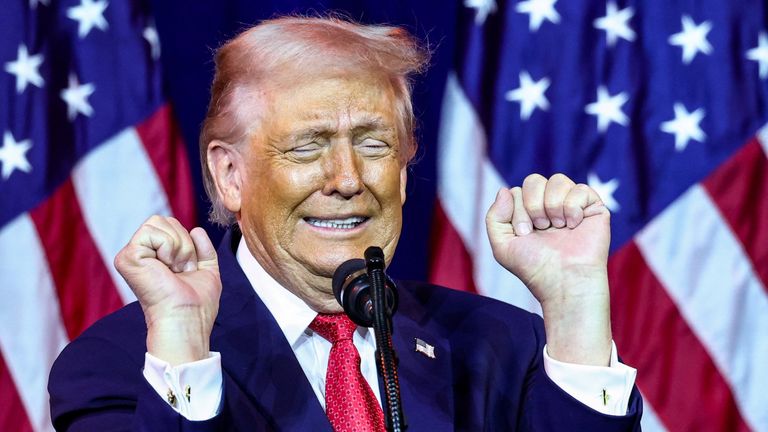
US President Donald Trump earlier announced that Venezuela would “turn over” up to 50 million barrels of oil to the United States, to be sold at prevailing market prices. The White House confirmed that it has already begun working with major banks and commodity trading firms to market the oil and execute the sales.
Read related report from New Daily Prime:
US avoids global corporate tax rules in revised OECD agreement
Trump says Venezuelan President Maduro has been captured by American forces
China backs Nigeria, warns US against interference, use of force
Venezuela’s state-run oil company, PDVSA, said negotiations were ongoing, noting that the proposed sales were being discussed within an existing framework used with international partners. However, officials did not clarify what share of the estimated $2.8 billion in expected revenue would return directly to Venezuela.
US Secretary of State Marco Rubio said the goal was to disburse funds in a way that benefits ordinary Venezuelans rather than corruption or entrenched political interests. He added that Washington intended to use the arrangement as leverage to stabilise the country and limit foreign influence.
The plan has drawn swift criticism from US Democrats. Senator Chris Murphy of Connecticut described it as an extreme measure, warning that it amounted to seizing another country’s resources to exert political control.
Venezuela possesses some of the world’s largest proven oil reserves, but years of disinvestment, mismanagement and US sanctions have reduced output to roughly one million barrels per day. In recent years, much of that oil has been exported to China, though US pressure has disrupted those flows.
Analysts say US companies such as Chevron, which is equipped to process Venezuela’s heavy crude, stand to benefit in the short term. However, they caution that restoring Venezuela’s oil sector will require years of investment and political stability, leaving the country’s economic and geopolitical future uncertain as the US pushes for a post-Maduro reset.
In the latest development, the United States is also demanding the expulsion of advisers from China, Russia, Iran, and Cuba as part of a sweeping post-Maduro reset. U.S. officials say Secretary of State Marco Rubio personally conveyed the Trump administration’s conditions to interim President Delcy Rodríguez, including reopening Venezuela’s oil sector to American companies. Washington argues that the move is aimed at dismantling foreign intelligence and military influence entrenched under Nicolás Maduro. Rodríguez has publicly defended Venezuela’s sovereignty while avoiding direct confrontation with the United States, even as American warships remain off the coast. With no clear roadmap for elections, Venezuela’s geopolitical future now hangs in the balance.
Follow us more, from www.newdailyprime.news
.

