


Iran has been plunged into deepening uncertainty as authorities imposed a nationwide communications blackout and intensified a crackdown on mass protests that have left at least 62 people dead, according to human rights groups.
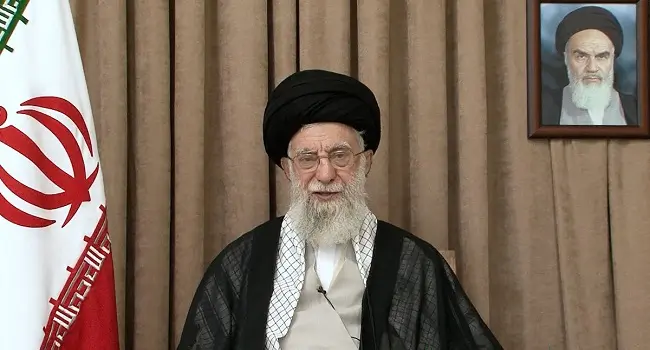
In his first major address since demonstrations erupted nearly two weeks ago, Iran’s supreme leader Ayatollah Ali Khamenei accused protesters of acting on behalf of U.S. President Donald Trump, saying they were “ruining their own streets to make the president of another country happy.”
The remarks followed Trump’s repeated statements praising the protests and warning that the United States was “watching very closely.” Khamenei dismissed those threats, saying the U.S. president should instead focus on domestic problems at home.
Read related report from New Daily Prime:
Israel urges BBC to focus on Iran protests rather than Gaza
How Nigeria is fighting corruption under Tinubu
Nobel Laureate Narges Mohammadi arrested in Iran
The speech was broadcast on state television after what activists described as the most intense night of unrest so far. Large crowds flooded the streets of Tehran and other major cities late Thursday into Friday, marking one of the most significant challenges to the Islamic Republic’s clerical leadership in years.
Authorities responded by shutting down the internet nationwide and severely restricting international phone calls, effectively cutting Iran off from the outside world. Iran’s judiciary chief Gholamhossein Mohseni-Ejei warned that punishment for protesters would be “decisive, maximum and without any legal leniency,” according to The Associated Press.
The protests began over Iran’s collapsing currency and soaring living costs but have since broadened into open calls for regime change. Demonstrators in Tehran and other cities have chanted slogans against Khamenei, the country’s highest authority, breaking long-standing political taboos.
Some protesters have gone further, voicing support for the late shah Mohammad Reza Pahlavi. His exiled son, Reza Pahlavi, has urged Iranians to continue demonstrating and has publicly appealed to Trump for assistance. In a social media post, he wrote: “Please be prepared to intervene to help the people of Iran.”
Iran’s powerful Islamic Revolutionary Guard Corps warned that protecting the achievements of the 1979 Islamic Revolution remains a “red line,” even as it acknowledged widespread economic hardship and public anger.
Human rights monitors say the violence has already claimed dozens of lives. The Human Rights Activist News Agency (HRANA) reported that at least 62 people have been killed since protests began on December 28, including 48 protesters and 14 members of the security forces. Iranian media have reported that several children are among the dead.
Facing mounting pressure, the regime has combined repression with rare concessions. Authorities on Sunday announced an “economic relief” plan, pledging to distribute 10 million rial (about £5.50) per month in vouchers to nearly the entire population over four months. The payment is roughly equivalent to an average worker’s daily wage and represents one of the most ambitious cash distribution efforts in the Islamic Republic’s history.
The emergency measures come amid severe international sanctions and sharply reduced oil revenues. In an unusual move, Khamenei has also signaled a willingness to listen to protesters’ economic grievances, offering limited dialogue even as security forces continue their crackdown.
Despite the blackout, rising death toll, and promises of financial relief, protesters appear undeterred, deepening fears among officials and fueling hopes among opposition figures—that Iran may be approaching a decisive moment in its modern history.
For more details, visit www.newdailyprime.news

