


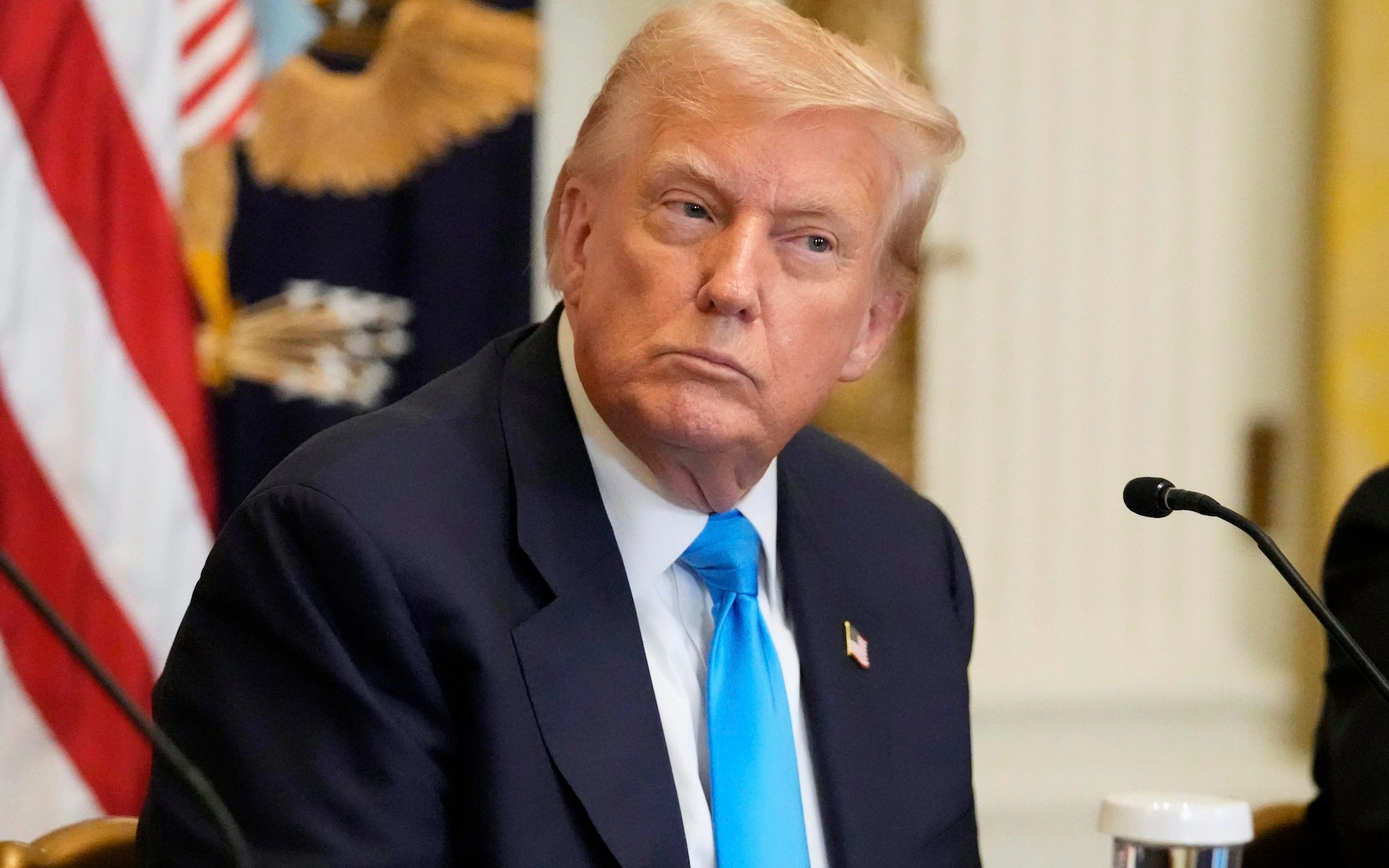
Donald Trump has warned that any country doing business with Iran will face a 25% tariff on trade with the United States, as Washington considers its response to the unrest gripping the Islamic Republic.
In a post on his Truth Social platform on Monday, the US president said the measure would take effect immediately. He stated that any country trading with Iran would be subject to a 25% tariff on all business conducted with the US. Under US law, tariffs are paid by American importers of foreign goods.
“This order is final and conclusive,” Trump said, without offering details on how the policy would be implemented. Iran has long been under heavy US sanctions.
There was no official announcement on the White House website, nor any clarification on the legal authority for the proposed tariffs or whether they would apply to all of Iran’s trading partners. The White House did not respond to requests for comment.
Iran’s main export destinations include China, the United Arab Emirates and India.
China swiftly criticised Trump’s declaration. A spokesperson for the Chinese embassy in Washington said Beijing opposed “any illicit unilateral sanctions and long-arm jurisdiction” and would take measures to protect its interests.
“China’s position against the indiscriminate imposition of tariffs is consistent and clear,” the spokesperson said. “Tariff wars and trade wars have no winners.”
The announcement comes as Iran faces its largest anti-government protests in years. The country experienced a 12-day conflict with Israel, a US ally, last year, and its nuclear facilities were bombed by the US military in June.
Trump has said the US could meet Iranian officials and that he has been in contact with opposition figures, while continuing to threaten further pressure, including possible military action.
Iranian officials said on Monday that communication channels with Washington remained open as Trump weighed his options.
The White House press secretary, Karoline Leavitt, said airstrikes were among “many, many options” under consideration, but stressed that diplomacy remained the president’s preferred course.
She added that private messages received from Tehran differed from the Iranian government’s public statements.
On Monday, tens of thousands of pro-government supporters gathered in Tehran for a state-organised rally aimed at demonstrating support for the regime.
With internet access restricted and phone lines cut, assessing the scale of protests has been difficult. However, the Associated Press reported on Tuesday that mobile phones in Iran were again able to make international calls.
Videos circulating online showed dozens of bodies outside a morgue in Tehran. The Norway-based group Iran Human Rights said at least 648 people had been killed during the unrest. A US-based organisation, the Human Rights Activists News Agency, reported more than 10,600 arrests. Iranian authorities have not released official casualty figures.
Meanwhile, non-essential staff at the French embassy in Iran have left the country, according to sources cited by Agence France-Presse. A French foreign ministry official said protecting personnel and citizens was a priority.
What began as protests over worsening economic conditions has evolved into calls for the overthrow of Iran’s clerical leadership.
The government has responded with a severe crackdown, including mass arrests, internet shutdowns and warnings that participation in demonstrations could result in the death penalty.
Since returning to the office for a second term, Trump has frequently used tariffs as leverage against countries he accuses of unfair trade practices or of maintaining ties with US adversaries.
His trade policies are currently facing legal scrutiny, with the US Supreme Court considering whether to strike down a wide range of existing tariffs.
Iran, a member of the OPEC oil producers’ group, exported goods to 147 trading partners in 2022, according to the World Bank’s most recent data.

