


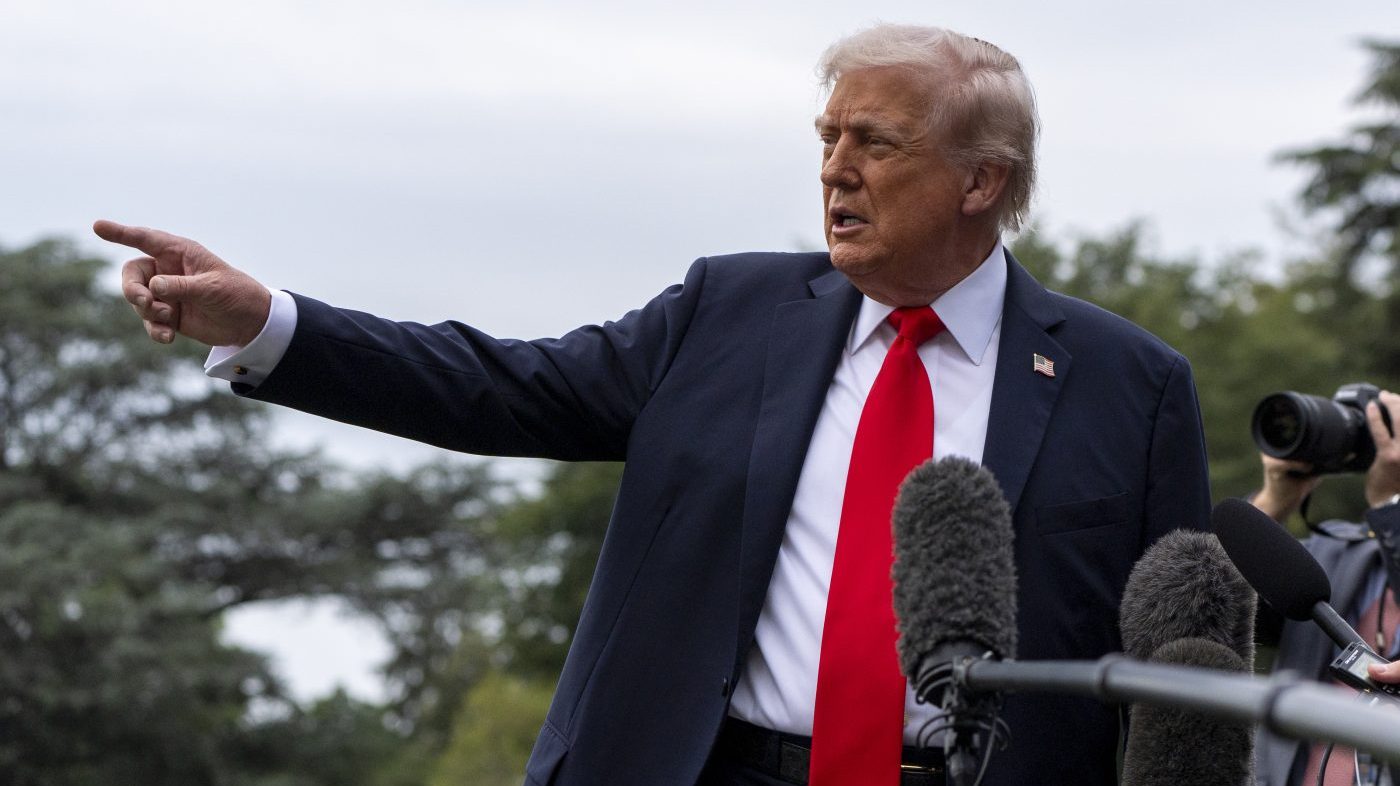
US President Donald Trump has agreed to suspend planned “bombing and attack” operations against Iran for two weeks, in a move aimed at easing tensions and opening the door to negotiations.
Read more breaking stories from our world news
The White House officials told Reuters that Israel has also agreed to a temporary ceasefire, raising cautious hopes of a broader diplomatic breakthrough in the Middle East.
The development comes as Iran submitted a 10-point proposal to the United States through Pakistan, according to its Supreme National Security Council. State media in Tehran said the proposal outlines terms for de-escalation, with talks expected to take place in Islamabad.
Trump described the proposal as “a workable basis on which to negotiate,” noting that he had engaged Pakistani leaders to help facilitate discussions.
Read related news:
Trump to deploy ICE agents at US airports
Trump attacks NATO allies as Iran war exposes deep Western divide
Trump declares Iran loser of the Middle East
The proposed pause in hostilities is tied to conditions around global energy supply. Trump said Iran must halt its blockade of oil and gas shipments through the Strait, a vital route that handles about one-fifth of global oil trade.
Nigeria watches oil market closely
For Nigeria, Africa’s largest oil producer, the ceasefire carries significant economic implications.
Tensions in the Middle East, particularly around the Strait, often push global oil prices higher. While this can boost Nigeria’s oil revenue, it also raises the cost of refined fuel imports, placing additional pressure on domestic petrol prices and inflation.
The two-week pause in hostilities has already sparked expectations of a drop in global oil prices, which could offer short-term relief for Nigerian consumers struggling with high fuel costs.
However, analysts warn that any renewed escalation could quickly reverse gains, exposing Nigeria’s continued vulnerability to global supply shocks due to its reliance on imported refined petroleum products.
A fragile diplomatic window
Trump’s announcement marks a sharp shift from earlier rhetoric. Just hours before the ceasefire, he warned that “a whole civilisation will die tonight” if Iran failed to meet US demands.
The sudden pivot highlights growing international pressure to avoid a wider regional conflict that could disrupt global energy markets and trade routes.
Diplomatic sources say Pakistan’s involvement reflects efforts to create a neutral channel for dialogue, as direct communication between Washington and Tehran remains limited.
While the ceasefire is temporary, it offers a narrow window for negotiations and a chance to stabilise both geopolitical tensions and global oil markets.
For Nigeria, the outcome of these talks could have immediate consequences, not just for government revenue, but for fuel prices, transport costs and the broader cost of living.

