


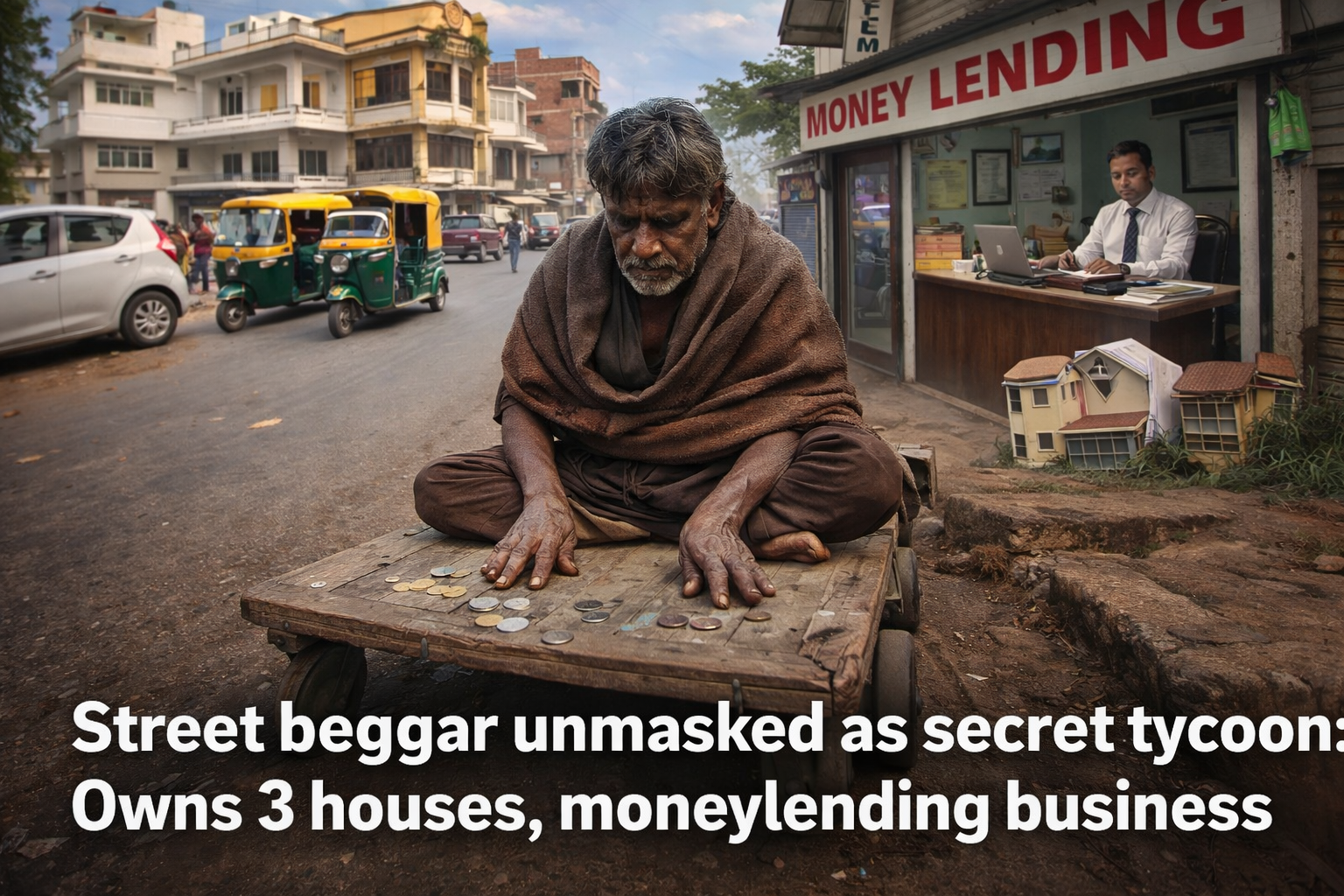
A beggar in India has been unmasked as a secret tycoon, owning three houses, two auto-rickshaws, a car, and even a moneylending operation — all funded by years of street-side pleas. Mangilal, 50, who moved around Sarafa Bazaar on a wheeled wooden platform, his fingerless hands evoking pity, was “rescued” by authorities during a drive to make Indore beggar-free. What they uncovered, however, stunned the nation: a fortune built on feigned helplessness.
Mangilal’s daily routine was a masterclass in deception. Cross-legged on his platform, eyes downcast to avoid scrutiny, he raked in thousands of rupees daily from sympathetic passers-by. His leprosy-scarred appearance tugged at heartstrings, but it was all part of a calculated strategy. “I certainly go there, but don’t beg—it’s the people who put the money in my pocket or throw coins on the wooden board,” he brazenly told officials after his removal from the streets.
Read related news from new daily prime: Remove child beggars from Abuja roads, Rep member tells Wike
Probed by civil servants, Mangilal confessed his earnings weren’t for survival but investment capital. He lent cash to local shopkeepers at interest, turning alms into a thriving side hustle. Further digs revealed staggering assets: a three-storey house, another home, and a flat from a government welfare scheme. He rented out two auto-rickshaws and employed a driver for his car at 12,000 rupees (£115) monthly. Authorities are now scouring for bank accounts, suspecting even more hidden wealth.
The revelation has sparked outrage and amusement in equal measure. Social media buzzes with memes dubbing him India’s “real slumdog millionaire,” echoing the Oscar-winning film. But it also highlights deeper issues in Madhya Pradesh, where urban poverty clashes with hidden affluence. Mangilal’s family, too, dabbled in begging, suggesting a clan operation.
Indore’s anti-begging campaign, part of broader civic reforms, aimed to rehabilitate the vulnerable. Instead, it exposed a fraud. Officials gave Mangilal a shower, fresh clothes, and questioned him, only to find he was far from destitute. His platform mobility masked a life of luxury, challenging stereotypes of beggars as society’s forgotten.
This isn’t isolated; India grapples with professional begging rings, often exploiting disabilities for sympathy. In Mumbai and Delhi, similar busts have revealed beggars with properties and vehicles. Experts blame lax enforcement and public gullibility. “People give without verifying need,” says sociologist Dr. Rajesh Kumar. “It perpetuates a cycle where genuine poor suffer.”
Mangilal’s case raises ethical questions: Is begging a scam if donors give willingly? Legally, he faces no charges yet, but authorities may seize assets if welfare fraud is proven. His story underscores urban India’s contrasts—glitzy bazaars hiding deceit amid genuine hardship.
As Indore pushes for a “beggar-free” status, Mangilal’s unmasking serves as a cautionary tale. It prompts reflection on charity: next time you drop a coin, consider if it’s funding a beggar or a baron. In a nation of 1.4 billion, where inequality reigns, such reversals remind us: appearances deceive, and fortune can hide in the humblest guises.

