


Poland plans to complete a new network of anti-drone defences along its eastern borders within two years, following repeated incursions by suspected Russian drones into its airspace earlier this year.
The deputy defence minister, Cezary Tomczyk, said the first elements of the system could be operational within six months, with full completion expected within 24 months.
Speaking in Warsaw, Tomczyk said the new defences would be integrated into an older protective line built around a decade ago. The system will consist of several layers, including machine guns, cannons, missiles and electronic drone-jamming technology.
Some elements, he noted, would only be deployed in extreme situations or wartime. Multi-barrel machine guns, for example, are difficult to use in peacetime because of the risks posed by falling ammunition.
More than a dozen suspected Russian drones entered Polish airspace in September, triggering airport closures, the scrambling of fighter jets and damage to buildings after several drones were shot down. At the time, the foreign minister, Radosław Sikorski, described the incident as an attempt by Russia to “test us without starting a war”.
The drones involved were not carrying explosives, according to Polish officials. However, the incident prompted Warsaw to accelerate plans to reinforce its eastern borders.
Tomczyk said no anti-drone system could offer complete protection against the kind of sustained attacks Ukraine has endured. Nevertheless, Poland and other European countries along Nato’s eastern flank are moving quickly to strengthen their defences against emerging threats.
The project is expected to cost more than €2bn (£1.75bn). Most of the funding will come from European sources under the SAFE (Security Action for Europe) defence loan programme, with additional contributions from the Polish state budget.
Since Russia’s full-scale invasion of Ukraine, Poland has steadily increased its state of readiness. Polish security services say incidents of sabotage and arson linked to Russian intelligence agencies have risen in recent years.
The government is also planning to train hundreds of thousands of citizens in basic survival skills, alongside expanded voluntary military training schemes.
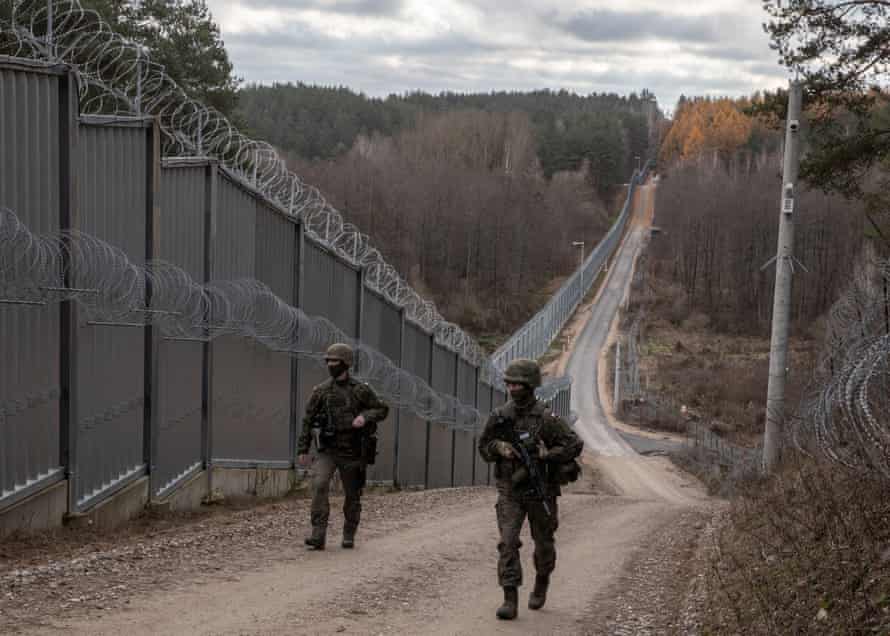
Alongside the anti-drone defences, Poland is fortifying its land borders with Belarus and the Russian exclave of Kaliningrad as part of a programme known as the Eastern Shield. The initiative is designed to deter a potential future Russian invasion.
Tomczyk said logistics hubs would be built in every border municipality, stocked with equipment to block crossings and deployable within hours if needed.
He argued that as long as Ukraine continues to resist Russia, Europe is not facing an immediate risk of conventional war. Instead, he said, countries should expect provocations and acts of sabotage.
However, he warned that a Russian victory in Ukraine could quickly change the security balance in Europe.
Poland has increased defence spending to 4.7% of GDP, one of the highest levels in the European Union, amid concerns over Russian hybrid warfare and potential military threats.
Tomczyk compared the cost of preparedness with the cost of war, noting that Ukraine is currently spending around 40% of its GDP on its defence.
Asked whether Russia harboured the same ambitions towards Poland as it did towards Ukraine, Tomczyk pointed to Russia’s long history of expansionism in eastern Europe. He said that shifting narratives about enemies could happen rapidly, drawing a comparison with George Orwell’s 1984.
“These conquests function mainly as a political tool for maintaining power,” he said, describing external conflict as a recurring feature of Russian domestic politics.

