


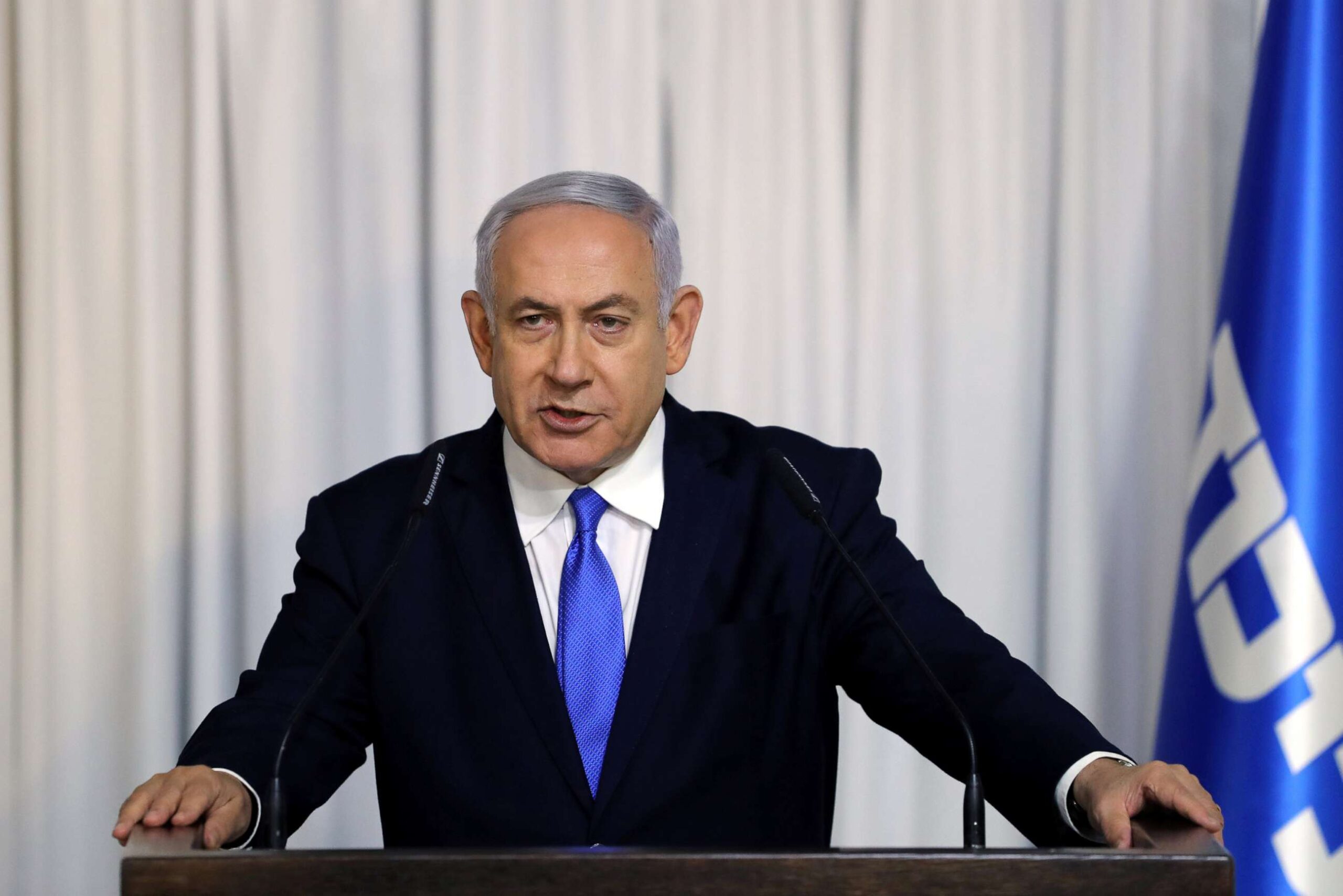
Far-right members of Israel’s governing coalition have rejected a US-backed plan for postwar governance in Gaza, accusing the prime minister, Benjamin Netanyahu, of failing to annex the territory and establish new Israeli settlements.
The criticism followed the White House’s announcement of a new international framework for Gaza, including a so-called “board of peace” and an executive body involving foreign leaders. The inclusion of Turkey and Qatar, both outspoken critics of Israel’s war in Gaza, has angered hardline figures within Netanyahu’s government.
Israel’s far-right finance minister, Bezalel Smotrich, described Netanyahu’s approach as a fundamental failure. Writing on X, he said the prime minister’s “unwillingness to take responsibility for Gaza” was “the original sin”.
Smotrich, who lives in an Israeli settlement in the occupied West Bank, said Israel should establish a military administration in Gaza, encourage Jewish settlement and take full control of the territory in order to guarantee long-term security.
The White House said this week it would establish a “Gaza executive board” under a broader board of peace, which would be chaired by Donald Trump as part of his 20-point plan to end the war.
The executive board is described as advisory and includes Turkey’s foreign minister, Hakan Fidan, and a Qatari diplomat, Ali al-Thawadi, alongside other regional and international figures.
Referring to Turkey and Qatar, Smotrich said countries that had “inspired Hamas” could not be allowed to replace it in Gaza. He added that the prime minister must resist pressure, even if doing so caused friction with the US administration.
On Sunday, Netanyahu convened a meeting with coalition partners in an apparent effort to manage the growing tensions within his government.
His political survival depends on the support of far-right allies, many of whom opposed the US-brokered ceasefire reached last October and continue to push for a more aggressive approach to Gaza.
Netanyahu himself voiced objections to the US plan on Saturday, saying some of the appointments had not been coordinated with Israel and ran counter to government policy. He instructed his foreign minister, Gideon Sa’ar, to raise Israel’s concerns with the US secretary of state, Marco Rubio.
Israel has previously rejected any Turkish role in postwar Gaza, with relations between the two countries deteriorating sharply since the conflict began in October 2023.
In addition to Turkey’s foreign minister, Trump has invited the Turkish president, Recep Tayyip Erdoğan, to join the board of peace, alongside Egypt’s president, Abdel Fatah al-Sisi, the former UK prime minister Tony Blair and Argentina’s president, Javier Milei.
According to the White House, the plan consists of three bodies: the board of peace chaired by Trump; a Palestinian technocratic committee tasked with governing Gaza; and the Gaza executive board, which would provide advice.
The Palestinian technocratic committee held its first meeting in Cairo on Saturday.
A draft charter circulated by the US administration calls on participating countries to contribute $1bn in cash to secure membership beyond three years. The document states that standard membership would last no more than three years unless a country made the required financial contribution within the first year.
The US said the Gaza truce had entered a second phase, shifting the focus from maintaining a ceasefire to disarming Hamas, whose attack on Israel on 7 October 2023 triggered the war.
Attention has now turned to transitional governance, demilitarisation and reconstruction in Gaza, even as Israeli military operations continue.
Since the ceasefire took effect in October, at least 451 Palestinians have been reported killed. While airstrikes and gunfire have decreased, they have not stopped entirely.
Conditions in Gaza remain dire. Recent winter storms have worsened the humanitarian crisis, flooding displacement camps and causing further deaths.
Strong winds last week caused walls to collapse on tents sheltering displaced families, killing at least four people. On Saturday, a 27-day-old baby died from exposure to extreme cold, bringing the number of children who have died from hypothermia this winter to eight, according to the Palestinian health ministry.

