


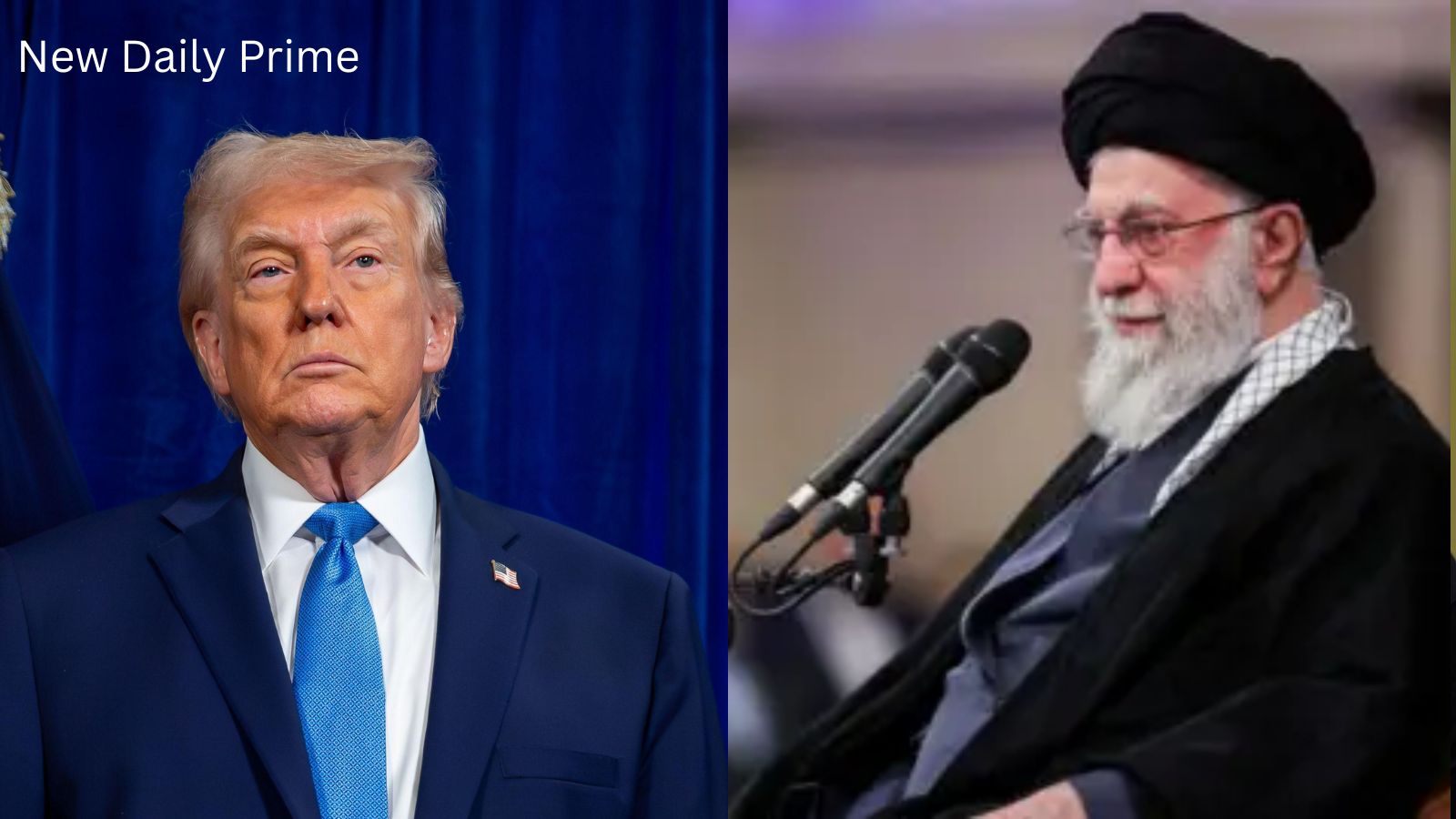
Middle East on the Brink as Reports Claim Iran’s Supreme Leader Killed in Air Strikes. The Middle East was pushed deeper into crisis on Saturday night after explosive claims emerged that Iran’s supreme leader, Ali Khamenei, had been killed during US and Israeli air strikes on Tehran. The reports, attributed to Israeli and Western intelligence officials, have not been independently verified and are strongly denied by Iran, but they have already triggered violent retaliation and global alarm.
According to intelligence sources briefed on the operation, Khamenei died after a large-scale strike hit his compound in the Iranian capital during the opening phase of a coordinated US–Israeli assault. Officials said his body was later recovered from the rubble, bearing multiple shrapnel wounds. Photographs said to document the death were reportedly shown to Benjamin Netanyahu and senior Israeli defence figures.
The strikes were described by one source as a “major combat operation” ordered by Donald Trump, aimed at crippling Iran’s leadership and halting its nuclear and missile ambitions. Israel is said to have led the initial assault, targeting Khamenei’s residence in what officials called a decisive opening blow.
Read related news from New Daily Prime:
US, Israel launch major assault on Iran as Middle East war fears surge
US, Israel launch major assault on Iran as Middle East war fears surge
Trump defends US–Israel military strike on Iran, cites nuclear threat
Israel ties Rafah reopening to recovery of last hostage
Mr Trump was also reportedly briefed with the same images after Iranian authorities discovered the body. Speaking later, the US president said he believed the reports were accurate. “We feel that that is a correct story,” he said, adding that most of Iran’s senior leadership had been killed in the strikes. He claimed the damage inflicted would take Tehran “years to rebuild”.
Iran, however, has flatly rejected the account. A spokesman for the foreign ministry insisted the ayatollah was “safe and sound”, though Khamenei has not appeared in public since the bombardment began. The absence has fuelled speculation inside and outside Iran, with Mr Netanyahu earlier stating that “signs are increasing that Khamenei is no longer with us”.
Within hours of the alleged killing, Tehran launched a fierce response. Waves of ballistic missiles were fired at US bases in Qatar, Kuwait and the United Arab Emirates, while Iran also struck the headquarters of the US Navy’s Fifth Fleet in Bahrain. Air raid sirens sounded across the region as defences scrambled to intercept incoming fire.
In Israel, missiles penetrated air defences and hit central Tel Aviv, leaving several people wounded. Emergency services said at least one man, aged about 40, was seriously injured by shrapnel after a strike devastated a city-centre street. Further barrage warnings were issued later in the evening.
In a phone interview from Mar-a-Lago, Mr Trump suggested the conflict could still end quickly. He said the US could “go long and take over the whole thing”, or bring the fighting to a halt within days by warning Iran against rebuilding its military programmes. He blamed the strikes on the collapse of recent negotiations and Iran’s past attacks across the region.
Senior figures in the Trump administration also claimed Iran had been preparing possible pre-emptive strikes against US forces, a charge disputed by other intelligence sources familiar with the assessments.
As uncertainty over Khamenei’s fate continues, the region remains on edge. If confirmed, his death would mark the most dramatic escalation in decades, reshaping Iran’s power structure and plunging an already volatile Middle East into uncharted territory. For now, the world is left weighing starkly different accounts — and bracing for what may come next.

