


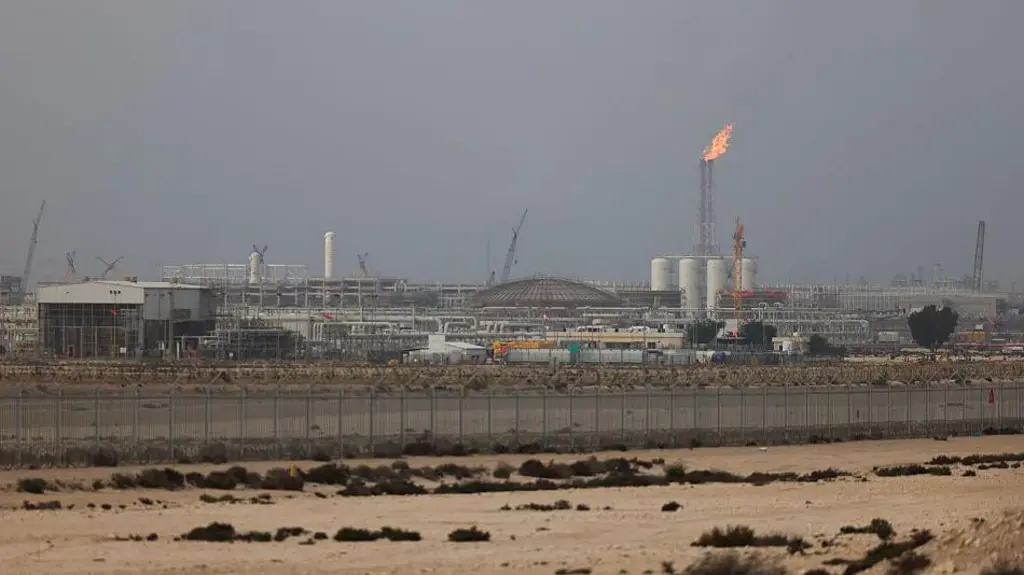
Iran has struck Qatar’s main gas export hub, Qatari officials said, just hours after Tehran warned that Gulf energy facilities had become “legitimate targets”, in an escalation that analysts say could trigger a global energy shock.
Authorities in Doha said a missile hit the Ras Laffan industrial city, home to the world’s largest liquefied natural gas export facility, causing a fire and “extensive damage”. Emergency crews were deployed to contain the blaze, while officials confirmed that all personnel had been accounted for and no casualties reported.
State-owned QatarEnergy said the site had been directly targeted, while the interior ministry confirmed civil defence teams were tackling fires following what it described as an Iranian strike.
Ras Laffan handles roughly one-fifth of global LNG supply, making it one of the most critical energy hubs in the world. Analysts warned that even limited disruption could have immediate consequences for gas markets across Europe and Asia.
Read related news from New Daily Prime:
Iran threatens ‘decisive action’ after strike on key gas field
Trump attacks NATO allies as Iran war exposes deep Western divide
Iran warns US over World Cup security
The strike followed Iranian threats to target energy infrastructure across the Gulf in response to attacks on its own facilities. Earlier, sites linked to Iran’s South Pars gas field, part of the world’s largest natural gas reserve, were reportedly hit, raising fears of a rapid escalation centred on energy assets.
In the hours before the attack, Iranian state media carried warnings urging staff to evacuate key facilities in Saudi Arabia, the United Arab Emirates and Qatar. Sites named included Saudi Arabia’s Samref refinery and Jubail petrochemical complex, the UAE’s Al Hosn gas field, and Qatar’s Mesaieed and Ras Laffan operations.
Markets reacted sharply to the developments. Oil prices rose by more than 5 per cent to around $108 a barrel, as traders priced in the risk of disruption across a region that underpins a significant share of global supply.
The economic impact is already being felt beyond the Middle East. In the United States, petrol prices have climbed to more than $3.84 a gallon, up from under $3 before the conflict began in late February, according to industry data.
Jerome Powell warned that higher energy costs were adding to inflationary pressure. He said the Federal Reserve remained focused on bringing inflation back towards its 2 per cent target, but acknowledged that rising fuel prices could push inflation higher while weighing on growth.
He added that while the US is a net energy exporter, the overall effect of a sustained oil shock would still be negative, putting pressure on spending, employment and broader economic activity.
Qatar has condemned the strike as a direct threat to its national security. There has been no immediate detailed response from Tehran beyond earlier warnings that Gulf energy infrastructure could be targeted.
Diplomatic and market attention is now turning to whether the conflict spreads further, particularly towards the Strait of Hormuz, a critical shipping route for global oil and gas.
With major energy hubs now under direct attack and prices already rising, the risk of a wider supply disruption is increasing, raising the prospect of sustained volatility in global markets and a deeper economic shock in the weeks ahead.

