


Iran escalated its military response on Tuesday, striking American and Israeli interests across the Middle East and forcing the temporary closure of US embassies in Saudi Arabia and Kuwait, as President Donald Trump declared it was “too late” for dialogue with Tehran.
Iranian drones hit the US embassy compound in Riyadh, causing a minor fire and prompting officials to warn Americans to stay away from the facility. The attack followed an earlier strike on the US embassy in Kuwait, as Tehran widened its retaliation against US bases, facilities and personnel in Gulf states.
President Trump dismissed reports that Iran was seeking renewed negotiations. Writing on Truth Social, he said: “Their air defense, Air Force, Navy and Leadership is gone. They want to talk. I said ‘Too Late!’” He added that the United States was prepared to sustain the conflict for far longer than the initially suggested four to five weeks.
Related:
Iran warns of global escalation if nations remain passive
Day four of Iran conflict: What you must know now
The war, which began with joint US-Israeli airstrikes on Tehran on Saturday that killed Iran’s supreme leader, Ali Khamenei, has expanded at speed. What started as direct confrontation between Iran, the US and Israel has evolved into a regional conflict spanning at least nine countries.
Israel announced an “extensive” wave of airstrikes in Tehran and issued evacuation warnings around an airport in Karaj, which it said would soon be targeted. US officials claimed they had destroyed key Islamic Revolutionary Guard Corps command and control facilities.
Israeli Prime Minister Benjamin Netanyahu said the war could take “some time” but would not “take years.” Mr Trump, however, suggested it could last “far longer” than first planned. Senior US officials, including Defence Secretary Pete Hegseth and Secretary of State Marco Rubio, indicated that the “hardest hits are yet to come,” while not ruling out the possibility of US ground troops — a prospect analysts warn would be highly complex given Iran’s geography.
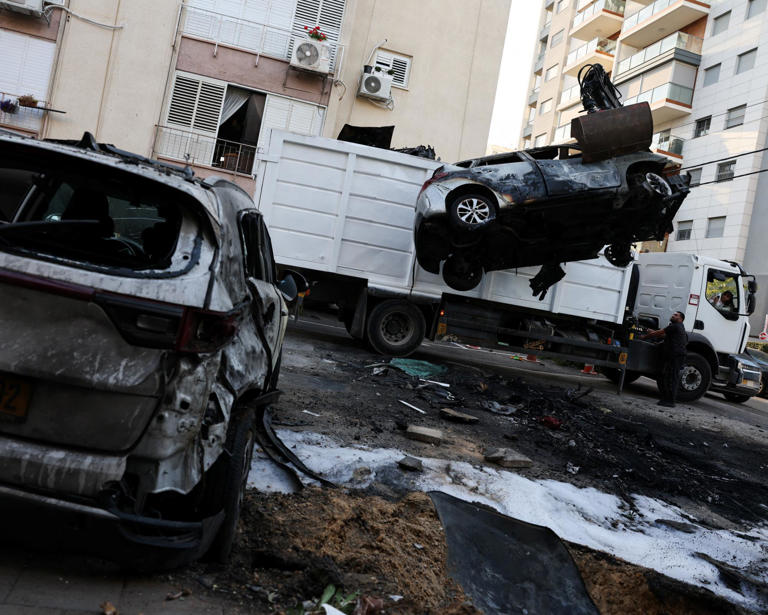
Meanwhile, Iran continued firing ballistic missiles at Israel. Most were intercepted, but several broke through air defences, killing at least 11 people and injuring more than a dozen. Some of the missiles reportedly contained cluster munitions.
The conflict has also opened a northern front. Israel confirmed that ground troops had entered southern Lebanon, with Defence Minister Israel Katz ordering forces to “hold and advance” to prevent further Hezbollah attacks. Hezbollah’s deputy political leader declared an “open war,” as the group launched missile and drone attacks on Israeli bases. Israeli strikes have killed 52 people in Lebanon and displaced at least 29,000, while much of southern Lebanon has been emptied.
Iran’s broader strategy has targeted Gulf energy infrastructure. Qatar suspended operations at its largest liquefied natural gas facility. Saudi Arabia halted activity at the Ras Tanura refinery. Global oil prices surged after Iran closed the Strait of Hormuz, a vital global shipping route, with Revolutionary Guard officials warning that ships attempting to pass would be attacked.
Casualty figures in Iran vary widely. Estimates range from 787 to as many as 1,500 killed, including dozens of children reportedly killed in a strike on a girls’ elementary school. The US confirmed six American soldiers had died, reportedly in Kuwait.
Diplomatically, the crisis has exposed divisions among Western allies. Washington claims it acted pre-emptively, fearing Iranian retaliation following Israeli strikes. Tehran denies pursuing nuclear weapons, while Mr Trump has alternated between citing regime change and nuclear prevention as objectives.
As embassies shut, energy markets shake and new battlefronts emerge daily, the Middle East stands at a tipping point. What was once a shadow war has become an open regional confrontation with global consequences.

