


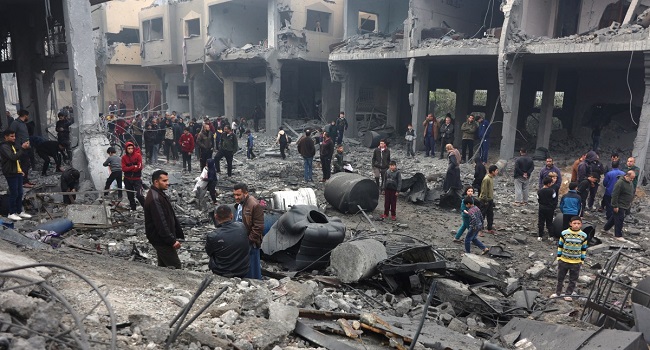
The war between Israel and Iran entered a dangerous new phase on day four as Israeli troops crossed into southern Lebanon, the United States intensified strikes inside Iran, and Tehran retaliated across the Gulf.
Israel confirmed it had launched a ground invasion of Lebanon, targeting positions held by Hezbollah, the Iran-backed militant group. Israel Katz, the defence minister, said troops had been authorised to “advance and take control of additional positions” to prevent further attacks on Israeli border communities.
The move followed fresh air strikes on Beirut in the early hours of Tuesday. Hezbollah had fired a barrage of missiles at Israel on Sunday night, describing it as revenge for the killing of Iran’s Supreme Leader. Israel said its forces were continuing operations against Hezbollah targets and warned the group would “pay a heavy price”.
The Israel Defense Forces (IDF) also announced it had killed Reza Khazaei, a senior commander in the Quds Force of Iran’s Islamic Revolutionary Guard Corps (IRGC), in a strike on Monday.
Read related news from New Daily Prime:
US Embassy attacked by Iranian drones
US confirms deaths of soldiers in Iran operation
US urges citizens to leave Israel, Gulf States immediately as Iran conflict intensifies
Inside Iran, Israeli and American forces continued coordinated attacks. Targets included the Tehran complex housing IRIB, Iran’s state broadcaster. US President Donald Trump described the campaign as “well ahead of schedule” and warned that “the big wave hasn’t even happened yet”.
Overnight, it emerged that Israeli intelligence had allegedly hacked Tehran’s traffic camera network and accessed mobile phone data to track the movements of the Supreme Leader. Intelligence sources claimed that information from surveillance systems and insiders confirmed the timing of a key leadership meeting, which was struck by missiles on Saturday, killing those present.
Iran has responded with direct and proxy attacks across the region. The US embassy in Riyadh was hit by two drones in the early hours of Tuesday. A loud explosion was heard and smoke rose above the compound. No casualties were reported, but the embassy was closed and Americans were urged to shelter in place.
Washington has ordered US citizens to leave more than a dozen Middle Eastern countries, including Saudi Arabia, Bahrain, Kuwait, Iraq, Israel, Jordan, Lebanon, Qatar and the United Arab Emirates. Iranian state media claimed it had destroyed a US air base in Bahrain and reported an attack on a US-flagged oil tanker.
At least six Americans were killed in a separate Iranian strike on a US base in Kuwait, prompting questions over base fortifications.
The conflict has also exposed divisions among Western allies. Mr Trump criticised Britain, saying European nations had been more supportive of US strikes than the United Kingdom. He singled out France for praise, adding that London had been “much different from others”.
Prime Minister Sir Keir Starmer told Parliament that Britain did “not believe in regime change from the skies” and insisted any military action must be lawful and carefully planned. UK bases are currently being used only for defensive purposes, protecting allies targeted by Tehran.
While Mr Trump has suggested the war could last weeks and even said it could be fought “forever” with existing stockpiles, Israeli Prime Minister Benjamin Netanyahu struck a different tone. He said the conflict would be “quick and decisive” and not an endless campaign.
With Israeli forces now operating on the ground in Lebanon, US air power expanding inside Iran, and Tehran launching strikes across the Gulf, the war has shifted from shadow conflict to open regional confrontation. The coming days will determine whether it remains contained or spirals further across the Middle East.

