


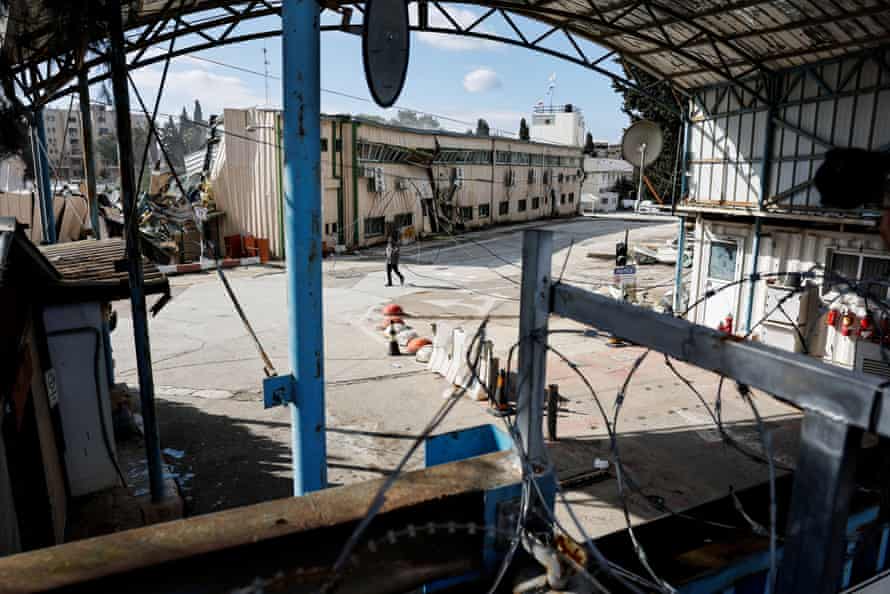
Israeli crews have begun demolishing the Jerusalem headquarters of the United Nations agency for Palestinian refugees and fired teargas at a UN vocational school in the occupied West Bank.
Bulldozers moved into the East Jerusalem compound of the United Nations Relief and Works Agency (Unrwa) in the early hours of Tuesday. At the same time, Israeli forces fired teargas at a Unrwa vocational training centre in Qalandia, north of Jerusalem.
Israel accuses Unrwa of collaborating with Hamas, an allegation the agency denies. Last year, Israel banned Unrwa from operating on territory it defines as Israeli. The demolition marks the latest step in a sustained campaign against the agency, which provides aid and services to millions of Palestinian refugees.
Roland Friedrich, Unrwa’s director in the West Bank, said demolition crews accompanied by police arrived at the agency’s headquarters before dawn. He said the site had been largely unused for nearly a year due to security threats and incitement, but that Israeli forces nonetheless entered the compound, seized equipment and expelled private security guards.
An Israeli flag was raised over the building in the Sheikh Jarrah neighbourhood. Several Israeli politicians attended the scene, with the national security minister, Itamar Ben-Gvir, describing the demolition as “a historic day”.
Israel defended the move, with the foreign ministry saying Unrwa had already ceased operations at the site and that no UN personnel were present. It said the compound did not enjoy immunity and that its seizure was carried out in accordance with Israeli and international law.
Friedrich rejected that claim, calling the demolition a violation of international law protecting UN facilities. He said it marked the culmination of two years of incitement and measures taken against Unrwa in East Jerusalem.
Unrwa was established in 1949 to provide aid and services to Palestinian refugees. It currently supports about 2.5 million refugees in Gaza, the occupied West Bank and East Jerusalem, and a further 3 million in Syria, Jordan and Lebanon. The agency runs schools, provides healthcare and maintains infrastructure in refugee camps.
Following the Hamas attack on Israel on 7 October 2023, Israeli settlers and rightwing activists staged protests outside Unrwa’s Jerusalem offices, blocking entrances and calling for the agency’s closure. Unrwa staff have since faced obstruction and harassment by Israeli authorities and the military.
In 2024, a US intelligence report cited by the Wall Street Journal assessed with “low confidence” that a small number of Unrwa staff may have been involved in the 7 October attack, but said the claim could not be independently verified.
Despite that uncertainty, Israel’s parliament passed legislation last year severing ties with Unrwa and banning it from operating in areas under Israeli control, including East Jerusalem.
Unrwa says 382 of its staff have been killed by Israeli forces in Gaza since the start of the conflict.
Videos circulated on Tuesday showed Israeli bulldozers destroying buildings and facilities inside the agency’s East Jerusalem compound.
Philippe Lazzarini, Unrwa’s commissioner general, said the demolition was part of broader efforts to erase the Palestinian refugee identity. He warned that the move should serve as a warning to other international organisations and diplomatic missions.
The action comes amid a long-running political and financial campaign against Unrwa. The United States cut funding to the agency in 2018 under Donald Trump, restored it in 2021 under Joe Biden, and paused contributions again in 2024.
Israel’s ban on Unrwa has coincided with tighter controls on humanitarian organisations operating in Gaza and the occupied West Bank. New legislation requires charities to dismiss staff accused of activities deemed to undermine Israel or support boycotts, and to submit detailed staff lists to retain their licences.
Israeli authorities have warned dozens of aid groups, including Médecins Sans Frontières and Care, that their licences may expire at the end of 2025. Aid organisations have warned that the measures are arbitrary and risk deepening an already severe humanitarian crisis for civilians.

