


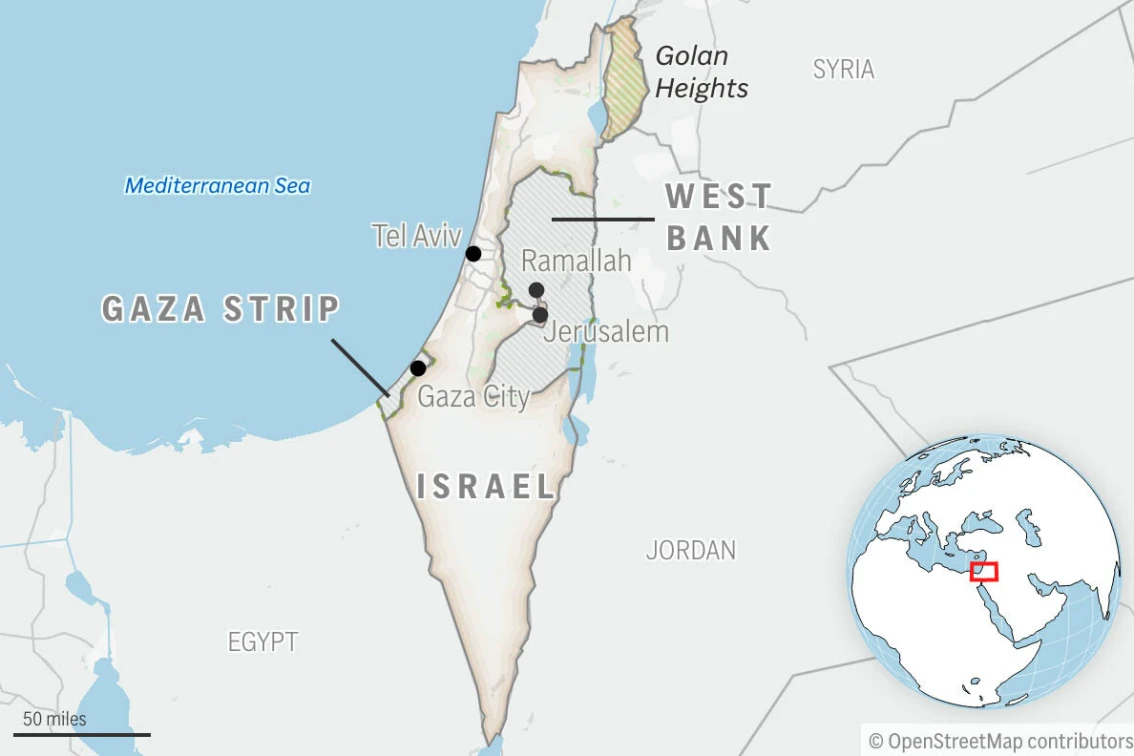
Israel has approved plans for 19 new Jewish settlements in the occupied West Bank, pressing ahead with an expansion drive that further undermines prospects for a Palestinian state.
The decision brings the number of settlements approved in recent years to 69, a record, according to the far-right finance minister, Bezalel Smotrich, a leading advocate of settlement expansion.
Two of the newly approved sites were previously dismantled during Israel’s 2005 disengagement from Gaza and parts of the West Bank.
The approval by the security cabinet represents a sharp increase during the tenure of the current government. In 2022, there were 141 settlements in the West Bank. With the latest decision, the number has risen to 210, according to Peace Now, an Israeli anti-settlement watchdog.
Settlements are considered illegal under international law, a position Israel disputes.
The move comes as the United States seeks to push Israel and Hamas towards a second phase of the Gaza ceasefire, which began on 10 October. The US-brokered framework includes a possible “pathway” to a Palestinian state, a prospect critics say is being actively obstructed by settlement expansion.
According to Israel’s finance ministry, the cabinet decision included the retroactive legalisation of several settlement outposts and neighbourhoods, as well as the establishment of new settlements on land from which Palestinians had previously been evacuated.
Settlements vary widely in size, ranging from a handful of homes to large developments with multi-storey buildings.
Among those legalised were Kadim and Ganim, two of the four West Bank settlements evacuated in 2005 as part of Israel’s withdrawal from Gaza. Efforts to resettle the sites intensified after the Israeli government repealed legislation in March 2023 that had barred Israelis from returning to the areas.
Israel captured the West Bank, East Jerusalem and Gaza in the 1967 war. The Palestinians claim all three territories for a future state.
More than 500,000 Israeli settlers now live in the West Bank, alongside over 200,000 in East Jerusalem, which Palestinians also claim as their capital.
Israel’s current government includes several prominent figures from the far right, including Smotrich and the national security minister, Itamar Ben-Gvir, both long-time supporters of the settler movement.
Settlement growth has coincided with a surge in settler violence against Palestinians in the West Bank. During October’s olive harvest, settlers carried out an average of eight attacks a day, the highest level since the UN humanitarian office began recording data in 2006.
The violence continued into November, with at least 136 further attacks recorded by 24 November.
According to the UN, settlers have burned cars, vandalised mosques, damaged factories and destroyed farmland. Israeli authorities have largely limited their response to occasional public condemnations.
The Palestinian health ministry in Ramallah said two Palestinians, including a 16-year-old, were killed during clashes with Israeli forces on Saturday night in the northern West Bank.
Israel’s military said one militant was shot dead after throwing a block at troops in the town of Qabatiya, while another was killed after hurling explosives at soldiers operating in the village of Silat al-Harithiya.
The Palestinian health ministry identified the teenager killed in Qabatiya as Rayan Abu Muallah. Palestinian media broadcast security footage showing him emerging from an alley before being shot as he approached Israeli troops. The footage appears to show him unarmed. The Israeli military said the incident was under review.
The second man killed was named as Ahmad Ziyoud, 22.
Israel has intensified military operations across the West Bank since the Hamas-led attack on 7 October 2023, which triggered the war in Gaza.
- Read more at http://www.newdailyprime.news

