


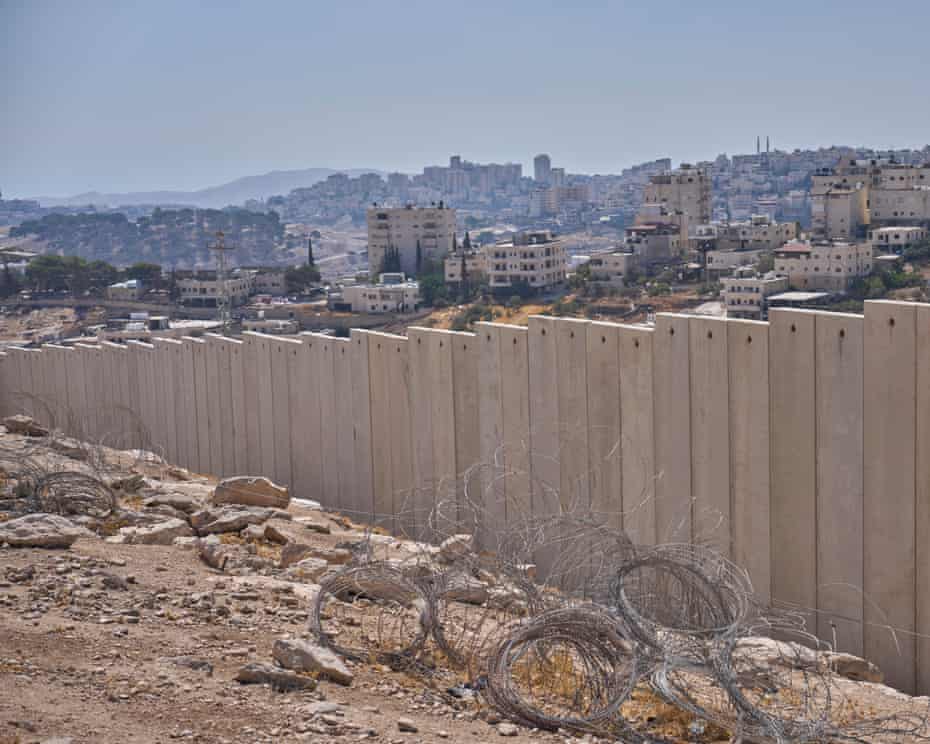
Israel is moving towards the construction of a major new settlement in the occupied West Bank, a project critics say is designed to permanently undermine the possibility of a Palestinian state.
In mid-December, the Israel Land Authority quietly issued a tender for the construction of 3,401 housing units in the area known as E1, a strategic stretch of land east of Jerusalem. The tender gives construction firms until mid-March to submit bids.
The E1 project would effectively split the West Bank in two for Palestinians, severing the link between its northern and southern regions and further isolating East Jerusalem.
The tender was first identified online by Peace Now, an Israeli advocacy group that monitors settlement activity. Yonatan Mizrachi, co-director of the group’s Settlement Watch project, said the move signalled an accelerated push to begin construction.
“This timeline suggests bulldozers could be on the ground in less than a year,” he said.
The British government has previously described construction in E1 as a “flagrant breach of international law”.
The idea of building in E1 dates back to the 1990s and has long enjoyed support across much of Israel’s political spectrum. It was first promoted under the Labour prime minister Yitzhak Rabin, who was assassinated in 1995.
For years, pressure from the United States and European allies prevented the project from moving forward. That opposition has weakened under Israel’s current government, which has openly embraced the plan.
Supporters and critics alike acknowledge that building tens of thousands of settler homes between Jerusalem, Bethlehem and Ramallah would deal a severe blow to any future two-state solution.
Mizrachi said construction in E1 was intended to create “irreversible facts on the ground” that would entrench a one-state reality marked by unequal rights.
Israel’s far-right finance minister, Bezalel Smotrich, said last year that Donald Trump had dropped long-standing US opposition to the project. While the US state department declined to comment, Israeli authorities granted formal planning approval in August.
Smotrich said the development would “bury” the idea of a sovereign Palestinian state.
“Those trying to recognise a Palestinian state will get an answer from us on the ground,” he said. “Not through documents or declarations, but through facts.”
More than 20 countries, including France, Canada, Italy and Australia, condemned the approval, warning it violated international law and risked escalating violence.
Despite the criticism, Israel pressed ahead. In September, the housing ministry signed an agreement to fund infrastructure for E1 and the expansion of the neighbouring settlement of Ma’ale Adumim. The ceremony was attended by the prime minister, Benjamin Netanyahu.
“We said there will be no Palestinian state, and indeed there will be no Palestinian state,” Netanyahu said. “This place is ours.”
Also present was Smotrich, who has been sanctioned by the UK, Canada and Australia for repeated incitement of violence against Palestinian communities, alongside the head of the settler organisation Amana, which is also under UK sanctions.
Settlement experts say the pace of approval has been unusually rapid. Hagit Ofran of Peace Now said it normally takes six to 12 months to prepare settlement tenders after planning approval. In the case of E1, it took around four months.
If approvals continue at a similar speed, construction could begin before national elections expected by October.
“I am afraid we will see construction in the coming months,” Ofran said. “The aim is to create as much irreversible change as possible, as fast as possible.”
Once the tender closes, winning bids can be selected within days. Contract negotiations typically take weeks, followed by applications for building permits, a process that can take several months.
E1 is formally classified as an extension of Ma’ale Adumim rather than a separate settlement, placing responsibility for permits with that municipality.
The project is part of a broader expansion drive across the West Bank. In December, Israel approved plans for 19 new settlements, including two previously dismantled under a 2005 withdrawal plan.
According to Peace Now, there were 141 settlements in the West Bank in 2022. Once recently approved projects are built, that number is expected to rise to 210.
Israeli military forces have already moved into areas where settlers were previously removed, establishing bases ahead of renewed settlement activity.
The expansion has coincided with a sharp rise in violence against Palestinians in the West Bank during Israel’s war in Gaza. The UN and several Israeli and international human rights groups have described the conduct of the war as genocidal.
Since October 2023, hundreds of Palestinians have been killed in the West Bank, at least 20 per cent of them children, while tens of thousands have been forcibly displaced.
There is little opposition within mainstream Israeli politics to settlement expansion, and rights groups say Israeli soldiers and settlers operate in a climate of near-total impunity.
In 2024, the international court of justice ruled that Israel’s occupation of Palestinian territories was unlawful. The court ordered Israel to end the occupation as quickly as possible and to provide full reparations for its actions.

