


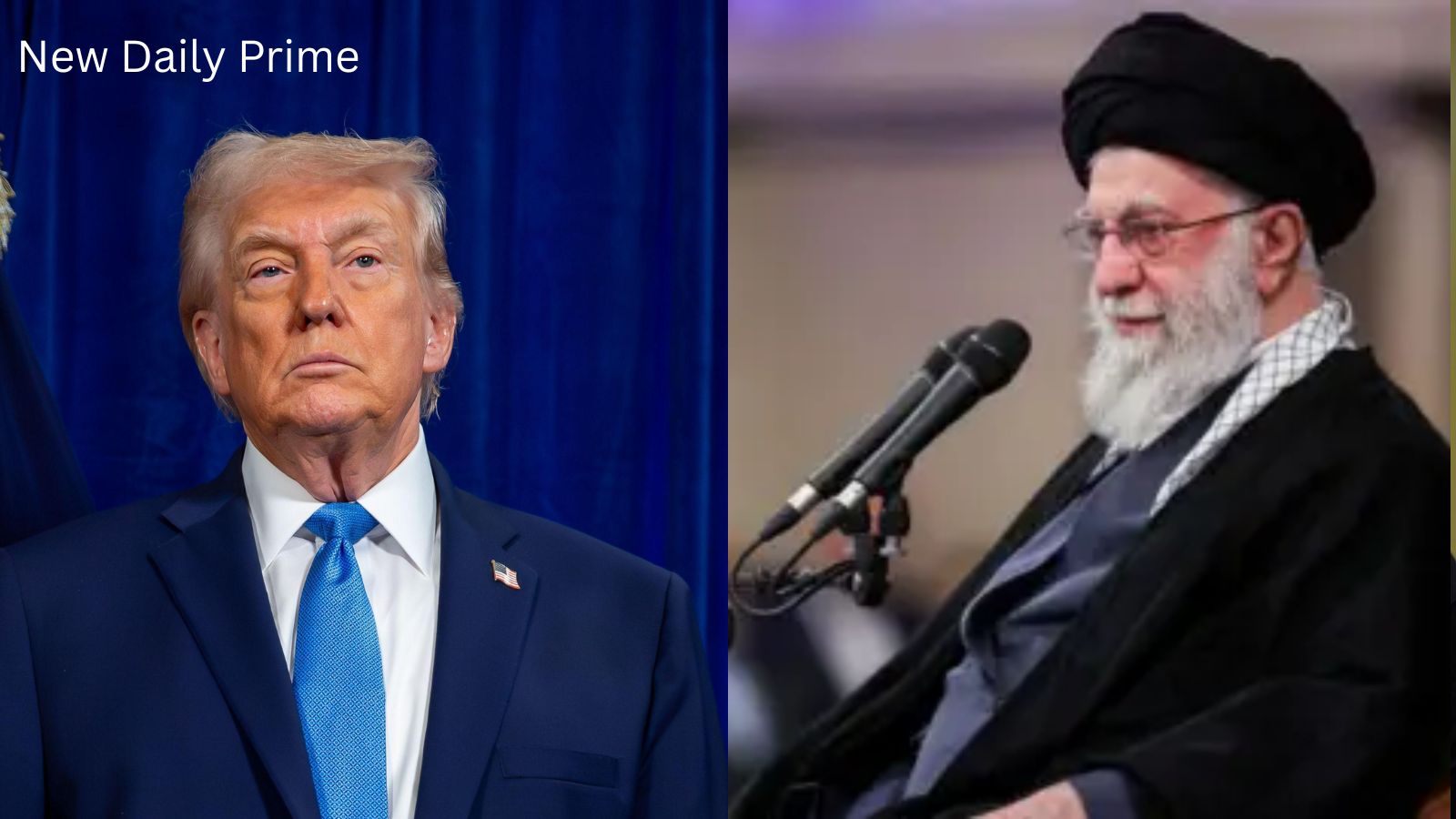
Washington and Tehran edged closer to a dangerous confrontation over the weekend as President Donald Trump was warned by senior military officials that the United States armed forces require more time to prepare for any potential strikes against Iran. The warning came amid escalating protests across Iran and growing speculation about imminent US military action in the Middle East.
Concerns about a possible strike intensified on Saturday evening after evidence emerged that two American C-17A military transport aircraft departed from Germany and appeared to be heading toward the Middle East. While the Pentagon has not confirmed the mission, the movements fuelled speculation that Washington is positioning assets for a potential escalation.
However, US military commanders in the region have reportedly advised caution. According to officials briefed on the matter, commanders stressed the need to “consolidate US military positions and prepare defences” before launching any strikes that could provoke swift and wide-ranging retaliation from Tehran or its allies.
Read related Story from New Daily Prime:
Trump says he is ‘ready to strike Iran’ to force regime change
Uncertainty deepens in Iran as protesters defy clerical rule
Those warnings appear well-founded. A former commander of Iran’s powerful Islamic Revolutionary Guard Corps (IRGC) issued a stark threat, declaring that any attack on Iran would result in immediate retaliation. “Let us be clear: in the case of an attack on Iran, the occupied territories [Israel] as well as all US bases and ships will be our legitimate targets,” he said, underlining the regional risks of a direct military confrontation.
Despite these risks, President Trump has reportedly been briefed on a range of options, including strikes against non-military targets in Tehran or elements of Iran’s internal security apparatus. The New York Times quoted US officials as cautioning that any military action must be carefully calibrated to avoid uniting the Iranian public behind the regime at a time of internal unrest.
That unrest continues to intensify. On Saturday night, thousands of Iranians again defied a sweeping crackdown, taking to the streets in cities across the country, including Tehran and Mashhad. Videos circulating on social media showed large crowds, burning vehicles and scenes of chaos, even as authorities imposed a near-total internet blackout. According to monitoring group NetBlocks, the shutdown has lasted more than 60 hours, posing “a direct threat to the safety and well-being of Iranians at a key moment for the country’s future.”
Reports indicate that hundreds may have been killed by security forces over the past three days, with hospitals overwhelmed by patients suffering gunshot wounds.
International reactions are sharpening. In the UK, Conservative politician Kemi Badenoch suggested she could support Western military intervention to aid protesters. Speaking to the BBC, she described Iran as a hostile state, saying: “It’s tried to kill people on our soil, it is an enemy.” While stressing that intervention remained hypothetical, she added that any decision must be based on national interest.
As protests rage and military options are debated behind closed doors, the coming days may prove decisive for Iran and for a region already braced for further instability.
For details, visit, www.newdailyprime.news

