


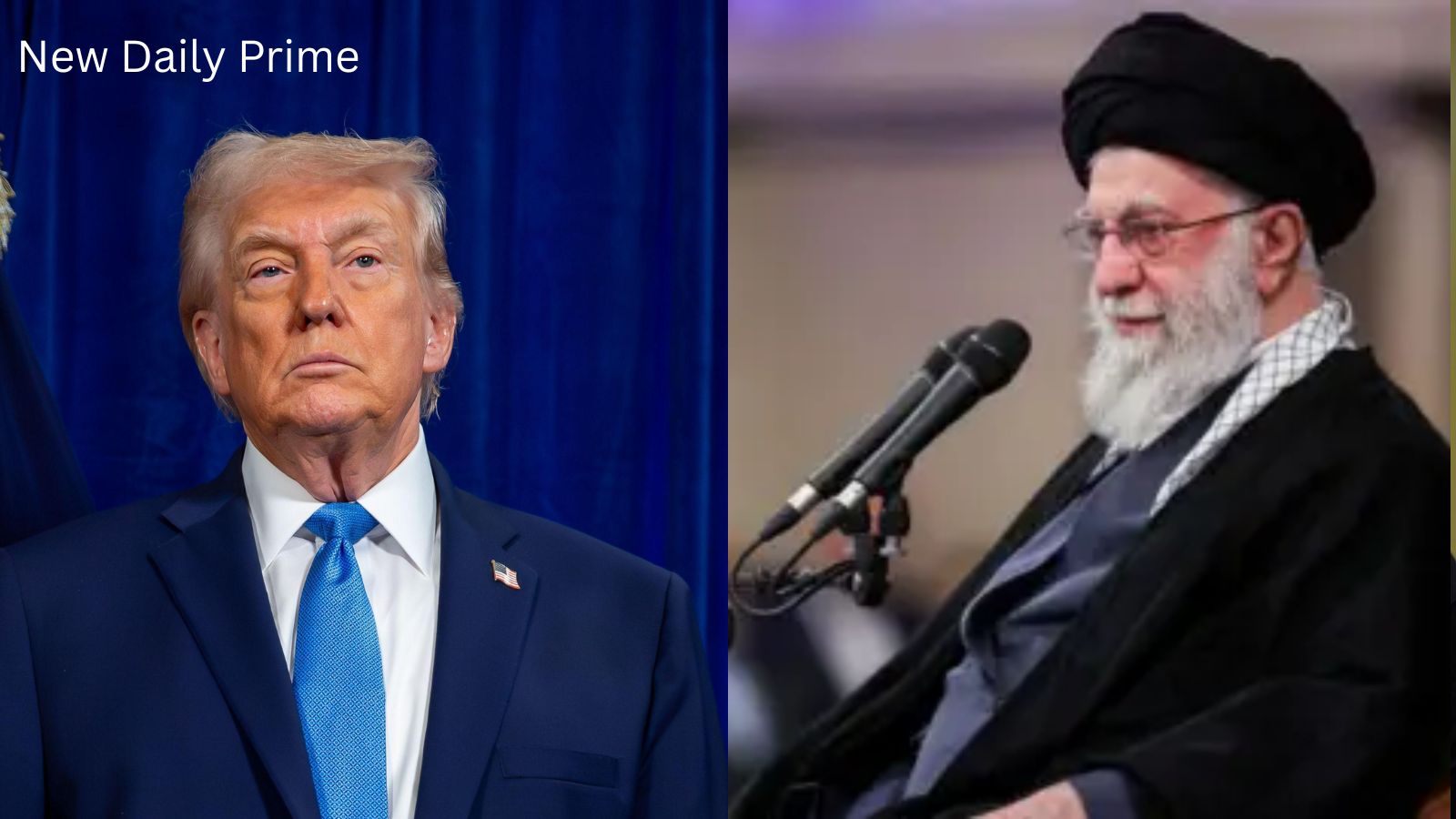
Satellite imagery from Planet Labs PBC has confirmed renewed activity at Iran’s key nuclear facilities in Natanz and Isfahan, where authorities are constructing protective structures to obscure damage from last year’s U.S.-Israeli airstrikes and limit international monitoring. The developments come as the U.S. warns Tehran against “unsafe” naval drills in the Strait of Hormuz, while President Donald Trump threatens military action if Iran fails to negotiate a new deal.
High-resolution images show roofs have been built over two destroyed buildings at Natanz and Isfahan—the first visible activity at the sites since the June 2025 “12-day war” that targeted Iran’s nuclear infrastructure. Experts say the structures are not for reconstruction but to block satellite surveillance, allowing Iran to assess surviving assets such as stockpiles of highly enriched uranium (HEU).
“These coverings are likely part of efforts to salvage equipment or remove debris without external oversight,” said Sarah Burkhard of the Institute for Science and International Security (ISIS). At Isfahan, satellite data from January 29 shows Iran has re-buried tunnel entrances with fresh soil, reinforcing concrete structures to shield storage facilities holding an estimated 408 kg of HEU. The northern tunnel entrance remains open, leading analysts to speculate assets may be moved deeper underground.
The International Atomic Energy Agency (IAEA) has not been granted access to the sites since the strikes, leaving inspectors reliant on satellite imagery. IAEA Director-General Rafael Mariano Grossi previously warned verification of Iran’s nuclear stocks is “long overdue,” noting uncertainty over whether material has been diverted to other areas.
Beyond surface repairs, Iran is pushing forward with a deep underground facility at Pickaxe Mountain (Kuh-e Kolang Gaz Lā), south of Natanz. Satellite images show excavation work has intensified, with spoil piles growing in size. Analysts believe the site could reach depths of over 100 meters, designed to withstand bunker-buster munitions.
Activity has also resumed at Taleghan 2 within the Parchin military complex, linked to Iran’s alleged former Amad Plan for nuclear weapons development. A large cylindrical vessel—consistent with high-explosive test chambers—was observed in a new domed building in imagery from November 2025. Iran denies the existence of the Amad Plan and insists its nuclear program is purely peaceful, citing a religious decree from Supreme Leader Ali Khamenei.
The nuclear activity coincides with mounting pressure from the U.S., which deployed the USS Abraham Lincoln carrier strike group to the Middle East this month. On January 31, U.S. Central Command (CENTCOM) warned Iran against “unsafe actions” ahead of planned live-fire naval drills in the Strait of Hormuz, a corridor handling 20% of global oil supply.
“Unprofessional behavior near U.S. forces or commercial vessels increases risks of escalation,” CENTCOM stated, citing concerns over low-altitude drone overflights and high-speed boat approaches. President Trump has called for “unconditional negotiations” while threatening “far worse” strikes if Iran refuses to curb its nuclear program.
Iranian Foreign Minister Abbas Araghchi responded that talks would only proceed under “fair and noncoercive conditions,” adding that any attack would trigger a “swift and comprehensive” response. The regime also faces widespread domestic unrest: protests over economic hardship and political repression have left an estimated 6,000 dead, according to the Human Rights Activists News Agency.
Western powers, including France, Germany, and the UK, have condemned Iran’s nuclear escalation, while regional states such as Egypt are leading diplomatic efforts to de-escalate tensions. Analysts warn that Iran’s focus on hardening infrastructure and limiting transparency risks creating a “de facto black box” around its nuclear activities, raising fears of a new crisis in the Middle East.
“The combination of concealed salvage work, underground expansion, and rising military tensions creates a dangerous mix,” said Andrea Stricker of the Foundation for Defense of Democracies. “Without renewed IAEA access, the international community will struggle to verify Iran’s intentions.”
For more details , visit www.newdailyprime.news

