


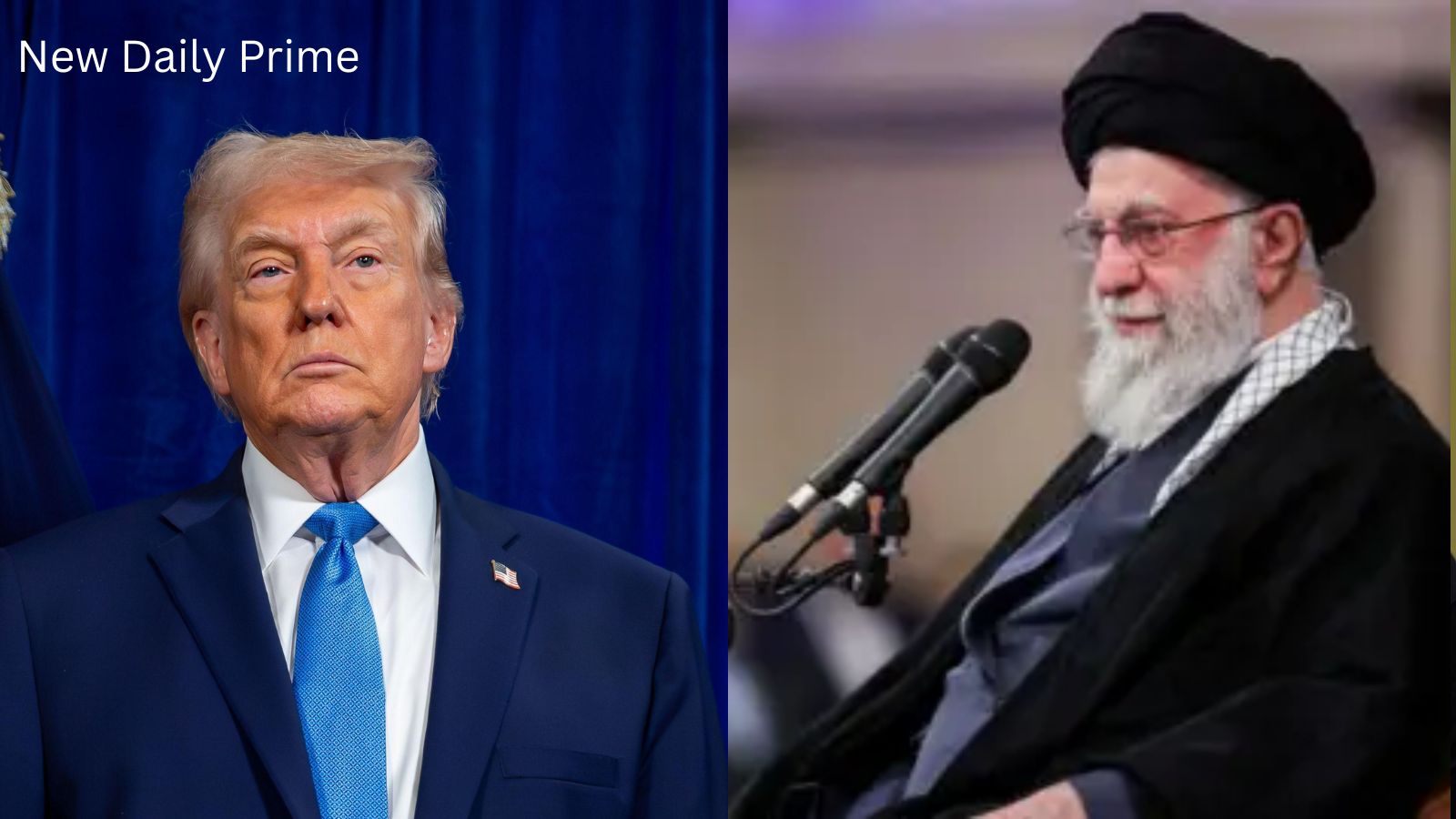
Tehran says it is “ready for war but also dialogue” as demonstrations spread nationwide and the death toll climbs past 500
Iran has signaled a willingness to negotiate with the Trump administration after the U.S. president warned that Tehran was “crossing a line” by using lethal force against protesters, even as nationwide demonstrations intensified and the reported death toll surged beyond 500.
President Donald Trump said Monday that Iran had reached out to Washington seeking talks, following his public threats of potential military action in response to what he described as an increasingly violent crackdown on civilians.
“Iran called. They want to negotiate,” Mr. Trump told reporters aboard Air Force One. “The meeting is being set up, but we may have to act because of what’s happening before the meeting.”
Read related news from New Daily Prime:Iran blames US, Israel as UN sanctions loom
Human rights organizations say at least 500 people have been killed since protests erupted late last month, initially over economic grievances but rapidly evolving into calls for an end to the Islamic Republic itself. More than 10,000 people have reportedly been arrested, though the true figures remain difficult to verify amid a near-total internet blackout imposed by Iranian authorities.
Iran’s foreign minister, Abbas Araghchi, said Monday that the government had brought the unrest “under total control,” accusing unnamed “terrorist elements” of exploiting the protests. Yet videos posted on social media — before access was cut — showed tens of thousands of Iranians marching through major cities, chanting anti-government slogans, setting fires, and clashing with security forces.
In Tehran, crowds were seen clapping and chanting late into the night. In the northeastern city of Mashhad, smoke filled the air as explosions echoed through the streets.
Rising Tensions, Military Warnings
The escalating unrest has brought Washington and Tehran closer to a potentially dangerous confrontation. Mr. Trump said he was receiving “hourly updates” on the situation and confirmed that the U.S. military was reviewing “very strong options,” including cyber operations and direct strikes, possibly in coordination with Israel.
“If they retaliate,” he warned, “we will hit them at levels they’ve never been hit before.”
Senior U.S. military commanders, however, have reportedly urged caution. According to officials briefed on internal discussions, Pentagon leaders warned the president that U.S. forces would require additional time to consolidate positions and strengthen defenses before any strike, given the risk of rapid retaliation across the region.
Those concerns intensified over the weekend after two U.S. C-17 military transport aircraft departed from Germany and appeared to head toward the Middle East, fueling speculation that Washington was positioning assets for a possible escalation. The Pentagon declined to comment on the aircraft movements.
Iranian officials responded with stark warnings. Mohammad Baqer Qalibaf, the speaker of Iran’s parliament, cautioned the United States against what he called a “miscalculation.”
“Let us be clear,” he said. “In the case of an attack on Iran, the occupied territories [Israel], as well as all U.S. bases and ships, will be our legitimate targets.”
A former commander of Iran’s Islamic Revolutionary Guard Corps echoed that threat, underscoring the risk of a regional conflict involving U.S. allies and Iranian proxy forces.
Diplomacy Amid Bloodshed
Despite the mounting tensions, Mr. Araghchi said Iran remained open to talks. “We are ready for war but also for dialogue,” he said, though he offered no specifics on what Tehran might propose in exchange for de-escalation.
American officials expect that any negotiations would likely involve Iran’s nuclear program, long a central point of contention between the two countries. Mr. Trump did not specify whether Tehran had offered concessions.
Israeli officials said the country had been placed on high alert amid concerns that U.S. military action could prompt Iranian retaliation. Israel and the United States carried out joint strikes on Iranian nuclear facilities in June, prompting Tehran to respond with missile attacks on Israel and a U.S. base in Qatar.
Over the weekend, Israeli Prime Minister Benjamin Netanyahu spoke by phone with U.S. Secretary of State Marco Rubio to discuss the unfolding crisis, according to officials familiar with the call.
International Condemnation Grows
Global reaction to Iran’s crackdown has sharpened. Germany’s chancellor, Friedrich Merz, condemned what he called the regime’s “disproportionate and brutal violence,” describing it as “a sign of weakness, not strength.”
In Britain, Iran summoned the country’s ambassador after Foreign Secretary Yvette Cooper criticized Tehran’s response to the protests and defended the rights of demonstrators, particularly young women.
“Free speech and peaceful assembly are fundamental rights,” Ms. Cooper said. “They should never come with the threat of violence or reprisals.”
In the United States, some lawmakers and commentators have openly debated whether Western intervention could help protesters. Others have warned that military action could backfire by uniting Iranians behind the regime at a moment of profound internal dissent.
With internet access largely severed for more than 60 hours, monitoring groups warn that the blackout itself poses a grave risk to civilians, preventing people from seeking help or documenting abuses. Hospitals in several cities are reported to be overwhelmed with patients suffering gunshot wounds.
As protests continue into a third week — the bloodiest unrest Iran has seen since 2019 — the coming days may prove decisive not only for the future of Iran’s leadership, but also for stability across an already volatile Middle East.
Whether diplomacy can gain traction before violence escalates further remains an open and urgent question.
For more details, visit www.newdailyprime.news

