


The leader of Burkina Faso’s military government has told citizens to abandon expectations of democratic rule, marking a decisive shift in the country’s political direction.
The development reflects broader trends across the world
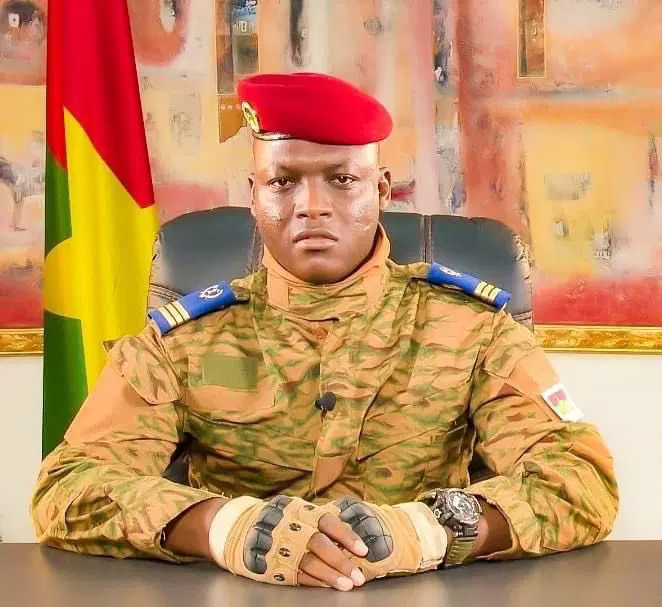
Captain Ibrahim Traoré, who seized power in a coup in September 2022, said people should “forget about the issue of democracy” during an interview broadcast on national television. Speaking to the state broadcaster Radiodiffusion Télévision du Burkina (RTB), he made clear that elections are no longer a priority.
“We’re not even talking about elections, first of all,” he said. “People need to forget about the issue of democracy. Democracy isn’t for us.”
Read related news:
Burkina Faso dissolves political parties in state restructuring move
Burkina Faso: NAF confirms release of detained C-130 aircraft, resumes ferry mission to Portugal
Democracy has never developed a country; Burkina faso’s president
The remarks confirm what many observers had already suspected: the country’s transition back to civilian rule has effectively been shelved. Burkina Faso had initially pledged to restore democratic governance following a military takeover in January 2022. That plan was due to end in July 2024.
However, the junta later extended the transition period by five years, allowing Traoré to remain in power until at least 2029. The move has drawn criticism from international bodies, including the United Nations, which has urged authorities to reverse recent political restrictions.

Ibrahim Traoré
In February, the junta-led parliament dissolved all political parties. Their activities had already been suspended since Traoré’s takeover. The government also scrapped the country’s electoral commission last year, removing a key institution needed to organise any future vote.
These actions have significantly narrowed political space in the West African nation. Critics say dissent is being silenced, while civil society groups face growing pressure.
Burkina Faso has been battling a worsening security crisis for nearly a decade. Armed groups linked to extremist networks control large parts of the country, and attacks have killed thousands of people and displaced millions. The junta has repeatedly argued that national security must come before elections.
Traoré has positioned himself as a leader focused on regaining territory and restoring order. His government has shifted alliances, moving away from former colonial power France and strengthening ties with other partners.
Relations with Western countries have deteriorated. Authorities have expelled foreign troops and restricted international media. Several global news organisations have been suspended, and some journalists have been forced to leave the country.

Supporters of the junta argue that strong leadership is needed to confront the insurgency. They say previous civilian governments failed to stop the violence.
But opponents warn that abandoning democratic processes risks deepening instability. Without political accountability, they argue, the government may struggle to maintain legitimacy in the long term.
For now, Traoré’s message is clear. Elections are off the table, political parties are dismantled, and democratic rule is no longer the stated goal.
The direction Burkina Faso takes next may depend less on ballots and more on the battlefield, as the country continues to face one of the region’s most severe security crises.

