


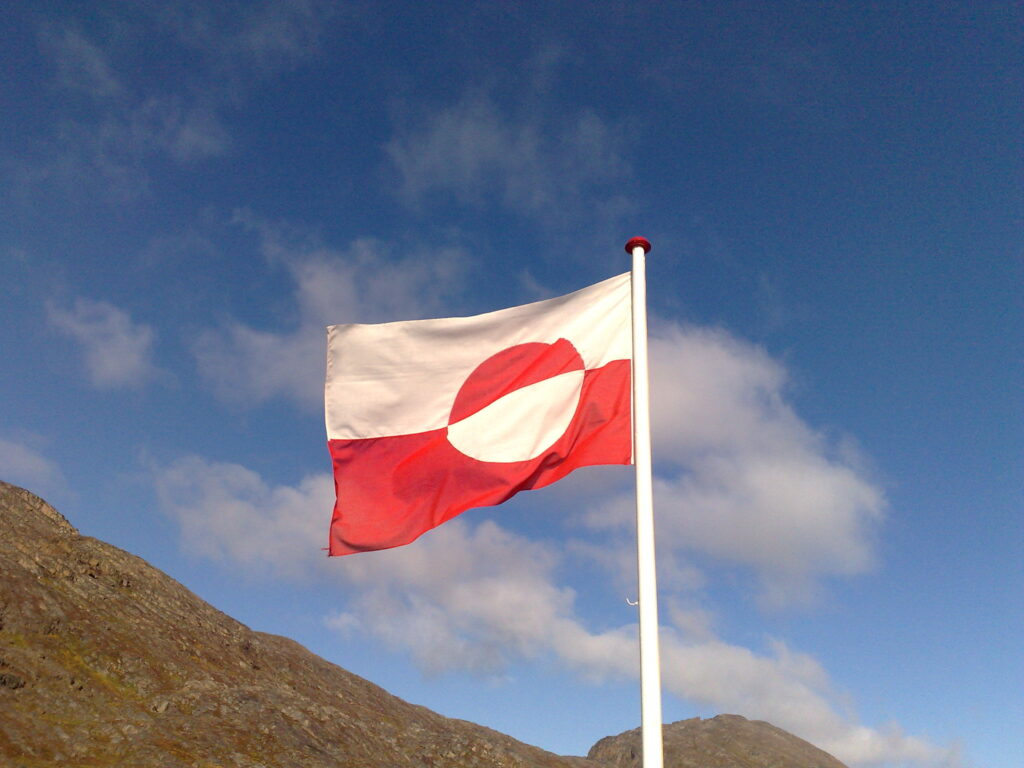
Senior European diplomats are preparing for emergency talks after Donald Trump threatened to impose tariffs on eight European countries over their support for Greenland.
The move has triggered sharp reactions across the continent, with leaders warning that the dispute risks damaging transatlantic relations and destabilising Nato.
Italy’s prime minister, Giorgia Meloni, described the proposed tariffs as a “mistake”, while the Dutch foreign minister, David van Weel, accused the US president of using “blackmail” against allies.
France’s president, Emmanuel Macron, is expected to press the European Union to activate its anti-coercion instrument if Washington follows through on the tariffs, according to Agence France Presse. The mechanism, which has never been used, allows the EU to impose punitive economic measures on countries seeking to force policy changes through economic pressure.
Ambassadors from the EU’s 27 member states are due to meet later on Sunday for an emergency session. The talks follow Trump’s announcement that Denmark, Norway, Sweden, France, Germany, the UK, the Netherlands and Finland would face tariffs of 10% from 1 February, rising to 25% from 1 June.
Trump accused the countries of playing “a very dangerous game” after they deployed troops to Greenland in recent days. In a post on Truth Social, he said the tariffs would remain in place “until such time as a Deal is reached for the Complete and Total purchase of Greenland”.
Greenland is a largely autonomous territory within the Kingdom of Denmark.
The escalating row has cast doubt over the EU–US trade deal agreed last August. The agreement, which aimed to cut EU tariffs on some US goods to zero, was expected to be ratified by February. However, Manfred Weber, leader of the European parliament’s largest group, said approval was no longer possible “at this stage”.
Macron said on Saturday that Europe would not be intimidated into changing its stance on Greenland. “No intimidation or threat will influence us, neither in Ukraine, nor in Greenland, nor anywhere else,” he said.
In a joint statement, the European Commission president, Ursula von der Leyen, and the European Council president, António Costa, warned that tariffs would “undermine transatlantic relations and risk a dangerous downward spiral”. The pair were in Paraguay at the time, signing a trade deal with Mercosur countries, and are understood to have been taken by surprise by Trump’s remarks.
Meloni, one of Trump’s closest allies in Europe, said she had spoken directly to him. Speaking to journalists in Seoul, she said she had told him what she thought and reiterated that the tariffs were a mistake.
Finland’s president, Alexander Stubb, said European countries were united behind Denmark and Greenland. “Tariffs would undermine the transatlantic relationship and risk a dangerous downward spiral,” he wrote on X.
Spain’s prime minister, Pedro Sánchez, warned that any US invasion of Greenland would benefit Vladimir Putin by legitimising Russia’s actions in Ukraine and could mark the “death knell for Nato”.
The EU’s foreign policy chief, Kaja Kallas, said the dispute risked distracting from efforts to support Ukraine. “China and Russia must be having a field day,” she wrote, adding that Greenland’s security could be addressed within Nato.
Denmark’s foreign minister, Lars Løkke Rasmussen, said Trump’s announcement came as a surprise following what he described as constructive talks in Washington with the US vice-president, JD Vance, and secretary of state, Marco Rubio. He said the increased military presence in Greenland was intended to strengthen Arctic security.
Trump has criticised Denmark for failing to defend Greenland adequately, while questioning the motives of European allies sending troops to the territory. He claimed China and Russia were seeking control of the island and mocked Denmark’s military capabilities.
Denmark announced last week that it would increase its own military presence in Greenland. Troops from the other seven countries have been on short scoping missions aimed at demonstrating Europe’s commitment to Arctic security.
Some officials have warned that the dispute represents a serious threat to the Nato alliance. Robert Pszczel, a former Nato official, said the use of economic pressure against allies violated the spirit of the North Atlantic Treaty.
The chair of the European parliament’s trade committee, Bernd Lange, said the EU should activate its anti-coercion instrument in response. He accused Trump of using trade as a political weapon and warned that the bloc could not continue with “business as usual”.

