


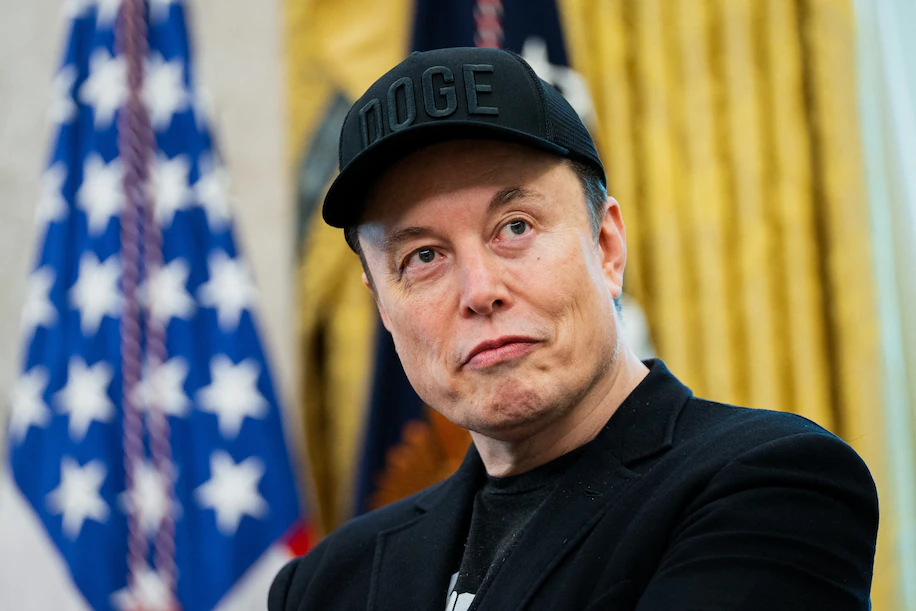
Elon Musk has admitted that the sweeping federal job-cutting initiative he led during Donald Trump’s second term, known as the Department of Government Efficiency (Doge), was only “a little bit successful” and confirmed he would not take on the role again.
Speaking on a podcast hosted by Katie Miller, a right-wing commentator and former Doge adviser, Musk said he would have been “better off running his companies” than heading the controversial programme. Miller is married to Stephen Miller, Trump’s deputy chief of staff and a prominent figure in the administration’s hardline immigration policies.
Asked whether Doge had achieved its aims, Musk replied: “We were a little bit successful. We were somewhat successful.”
The initiative caused widespread disruption across Washington, with more than 200,000 federal workers laid off and around 75,000 accepting buyouts by May. Musk’s external team, largely made up of young recruits, claimed to have saved billions in public spending. However, experts said the lack of transparent accounting made it impossible to verify such claims, and estimates suggested the savings were far lower than those touted by Musk and Trump.
Musk eventually stepped back from Doge, which was quietly wound down before being formally disbanded last month, eight months short of its mandate.
The Tesla chief executive, who also controls the social media platform X and runs aerospace company SpaceX, reflected that his involvement in government had come at a cost. Tesla’s shares lost nearly half their value between January, when Doge began, and March, though they have since recovered. Musk also pointed to incidents of vandalism and politically motivated attacks on Tesla dealerships, including one in Oregon where shots were fired.
Critics on the political left accused Musk of undermining government institutions in pursuit of Trump’s agenda of bureaucratic efficiency, which drew heavily on the Heritage Foundation’s Project 2025. Musk acknowledged that Doge was ideologically opposed to liberal initiatives such as refugee services and transgender rights.
Despite the controversy, Musk insisted he was not disillusioned by his time as a special government employee, though he conceded he would not repeat the experience. “I think instead of doing Doge, I would have basically worked on my companies,” he told Miller. “And they wouldn’t have been burning the cars.”
In February, the Tesla boss appeared at a conservative conference wielding a chainsaw to symbolise efforts to cut billions from the $7 trillion federal budget. Reflecting on the programme, he said: “We stopped a lot of funding that really just made no sense, that was just entirely wasteful.”
Pressed on whether he would return to such a role, Musk was unequivocal: “No, I don’t think so. Knowing what I know now.”

