


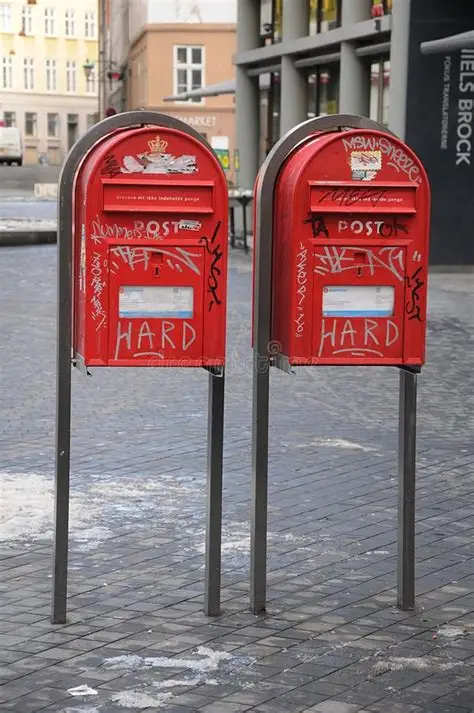
Denmark’s postal service will deliver its final letter on 30 December, bringing to an end more than four centuries of letter delivery.
PostNord, the company formed in 2009 from the merger of the Swedish and Danish postal services, announced earlier this year that it would stop delivering letters in Denmark. The decision will lead to 1,500 job losses and the removal of 1,500 of the country’s iconic red postboxes.
The company cited the “increasing digitalisation” of Danish society, describing Denmark as one of the most digitalised countries in the world. Demand for letters, it said, has fallen sharply, while online shopping and parcel delivery continue to grow.
In the past 25 years, letter volumes in Denmark have dropped by more than 90%, making the service unprofitable. PostNord will now focus entirely on parcel delivery in the country, though it will continue to deliver letters in Sweden.
The dismantling of Denmark’s postboxes has already begun. When 1,000 of them were put up for sale earlier this month, they sold out within three hours. Prices ranged from 1,500 to 2,000 Danish kroner, depending on condition. A further 200 postboxes are due to be auctioned in January.
PostNord has also said it will refund unused Danish stamps for a limited period.
Letters will not disappear entirely from Denmark. The delivery company Dao, which already operates letter services, will take on a larger role from 1 January. Dao plans to increase its annual letter deliveries from around 30 million to 80 million next year.
However, customers will need to post letters at Dao shops or pay extra for home collection. Postage will be purchased online or through an app.
By law, Danes must retain the ability to send letters. If Dao were to withdraw from the market, the government would be required to appoint another provider.
A source close to the transport ministry said the change would make no “practical difference”, arguing that letters would still be sent and received, just through a different company. Any significance, the source said, was largely “sentimental”.
Others disagree. Magnus Restofte, director of the Enigma Museum of Post, Telephony and Communication in Copenhagen, said the end of the national letter service marked a point of no return.
“If digital communications were no longer possible, it would be very difficult to go back to physical post,” he said. “We can’t return to what it was.”
Denmark’s reliance on digital communication is reinforced by MitID, the national digital ID system used for banking, official documents and medical appointments. Under the system, official correspondence from authorities is sent automatically via digital post.
Although citizens can opt out and receive physical mail instead, only 5% have done so. Around 97% of Danes aged 15 and over are enrolled in MitID.
Restofte said the public response had been largely pragmatic, as most people rarely receive physical letters. Some younger Danes, he noted, have never sent one at all.
Yet there are signs of renewed interest. Research by Dao suggests that people aged 18 to 34 send two to three times as many letters as other age groups. Trend researcher Mads Arlien-Søborg attributes this to young people seeking relief from digital overload, turning letter-writing into a deliberate choice.
The rarity of physical letters, Restofte added, has increased their emotional value. “When you receive a handwritten letter, you know someone has spent time and money on it,” he said.
Announcing the decision earlier this year, Kim Pedersen, deputy chief executive of PostNord Denmark, acknowledged its historical weight.
“We have been the Danish postal service for 400 years, so this is a difficult decision,” he said. “But the decline in letters is so significant that the market is no longer viable.”
The Danish postal service has delivered letters since 1624. On 30 December, that chapter of the country’s history will quietly come to a close.

