


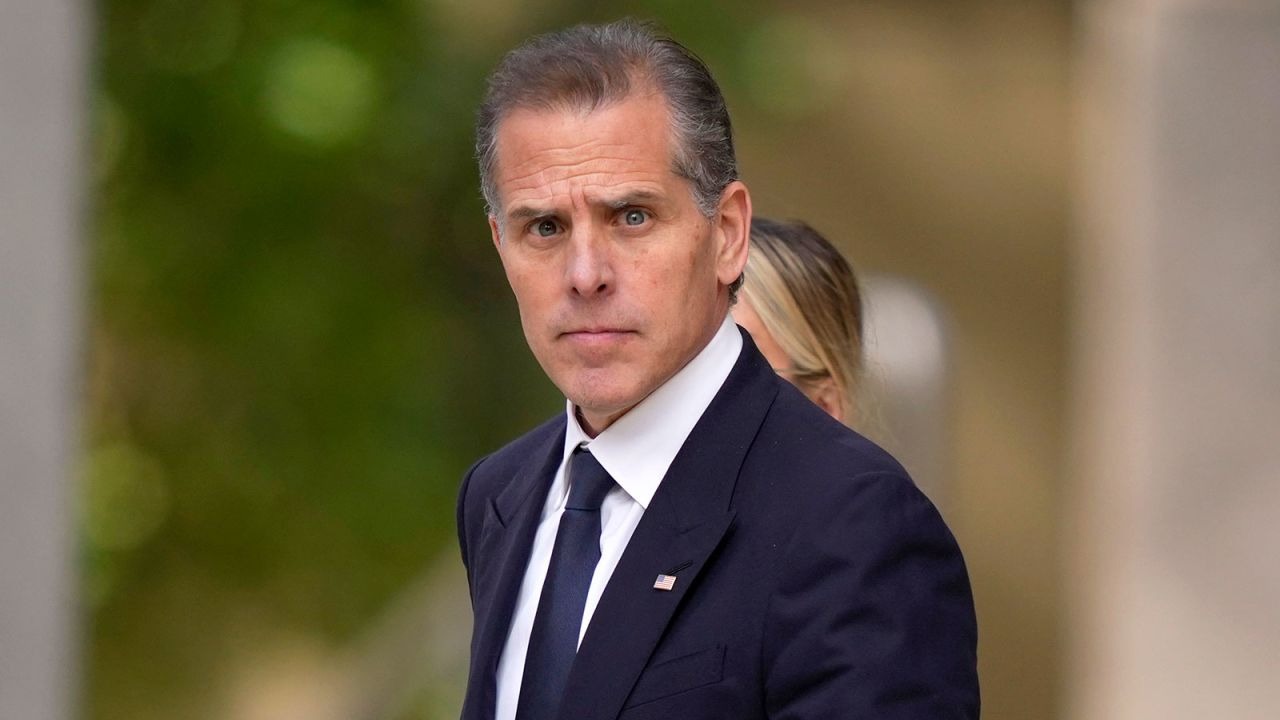
President Joe Biden has issued a full and unconditional pardon to his son, Hunter Biden, bringing an abrupt end to a long-running federal case that had shadowed his presidency and triggered intense political debate.
Read more breaking stories from our latest news
The decision, announced on Sunday, comes just weeks before Biden leaves office and marks a clear reversal of his earlier public stance that he would not intervene in his son’s legal troubles.
“Today, I signed a pardon for my son Hunter,” the president said in a statement, describing the clemency as “full and unconditional.”
Read related news:
Biden warns Trump will try to ‘steal’ US midterm elections
Biden slams Trump, labels admistration to erase history, erase equality
Hunter Biden says exhaustion led to fathers debate collapse
Pardon Ends Criminal Cases Immediately
The sweeping pardon effectively halts all legal proceedings against Hunter Biden, who had been awaiting sentencing this month on federal tax and gun convictions.
Court hearings scheduled for December are now expected to be cancelled. Legal experts say the pardon eliminates any possibility of prison time and permanently closes the cases.
The clemency also extends beyond the current charges. It covers any potential federal offences committed between January 1, 2014, and December 1, 2024 — a period that includes Hunter Biden’s controversial business dealings abroad, notably his role at Ukrainian energy firm Burisma.
No Power for Trump to Reverse Decision
The move carries lasting legal weight. Under US law, presidential pardons are final and cannot be overturned — meaning President-elect Donald Trump will have no authority to rescind it once he returns to office.
Trump reacted sharply, calling the pardon “an abuse and miscarriage of justice” in a social media post, while also referencing those involved in the January 6 Capitol riot.
Break from Earlier Promise
The pardon stands in contrast to repeated assurances from Biden and senior White House officials that he would not interfere in the justice process.
Even after withdrawing from the 2024 presidential race and following Trump’s election victory, the president had maintained that he would not pardon or commute his son’s sentence.
Critics argue the decision undermines public trust, while supporters say it reflects a personal and political judgement shaped by years of scrutiny.
President Cites ‘Unfair Prosecution’
In his statement, Biden defended the move, claiming his son had been “selectively and unfairly prosecuted.”
He argued that similar cases are rarely brought to trial, especially when linked to addiction-related offences or resolved tax issues.
“Raw politics has infected this process,” he said, adding that the charges were driven by political opponents seeking to damage him.
However, federal judges previously rejected claims of selective prosecution, with one describing the argument as unsupported by evidence.
A Case Rooted in Addiction and Scrutiny
Hunter Biden’s legal troubles stemmed from two separate cases. He was convicted earlier this year of illegally purchasing and possessing a firearm while struggling with drug addiction. He later pleaded guilty to multiple tax offences involving more than $1.4 million in unpaid taxes.
The investigations were led by special counsel David Weiss, originally appointed during the Trump administration, and spanned more than six years.
Throughout the process, Hunter Biden acknowledged his past struggles with addiction, which he detailed in his memoir, and said he had taken responsibility for his actions.
Political and Personal Decision
Sources close to the White House said the president made his decision after the Thanksgiving holiday, concluding that his son had endured enough.
Officials indicated Biden believed his political opponents were using the case to attack him indirectly, while also targeting his son during recovery from addiction.
The president described the decision as one he “wrestled” with before ultimately acting.
A Controversial Use of Presidential Power
The pardon places Biden among a number of outgoing presidents who have used clemency powers to benefit family members. Former President Bill Clinton pardoned his half-brother, while Trump granted clemency to the father of his son-in-law.
Legal scholars remain divided. Some view the decision as a legitimate exercise of constitutional authority, while others argue it sets a troubling precedent.
Hunter Biden Responds
In a statement, Hunter Biden said he accepted the pardon and expressed gratitude, while acknowledging past mistakes.
“I have admitted and taken responsibility for my actions during the darkest days of my addiction,” he said, adding that he intends to focus on helping others facing similar struggles.
End of a Long-Running Saga
The pardon brings closure to a case that has dominated headlines for years and played a significant role in US political discourse.
As Joe Biden prepares to leave office, the decision underscores the complex intersection of law, politics and personal loyalty — and ensures the debate over presidential clemency will continue well beyond his presidency.

