


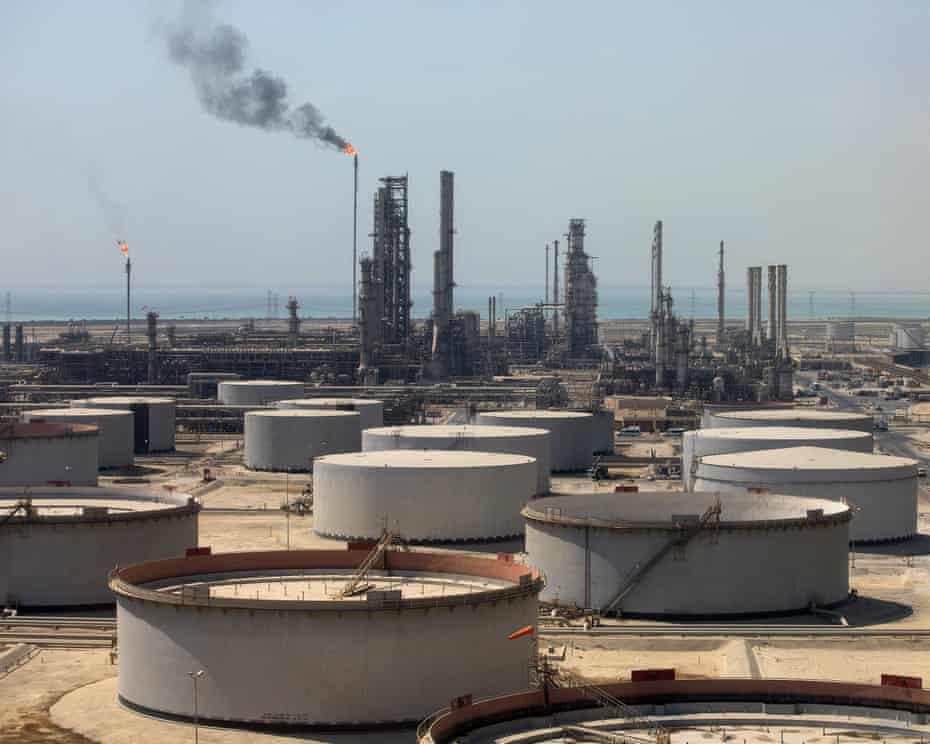
Just 32 fossil fuel companies were responsible for half of the global carbon dioxide emissions driving the climate crisis in 2024, according to a new report. The figure is down from 36 companies a year earlier, highlighting a growing concentration of emissions among a small group of producers.
Saudi Aramco emerged as the largest state-owned polluter, while ExxonMobil was the biggest investor-owned company on the list. Campaigners accused leading fossil fuel firms of obstructing climate action but said the data was increasingly being used to hold them to account.
Read related news from New Daily Prime: Nigeria unveils blueprint for clean transition at COP30
The findings come from the Carbon Majors report, which shows that state-owned producers accounted for 17 of the top 20 emitters. The authors said this underlined the political challenges of tackling global heating.
All 17 state-controlled companies are owned by countries that opposed a proposed global fossil fuel phaseout at the Cop30 UN climate summit in December. Those countries include Saudi Arabia, Russia, China, Iran, the United Arab Emirates and India. More than 80 other nations supported the phaseout proposal.
Saudi Aramco was responsible for 1.7bn tonnes of carbon dioxide in 2024, much of it linked to exported oil. If it were a country, it would rank as the world’s fifth-largest carbon polluter, just behind Russia.
ExxonMobil’s fossil fuel production resulted in 610m tonnes of carbon dioxide emissions, placing it ninth globally, ahead of South Korea.
Global emissions have continued to rise each year since a brief drop during the Covid pandemic, driven by sustained fossil fuel use. To meet the Paris agreement target of limiting global heating to 1.5C, emissions would need to fall by 45% by 2030, a goal now widely viewed as unattainable.
Experts say limiting the overshoot remains crucial, as every additional fraction of a degree increases the severity of climate impacts on communities worldwide.
Emmett Connaire of the thinktank InfluenceMap, who led the report, said emissions were becoming increasingly concentrated among a shrinking number of producers, even as overall fossil fuel production continued to grow.
The report follows a series of major mergers in the oil sector, including ExxonMobil’s acquisition of Pioneer Natural Resources and Chevron’s takeover of Hess.
Tzeporah Berman, of the Fossil Fuel Non-Proliferation Treaty Initiative, said the analysis showed a small group of corporations dominating global emissions while undermining government efforts to tackle climate change.
She said a meeting in April in Colombia, involving the 80 countries backing a fossil fuel phaseout, would be a critical step towards international cooperation on ending fossil fuel expansion and ensuring a just transition away from coal, oil and gas.
Christiana Figueres, a former UN climate chief, said the data showed major emitters were “on the wrong side of history”, even as investment in clean energy and electrification now far outpaces spending on fossil fuels.
She added that emissions data was becoming a powerful tool for those pushing for science-based solutions and greater corporate accountability.
The Carbon Majors database has been used in recent research linking emissions from major fossil fuel companies to dozens of deadly heatwaves that would otherwise have been highly unlikely.
It has also supported studies attributing trillions of dollars in economic losses from extreme heat to individual companies, as well as legal cases such as Lliuya v RWE, a landmark climate lawsuit in Germany.
The data has further informed climate “superfund” laws in New York and Vermont, which require large fossil fuel companies to help pay for measures protecting communities from climate impacts including flooding and extreme heat.
Rebecca Brown, head of the Center for International Environmental Law, said courts around the world were increasingly recognising the link between fossil fuel production and climate damage.
She said the growing body of evidence made clear that major polluters must phase out fossil fuels and contribute to the costs of addressing the harm they have caused.

