


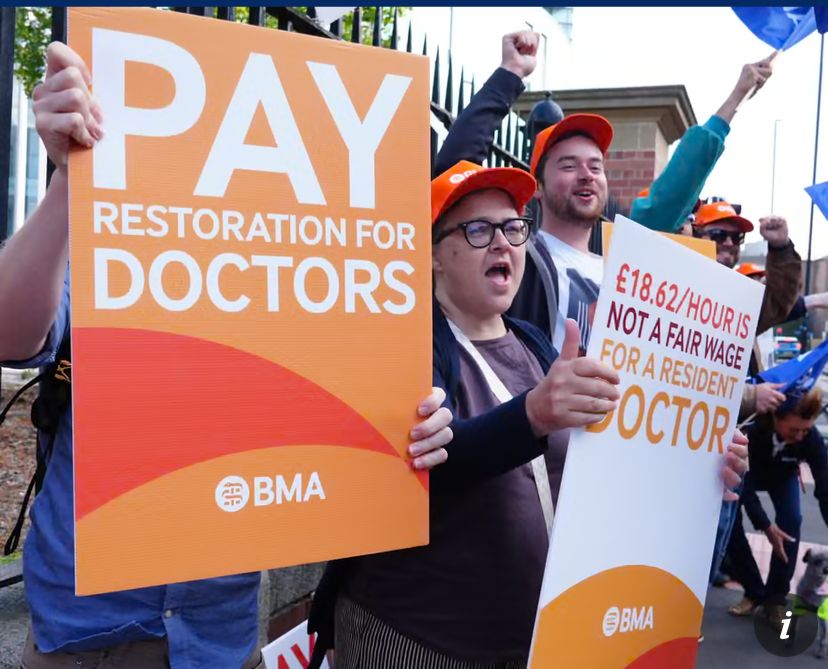
Resident doctors in England will proceed with a five-day strike from Wednesday after voting to reject the government’s latest proposal aimed at ending the long-running pay and jobs dispute.
Doctors, previously known as junior doctors, voted against the deal in a survey conducted by the British Medical Association (BMA). The offer, put forward last week by Health Secretary Wes Streeting, focused on expanding training places to allow earlier access to specialist roles but did not include a pay rise for the current financial year.
The proposal was rejected by 83% of those who voted, with a turnout of 65%. A total of 35,107 of the 55,000 resident doctors represented by the BMA took part in the ballot.
The union described the offer as “too little, too late” to prevent the strike, which is scheduled to begin at 7am on Wednesday and end at 7am next Monday. This will be the 14th strike action taken by resident doctors since the dispute began in March 2023.
Streeting criticised the decision, calling the strike “self-indulgent, irresponsible and dangerous”, warning it would put patients and NHS staff at risk at a time of severe pressure on the health service. He rejected the doctors’ demand for a 26% pay increase, describing it as unrealistic.
The strike comes as hospitals are already struggling with an early winter crisis driven by a surge in severe flu cases. Prime Minister Sir Keir Starmer said it was beyond belief that industrial action would go ahead while the NHS is under such strain.
Dr Jack Fletcher, chair of the BMA’s resident doctors committee, said the vote sent a clear message that the government had missed a chance to resolve the dispute. He accused ministers of repackaging existing jobs as new roles and failing to offer a credible plan for restoring doctors’ pay.
Resident doctors’ salaries have increased by nearly 29% over the past three years, but the union is seeking a further 26% rise over the coming years to restore pay levels to their real-terms value in 2008–09.
Fletcher said the strike could still be avoided if the government engaged meaningfully to address what he described as a growing jobs and pay crisis. He also accused Streeting of using scare tactics and failing to negotiate in good faith.
Streeting countered that the government’s offer would have reduced competition for training posts and improved doctors’ earnings, arguing there was no justification for strike action after recent pay increases.
The rejection of the deal represents a significant setback for efforts to resolve one of the most protracted and contentious industrial disputes facing the NHS.

