


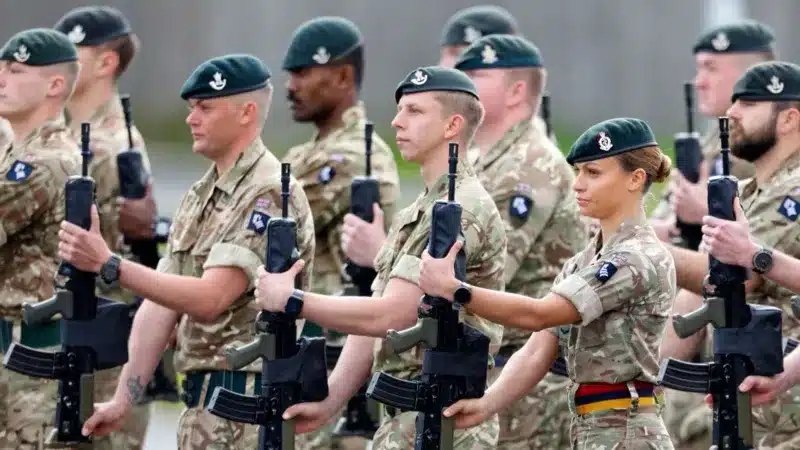
Recruits joining the proposed military gap year programme will not take part in active operations, with course content still being finalised.
Under the plan, Army participants would complete 13 weeks of basic training as part of a two-year placement.
The Royal Navy scheme would run for one year, offering general training for sailors, while proposals for the Royal Air Force are at an earlier stage of development, the i newspaper reported.
The Army already runs a separate gap-year scheme offering 30 placements for young people before, during or just after university, but it is limited to those considering officer training. Fewer than 10 people enrolled in the most recent academic year. The new scheme is expected to be open to a much wider group.
The Ministry of Defence (MoD) said participants would gain leadership, teamwork and problem-solving skills that would benefit them “for life”, regardless of whether they pursue a military career. Officials hope the programme will attract a broader range of people and encourage some to remain in the armed forces long term.
Defence Secretary John Healey said he wanted military opportunities to be part of discussions in households across the UK, particularly as young people consider their future plans. He has previously linked the scheme to the government’s defence strategy, arguing the current security environment demands a new era of defence and a whole-of-society approach to deterrence, including against Russia.
Shadow Defence Secretary James Cartlidge criticised the proposal, saying a scheme involving around 150 participants was barely a pilot and would do little to improve the UK’s military readiness. While acknowledging strengths in the Australian model on which the scheme is based, he argued the limited numbers undermined its impact.
He added that the Conservatives’ defence plans would involve redirecting up to £50bn from climate and science budgets.
The gap-year proposal emerged from the government’s strategic defence review in June and draws inspiration from the Australian Defence Force programme for 17- to 24-year-olds, which has been running for more than a decade.
In 2023, 664 Australians enlisted through the scheme, with just over half later joining the military permanently.
The UK initiative forms part of wider efforts to increase military experience across society, including plans to expand cadet numbers by 30%. Several European countries, including France and Germany, have also reintroduced voluntary national service in response to rising security concerns.
Former Army chief Lord Richard Dannatt said the scheme would have only a limited impact on the threat posed by Russia but could modestly improve recruitment.
He added that its broader value lay in giving young people exposure to military discipline, teamwork and problem-solving skills, even if they later choose civilian careers.
For more details, visit New Daily Prime

