


Despite the capabilities of MI5 and MI6 to provide security services within and outside the UK, China has carried out a long-running cyber-espionage operation against the British government, hacking the mobile phones of senior officials in Downing Street for several years and potentially accessing sensitive communications at the highest levels of power.
According to revelations by The Telegraph, state-sponsored Chinese hackers targeted the mobile devices of top government aides between 2021 and 2024, including those working closely with former prime ministers Boris Johnson, Liz Truss and Rishi Sunak. Intelligence sources described the breach as one that went “right into the heart of Downing Street,” raising serious national security concerns.
Read related news:
My NGO account hacked, N180m stolen – VeryDarkMan
NBS website hacked
UK approves China’s London mega-Embassy despite US security concerns
Trump vows 100% tariffs if Canada moves ahead with China deal
While it remains unclear whether the phones of the prime ministers themselves were compromised, the operation is believed to have exposed private communications, metadata, and possibly geolocation data of senior officials. Such information could reveal who government figures were in contact with, how frequently they communicated, and their physical movements.
The espionage campaign, reportedly known as “Salt Typhoon,” is said to be part of a wider global hacking operation orchestrated by Beijing. The operation targeted multiple countries, including the United States and other members of the Five Eyes intelligence alliance — Australia, Canada and New Zealand.
US intelligence officials have warned that the operation may still be ongoing, raising the possibility that Prime Minister Sir Keir Starmer and his senior aides could also have been affected. MI5 issued an espionage alert to Parliament in November, warning lawmakers of heightened Chinese spying activities.
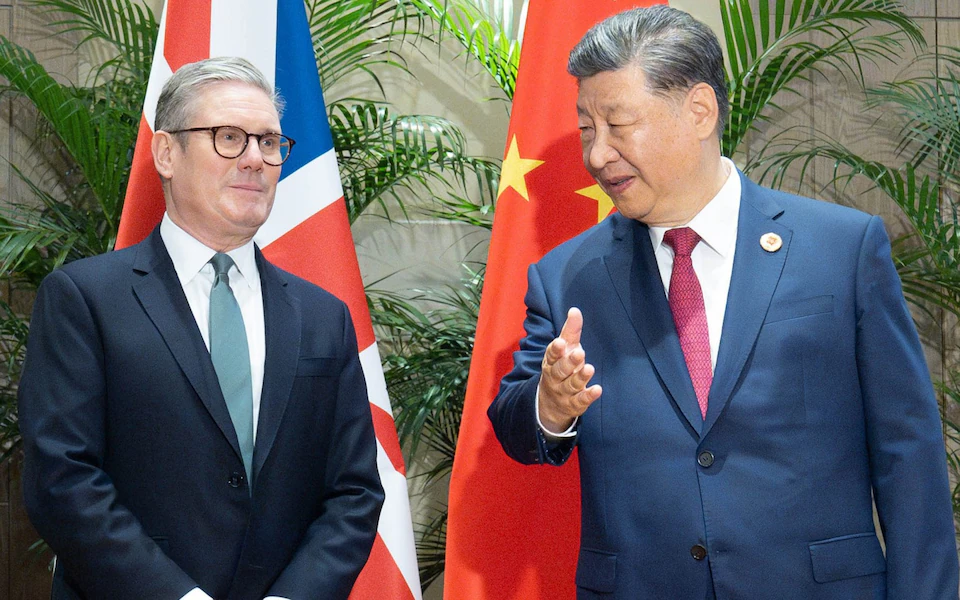
The revelations come at a sensitive time, as Sir Keir prepares to travel to China this week, marking the first visit by a British prime minister since 2018, aimed at strengthening trade and investment ties. The trip has already drawn criticism following the UK government’s approval of a Chinese mega-embassy in London, reportedly located near critical communications infrastructure.
Critics, including opposition figures, have accused the Labour government of taking a soft stance on China despite mounting evidence of hostile cyber activities. Alicia Kearns, a shadow minister for national security, described the situation as alarming and accused the government of rewarding hostile acts against the British state.
Security experts warn that hackers involved in Salt Typhoon had the capacity to record phone calls at will, read messages, and maintain persistent access to telecommunications networks. The breaches were only discovered in 2024 after US authorities revealed that Chinese-linked hacking groups had infiltrated telecom companies worldwide.
While UK officials insist domestic networks are better protected under the 2021 Telecommunications Security Act, US officials have described the global breach as “one of the most successful espionage campaigns in history.”
China’s foreign ministry has dismissed the allegations as baseless and politically motivated, insisting it neither condones nor engages in cyberattacks.
Despite official denials, intelligence agencies and cybersecurity experts continue to describe Beijing as one of the world’s most aggressive cyber adversaries, with the Downing Street hack underscoring growing concerns over the vulnerability of Western democracies to digital espionage.

