


Front pages of newspapers across the world reflect a shared moment of uncertainty shaped by economic strain, geopolitical tension and shifting social priorities. From the United States and the United Kingdom to Canada, Australia and India, headlines are dominated by rising inflation, energy costs and the impact of global conflicts, particularly in the Middle East. Governments are grappling with policy decisions on security, trade and welfare, while societies confront debates around technology regulation, social justice and public accountability. At the same time, stories of tragedy, political rivalry and economic pressure sit alongside lighter features in sport and culture, offering a broad snapshot of life across continents. Together, these front pages capture a world navigating instability while adjusting to new economic and political realities.
United State America
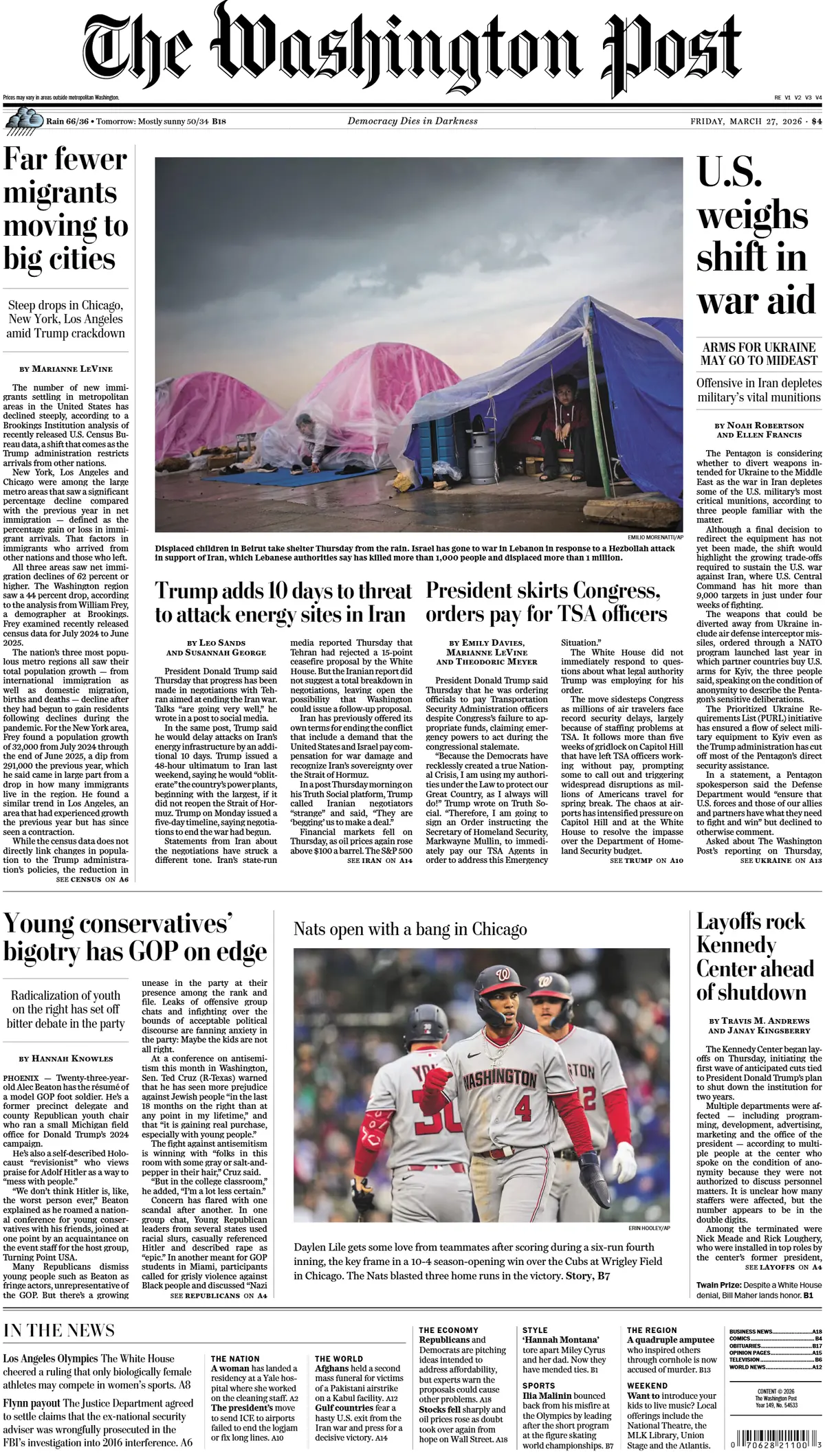
In the United States, The Washington Post highlights shifting political and global dynamics, with a decline in migrant movement to major cities amid stricter policies. The paper also reports on evolving foreign policy, as the U.S. considers changes to military aid strategies while tensions with Iran escalate following renewed threats of potential strikes. Domestically, governance issues take centre stage, including executive actions to fund TSA workers without Congress and growing concerns within the Republican Party over internal divisions linked to youth radicalisation. Economic and institutional pressures are also evident, with layoffs affecting major cultural institutions such as the Kennedy Center. Overall, the coverage reflects a nation navigating immigration changes, political tensions and international uncertainty.
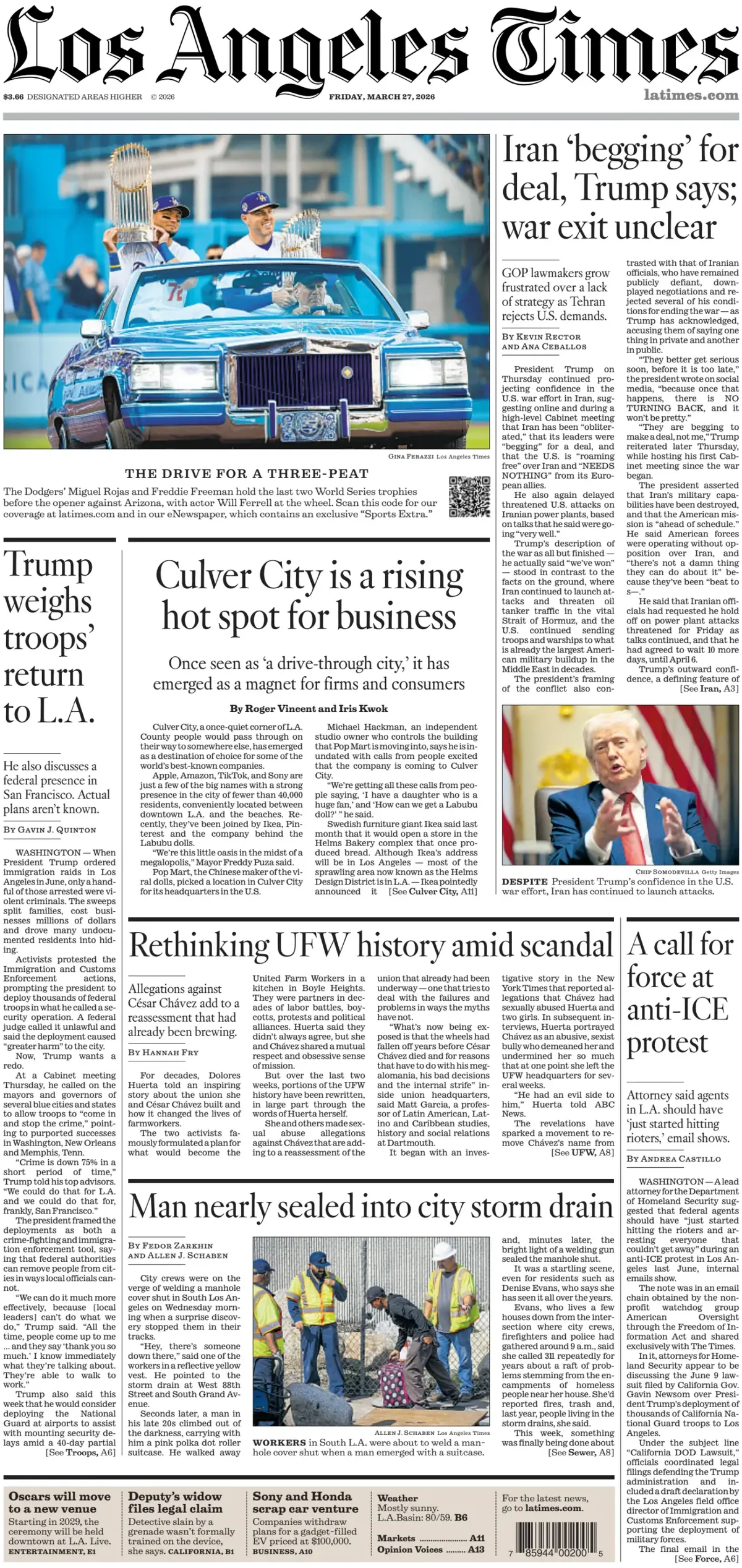
In the United States, Los Angeles Times focuses on a mix of international tension and domestic policy debates, with the lead story highlighting uncertainty over the U.S. stance on Iran as diplomatic signals clash with ongoing conflict concerns. Domestically, attention turns to immigration enforcement and security, including discussions around deploying troops to Los Angeles and escalating tensions at anti-ICE protests. Economic development is also featured, with Culver City emerging as a growing business hub attracting major firms. The paper further examines historical and social issues, including renewed scrutiny of labour movements, alongside local incidents that underscore urban challenges. Overall, the coverage reflects a blend of foreign policy uncertainty, internal political debates and economic shifts shaping life in the United States.
 for
for
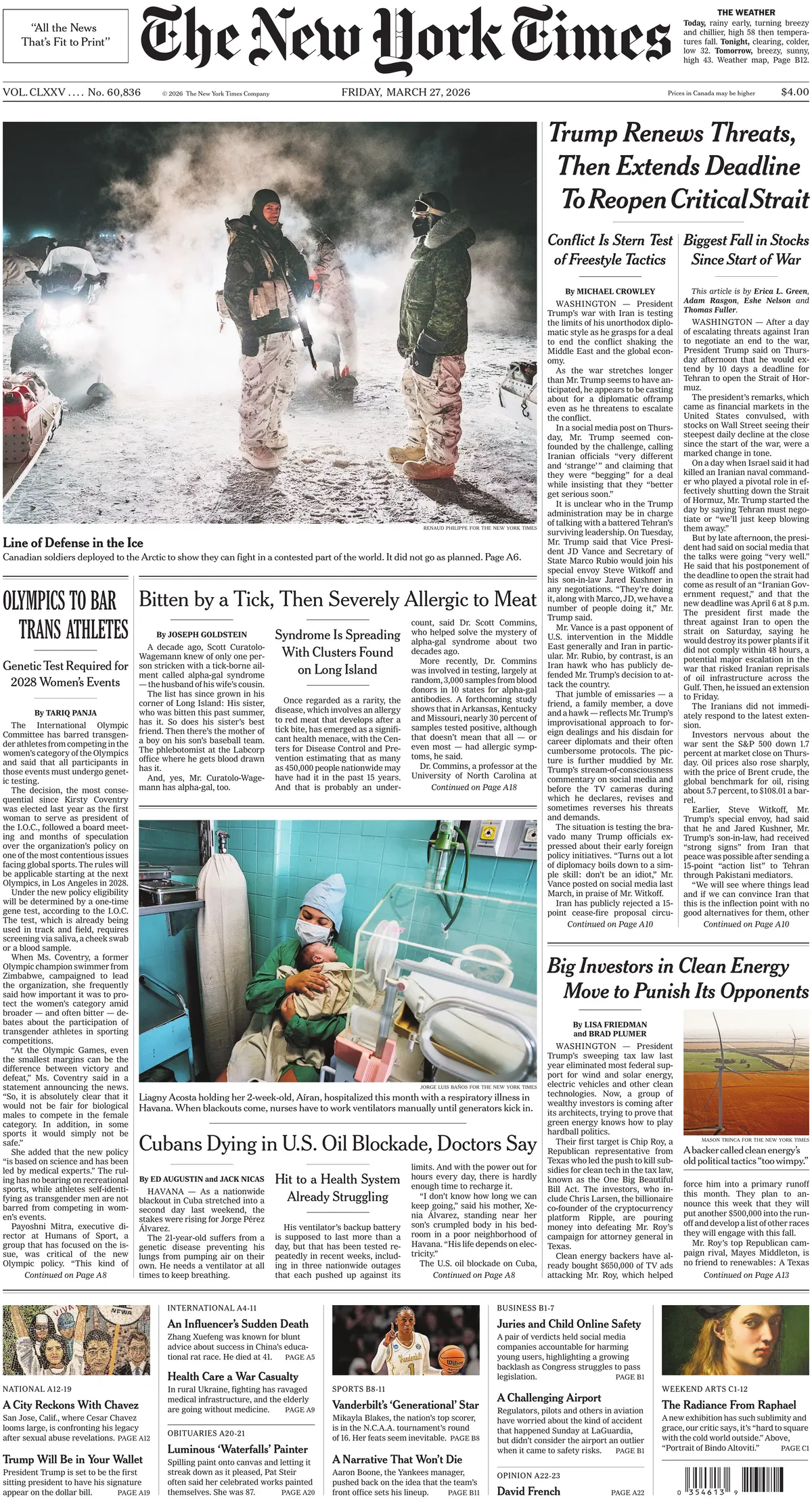
In the United States, The New York Times leads with escalating geopolitical tensions, as President Donald Trump renews threats related to Iran while extending a deadline tied to a critical shipping route, highlighting ongoing instability in global trade and security. The paper also reports on a significant policy shift in international sports, with the Olympics set to bar transgender athletes from women’s events, sparking global debate. Health concerns are featured through a rare medical condition linked to tick bites, while international humanitarian issues emerge with reports of deaths in Cuba tied to the U.S. oil blockade. Economic and environmental tensions are also evident, as major investors take action against opponents of clean energy policies. Overall, the coverage reflects a mix of global conflict, social policy debates, health issues and economic pressures shaping both the United States and the wider world.
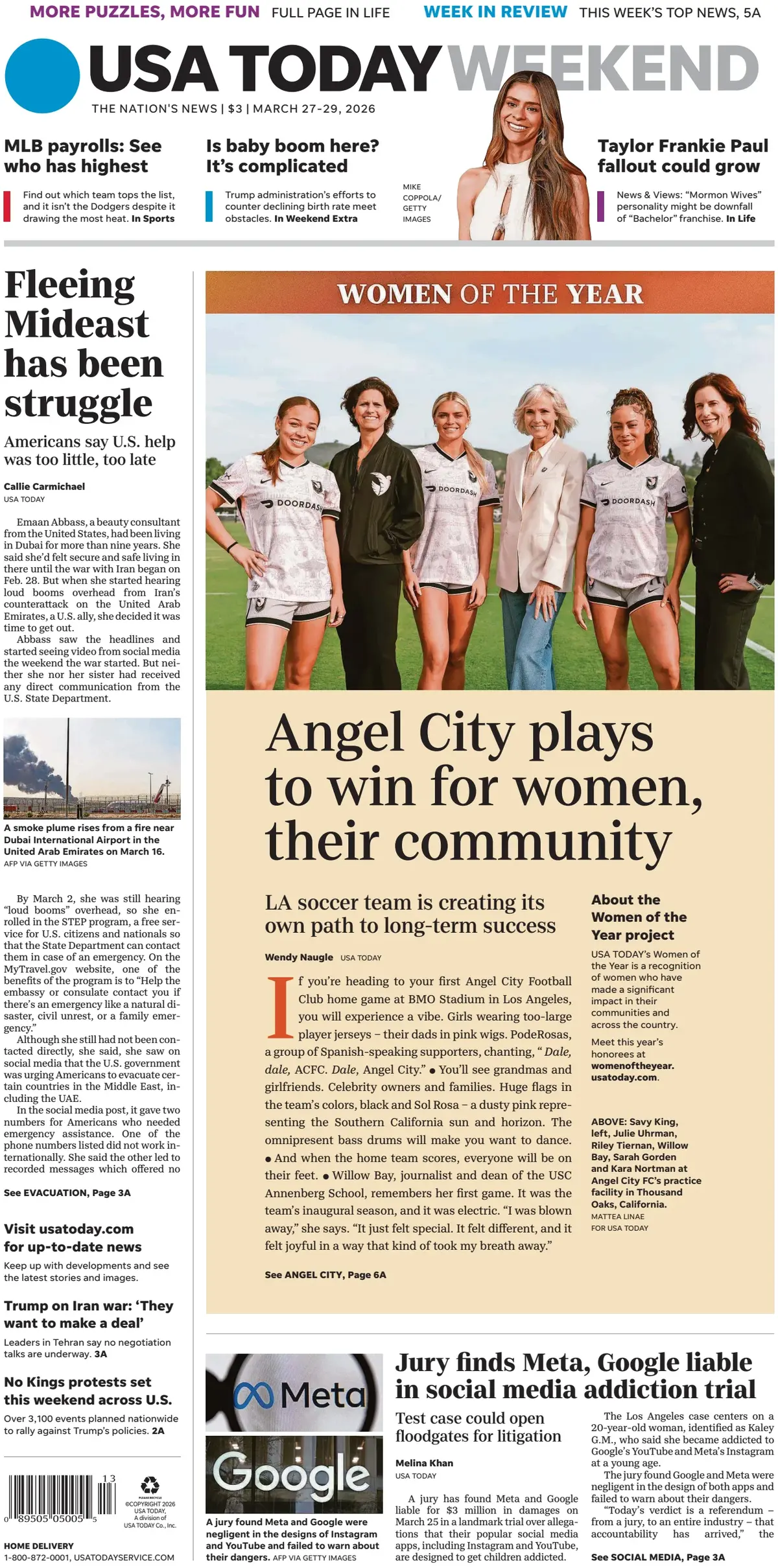
In the United States, USA Today Weekend highlights both global and domestic issues, with the lead story focusing on the difficulties faced by Americans trying to leave the Middle East amid rising tensions and concerns over delayed government assistance. The paper also celebrates women’s impact in sports, with Angel City Football Club recognised for building a strong community-focused model. Legal and technology developments feature prominently, as a jury finds major tech companies liable in a social media addiction case, signalling growing scrutiny of digital platforms. Social trends are also explored through discussions on birth rates and celebrity developments, while sports coverage examines team spending in Major League Baseball. Overall, the coverage reflects a mix of international challenges, social change and evolving accountability in the United States.
United Kingdom
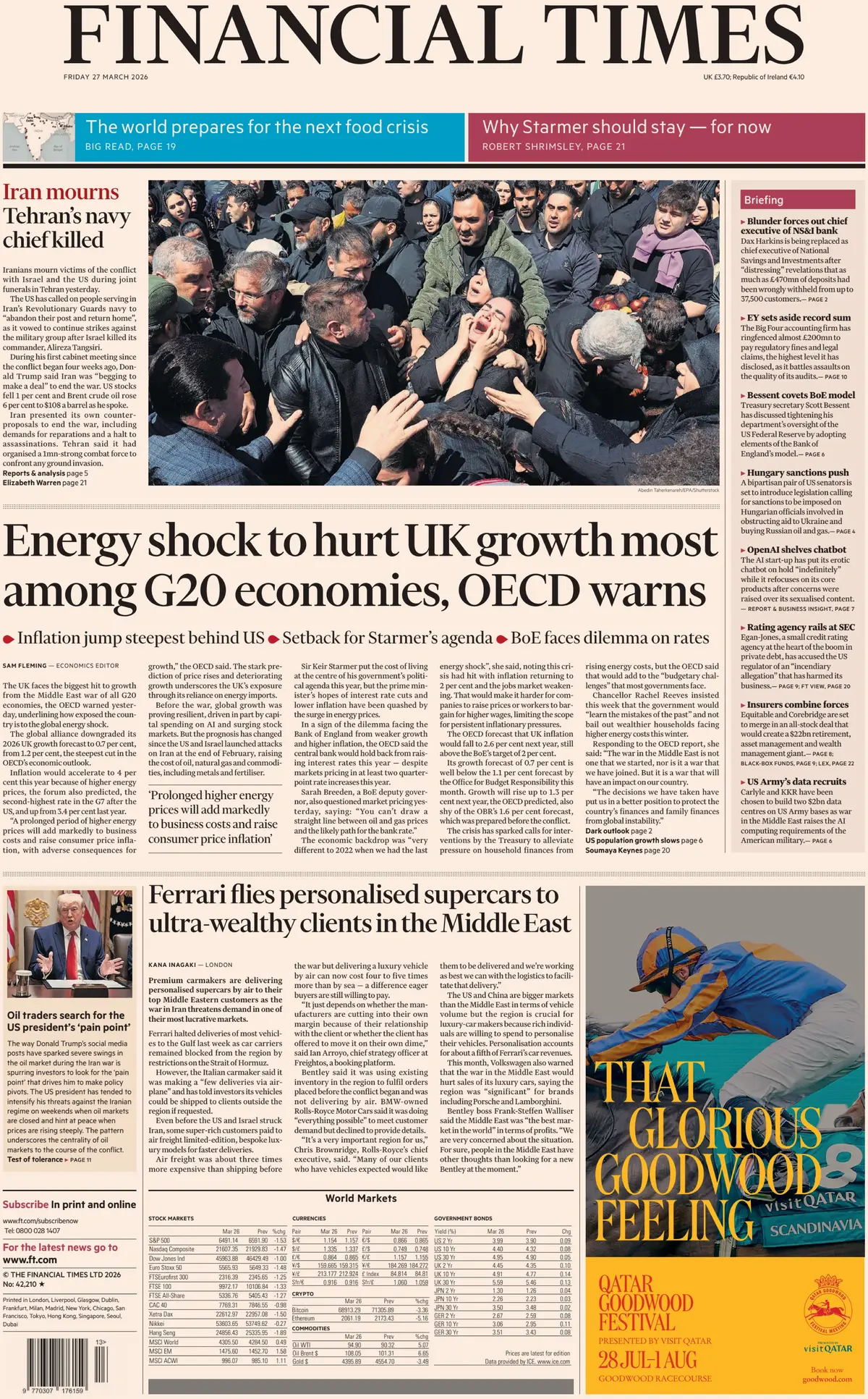
In the United Kingdom, the Financial Times focuses on economic pressures and global uncertainty, with the lead story warning that rising energy costs could significantly slow UK growth compared to other G20 economies. The paper also highlights geopolitical tensions in the Middle East following the killing of Iran’s navy chief, underscoring ongoing instability in the region. Global economic trends are further explored through concerns about a potential food crisis and shifting political dynamics within the UK, including debate over Labour leader Keir Starmer’s position. Meanwhile, luxury markets continue to thrive, as Ferrari targets wealthy clients in the Middle East. Overall, the coverage reflects a blend of economic risk, geopolitical tension and shifting global markets affecting the UK and beyond.

In the United Kingdom, the Morning Star focuses on political and social justice issues, with its lead story urging Labour leader Keir Starmer to take stronger action against companies profiting from global conflicts, particularly in relation to war-linked industries. The paper also highlights concerns over welfare policies, arguing that sanctions on disabled individuals reflect a lack of compassion within the system. Additionally, attention turns to historical accountability, with renewed calls for answers as an inquiry into the Orgreave incident is launched. Overall, the coverage emphasises economic inequality, government responsibility and social justice debates shaping the UK.
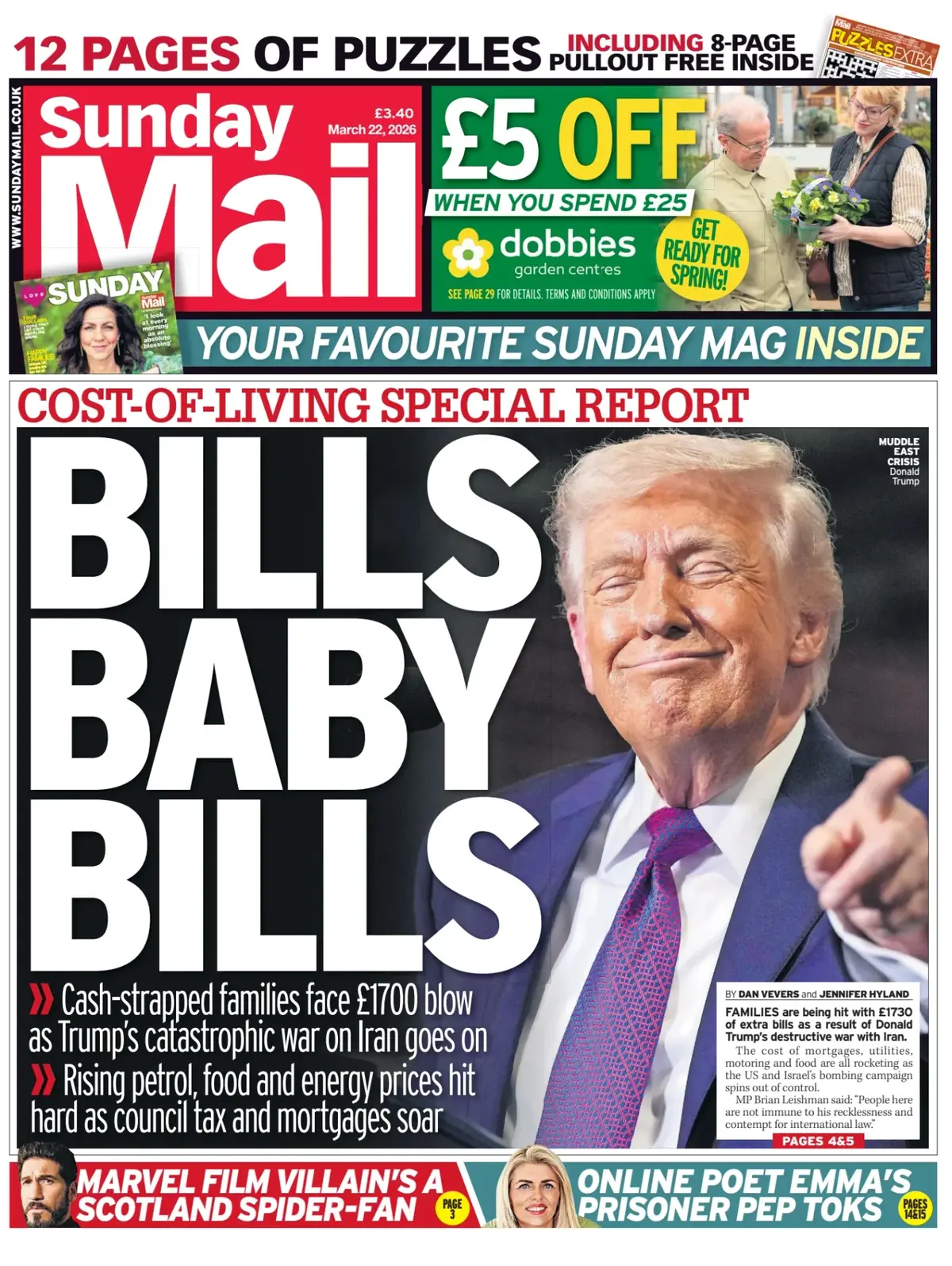
In the United Kingdom, the Sunday Mail leads with growing cost-of-living pressures, highlighting how rising global tensions, particularly involving the United States and Iran, are contributing to increased household expenses. The paper reports that families are facing significant financial strain due to surging energy, food and fuel prices, alongside rising mortgage rates and council taxes. The coverage links international conflict to domestic economic hardship, emphasising the impact on everyday households. Alongside these serious issues, lighter stories on entertainment and human interest provide balance, but the dominant theme remains the financial challenges affecting people across the UK.
India
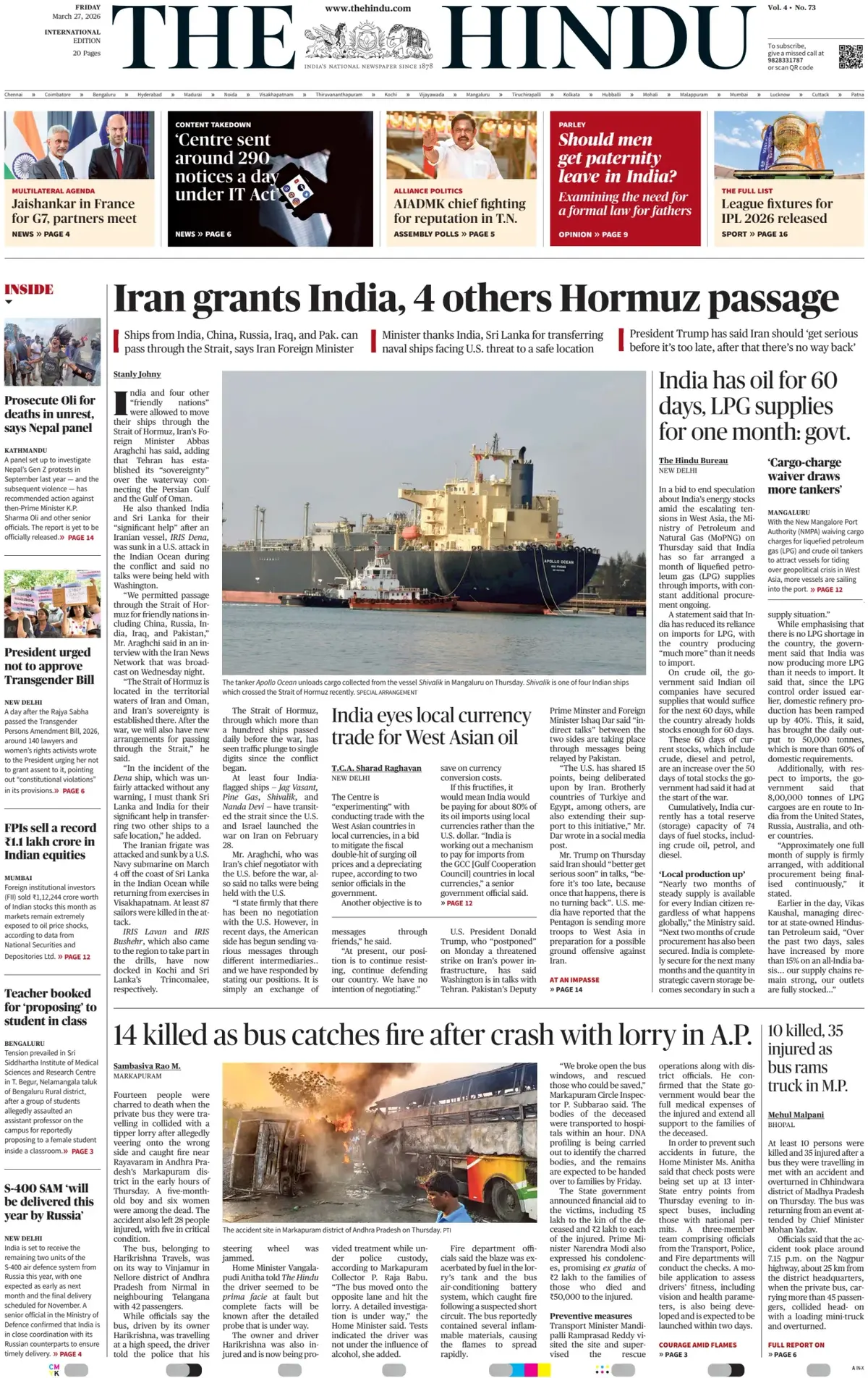
In India, The Hindu focuses on a mix of geopolitical, economic and domestic developments, with the lead story highlighting Iran’s decision to allow India and other countries passage through the Strait of Hormuz, easing concerns over energy supply routes. The paper also reports on India’s energy security, noting sufficient oil and LPG reserves while exploring plans to trade in local currency with West Asian nations. Domestic issues feature prominently, including deadly road accidents in Andhra Pradesh and Madhya Pradesh, alongside political developments and debates on social policy such as paternity leave. Technology regulation and regional politics also receive attention, reflecting a broad coverage of governance, safety and economic strategy shaping India.
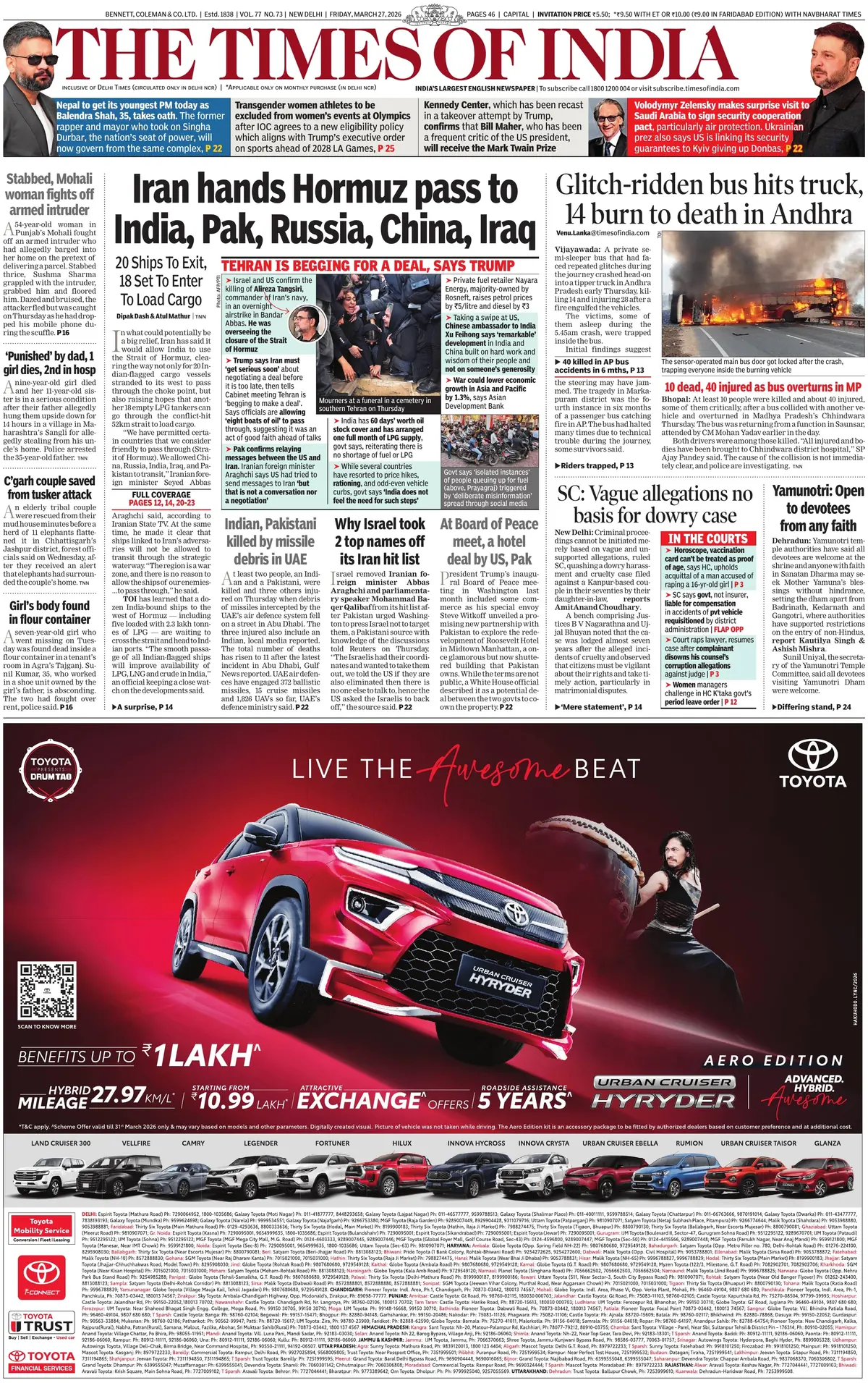
In India, The Times of India leads with a major geopolitical development as Iran allows multiple countries, including India, passage through the Strait of Hormuz, easing concerns over energy supply routes amid regional tensions. The paper also highlights tragic domestic incidents, including fatal bus accidents in Andhra Pradesh and Madhya Pradesh, raising ongoing concerns about road safety. Legal and social issues feature prominently, with the Supreme Court addressing dowry-related cases and discussions around religious inclusivity at Yamunotri. International developments, including missile-related casualties in the UAE and Middle East conflict dynamics, further underline the global context. Overall, the coverage reflects a mix of geopolitical shifts, domestic safety concerns and legal developments shaping India.
Australia
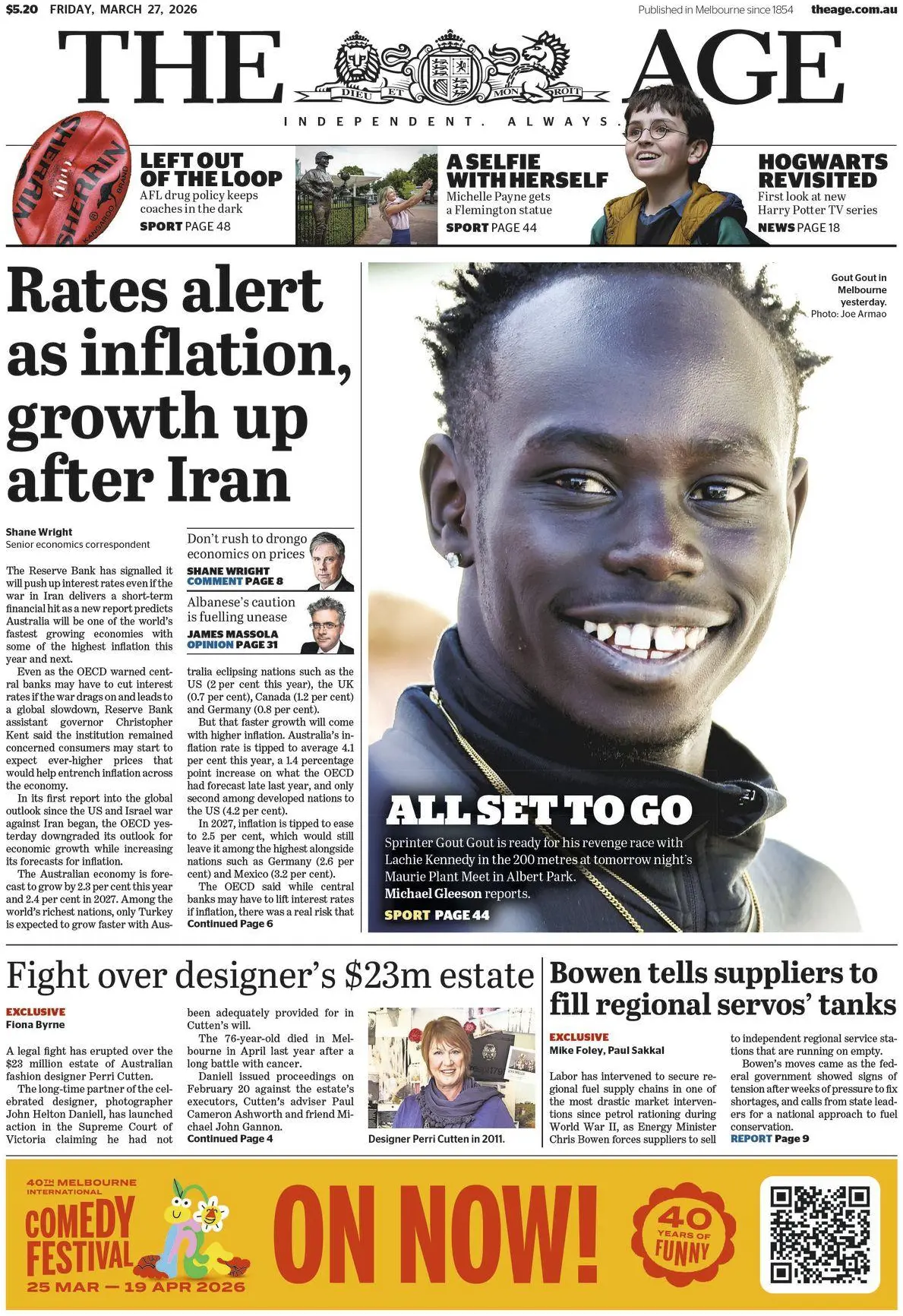
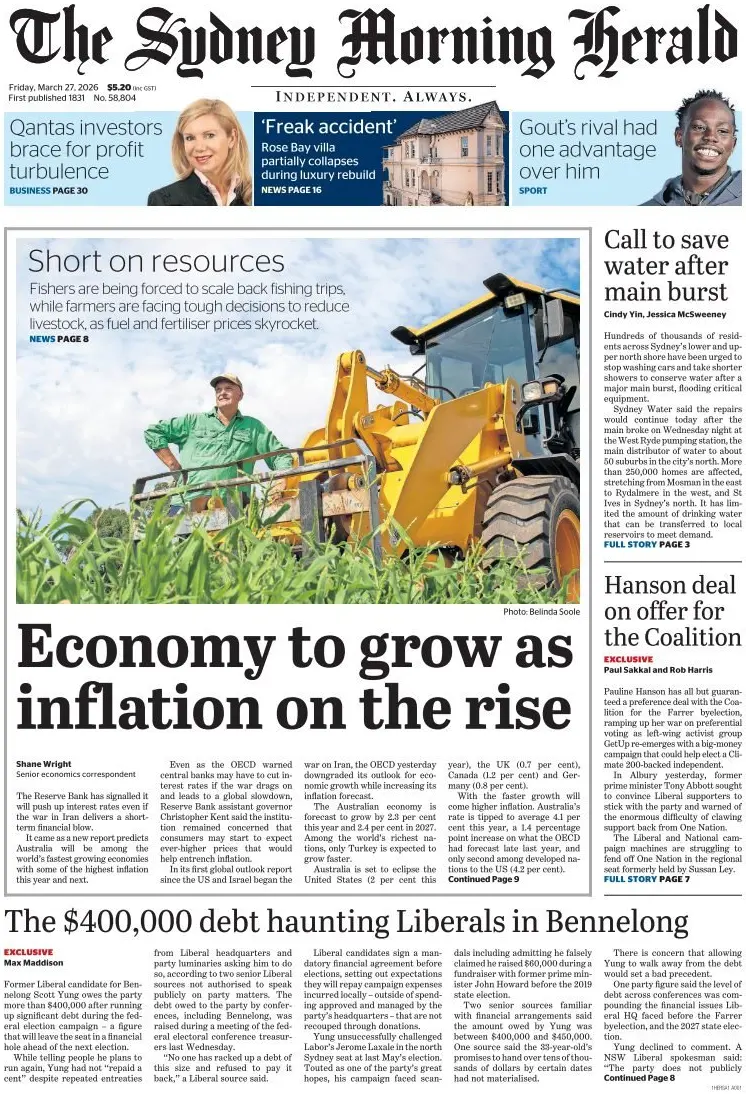
The newspaper leads with economic concerns as central bank signals point to rising inflation and economic growth following global tensions linked to Iran, raising the likelihood of future interest rate hikes. Alongside this, attention turns to sport, where a top sprinter prepares for a major race, reflecting national anticipation. Legal and political issues also dominate, including a high-profile dispute over a $23 million estate and government intervention to stabilise fuel supply in regional areas. Meanwhile, lighter features highlight gaps in sports governance, a quirky public moment involving a statue selfie, and renewed interest in a popular Harry Potter television series, offering a mix of serious policy developments and cultural stories.
In Australia, Herald Sun leads with a strong focus on government efforts to regulate social media, as pressure mounts on federal authorities to enforce stricter laws on tech companies to protect children. The paper also highlights growing strain on police forces, pointing to challenges in maintaining effective law enforcement. In sport, attention centres on Collingwood’s push to improve performance ahead of the next season, while rising fuel costs continue to impact travel and daily life. Consumer concerns are further reflected in guidance on electric vehicles, showing a shift towards alternative transport options. Overall, the coverage captures a mix of policy debate, public safety concerns and cost-of-living pressures affecting Australians.
Canada
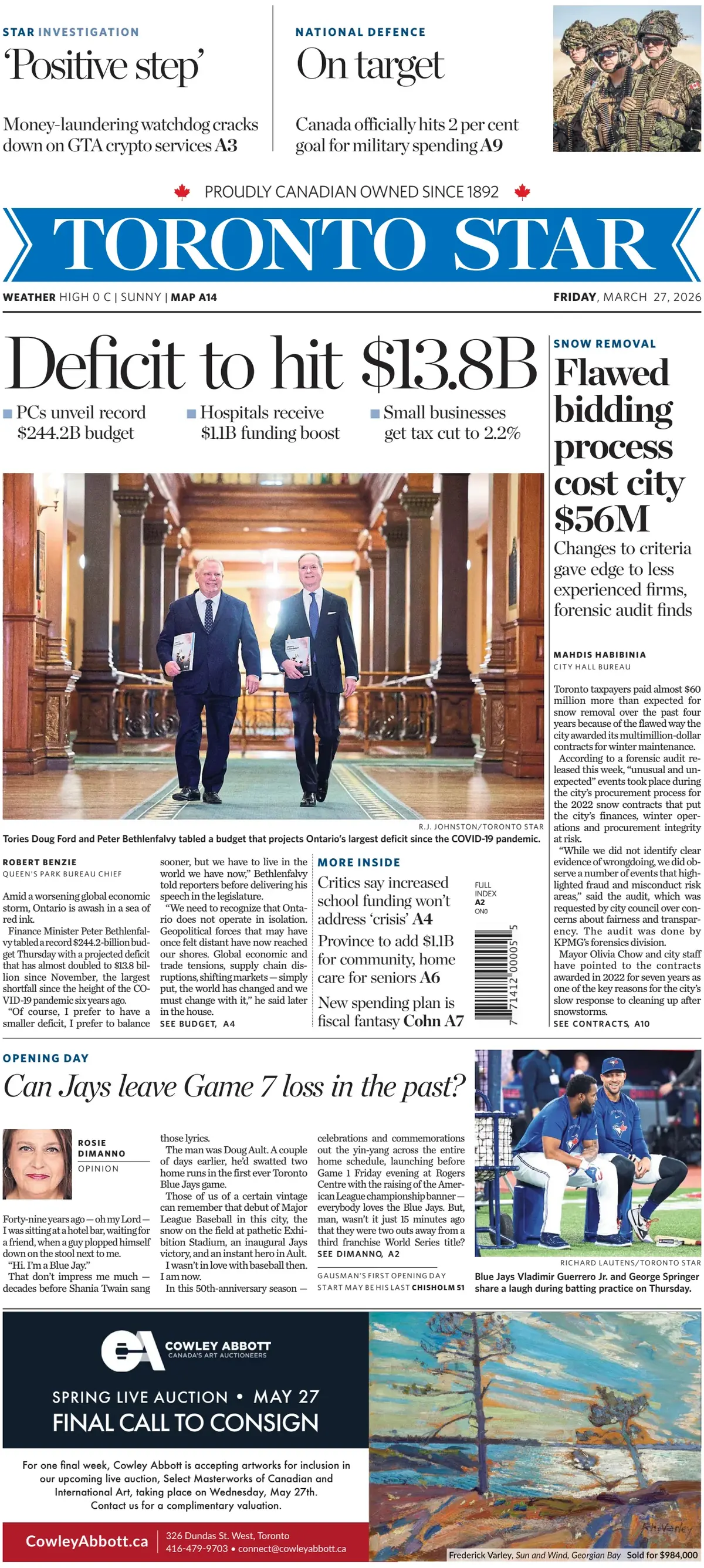
In Canada, the Toronto Star leads with concerns over public finances, as Ontario projects a $13.8 billion deficit despite increased spending on hospitals and tax relief for small businesses. The paper also highlights governance issues, revealing that flaws in Toronto’s snow removal bidding process cost the city $56 million, raising questions about accountability. Financial regulation is another focus, with authorities tightening oversight on cryptocurrency services in the Greater Toronto Area, while national defence gains attention as Canada meets its military spending target. In sport, optimism surrounds the Toronto Blue Jays as they aim to move past a previous setback. Overall, the coverage reflects economic pressures, public sector scrutiny and national policy developments shaping Canada.
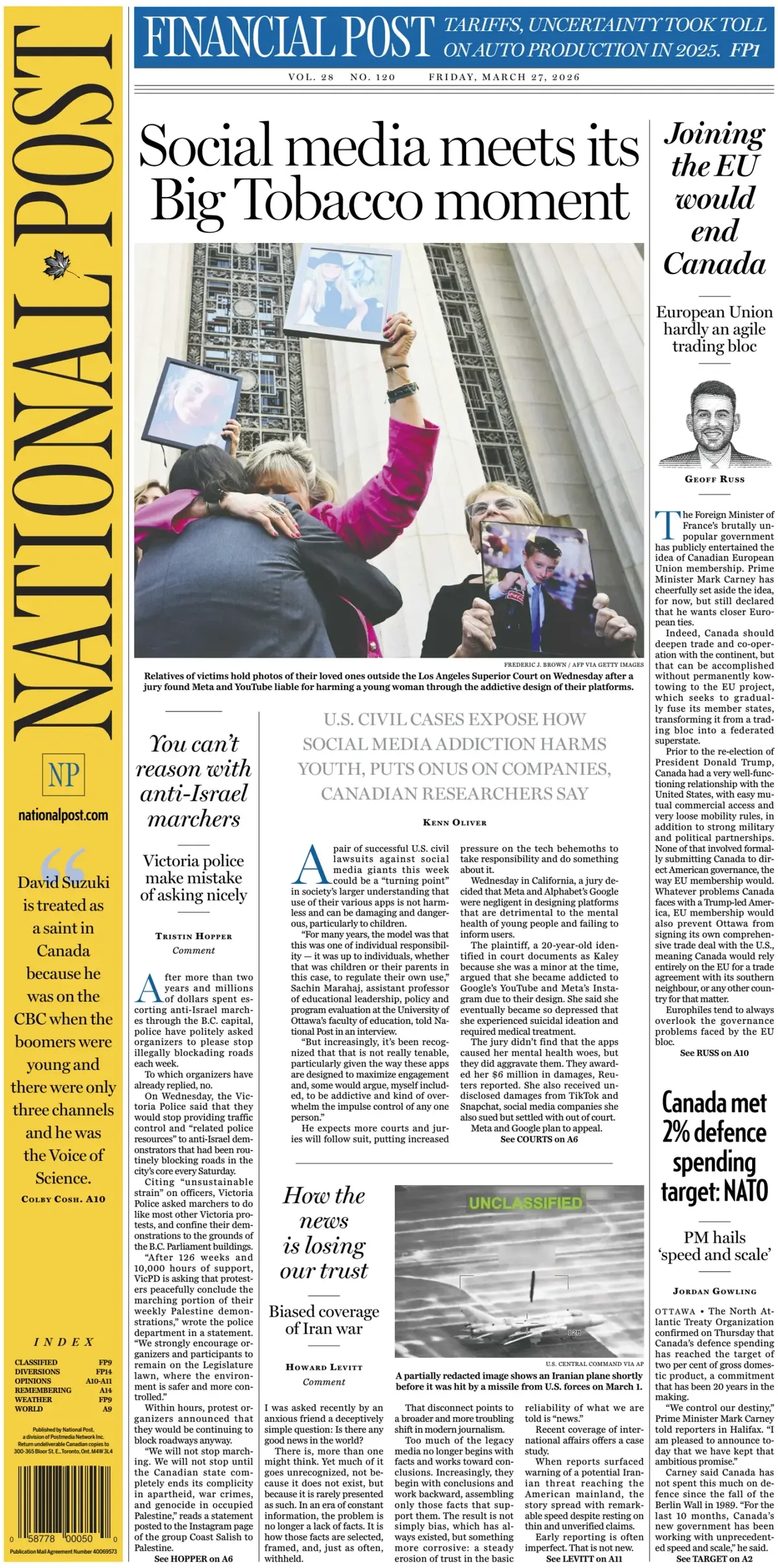
In Canada, the National Post (Financial Post) focuses heavily on the growing scrutiny of social media companies, with its lead story comparing the industry’s impact on youth to that of Big Tobacco, following legal cases in the United States that highlight addiction and harm. The paper also explores geopolitical and economic debates, including arguments against closer ties with the European Union and confirmation that Canada has met NATO’s defence spending target. Opinion pieces address public protests and declining trust in the media, reflecting wider societal tensions. Overall, the coverage centres on regulation, international relations and public confidence in institutions shaping Canada’s current landscape.
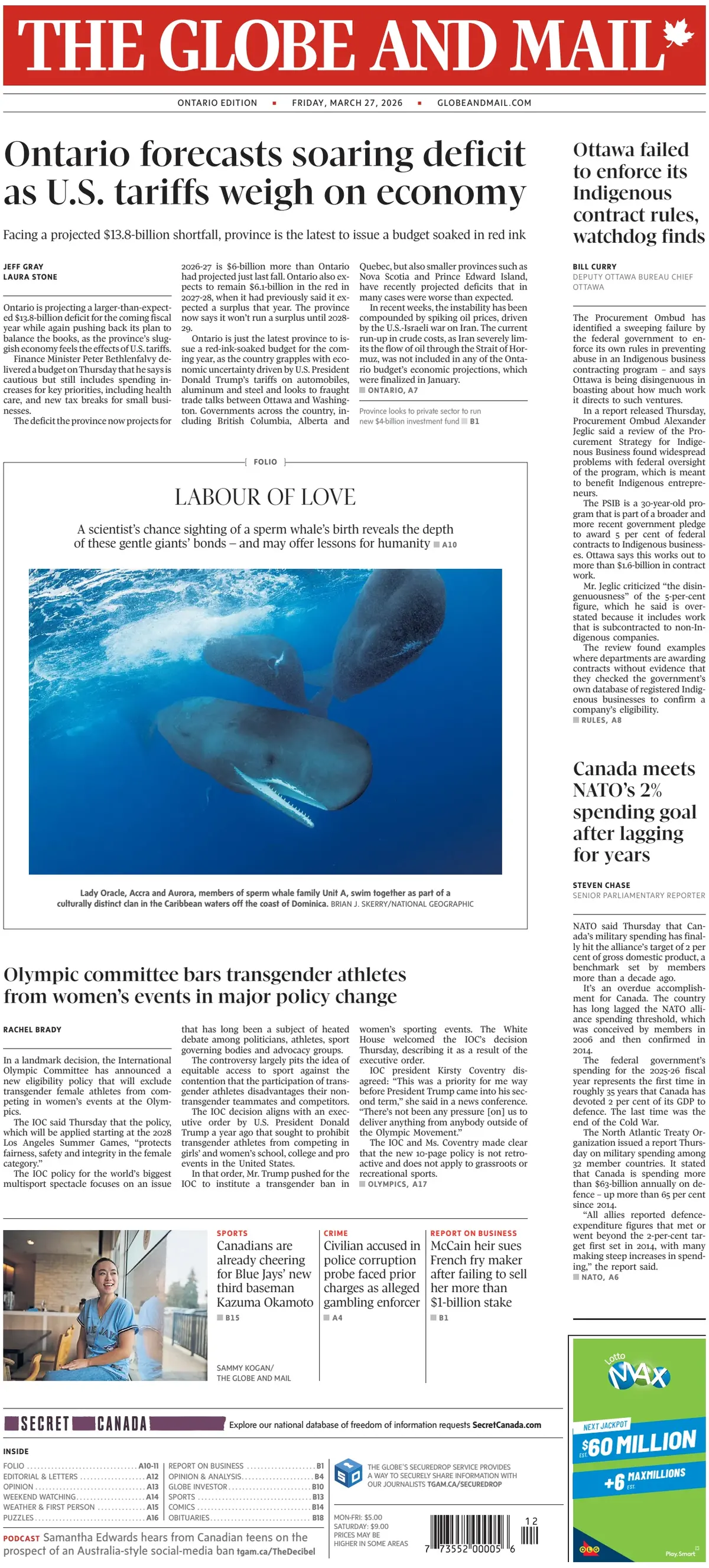
In Canada, The Globe and Mail highlights mounting economic pressure as Ontario projects a rising deficit driven partly by the impact of U.S. tariffs on trade and growth. Governance and accountability also take centre stage, with a watchdog report criticising Ottawa for failing to properly enforce Indigenous contracting rules. On the international front, Canada’s defence spending reaches NATO’s benchmark after years of falling short, signalling a shift in military policy. Social issues are also prominent, as a major Olympic policy change excludes transgender athletes from women’s events, sparking debate. Alongside these developments, a feature story offers a lighter perspective on marine life, balancing the paper’s focus on economic challenges, policy scrutiny and evolving social debates in Canada.
China
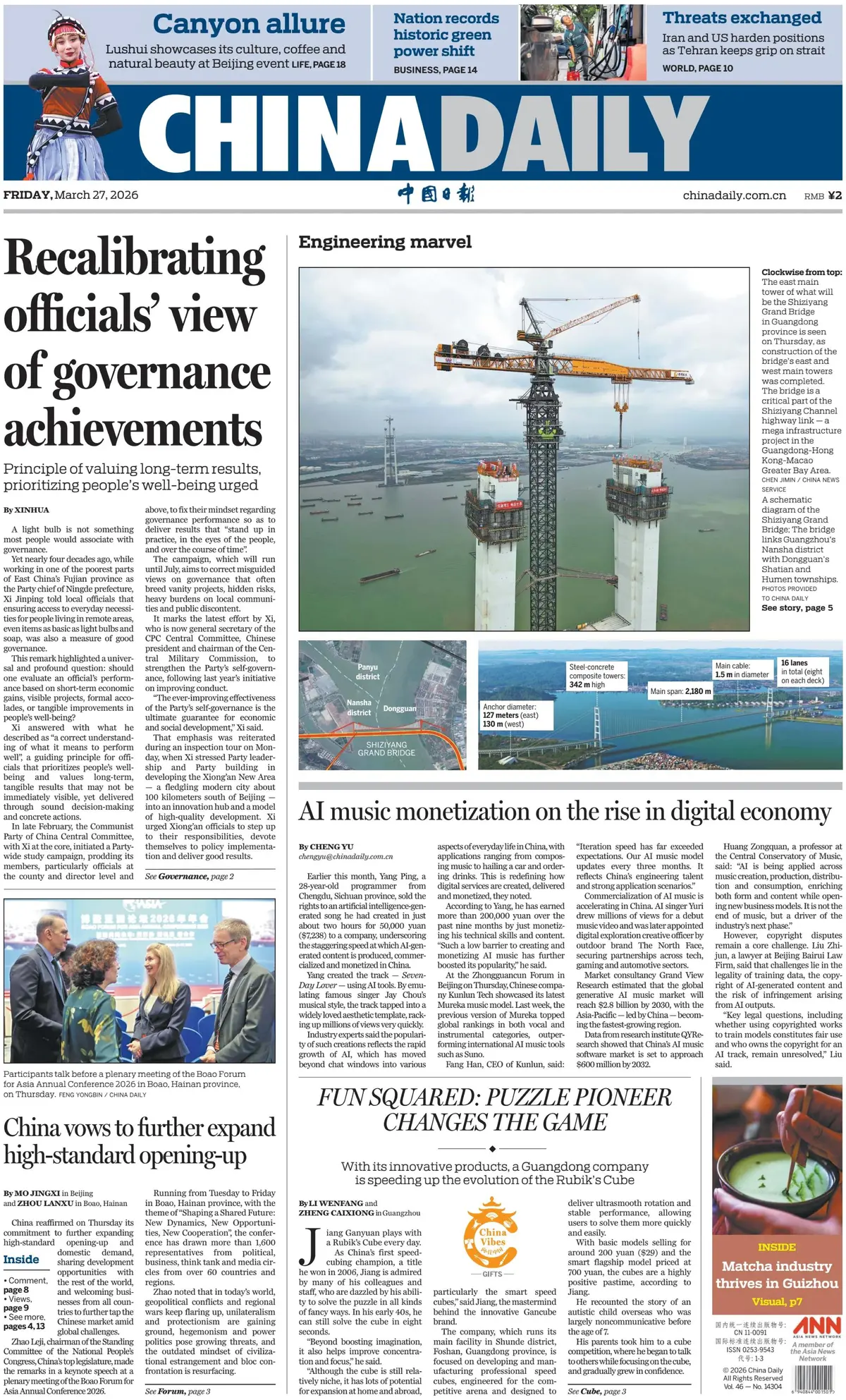
In China, China Daily highlights governance reforms and economic transformation, with its lead story focusing on efforts to reassess how officials measure success by prioritising long-term development and public well-being. The paper also reflects China’s push into the digital economy, particularly through the growing commercialisation of AI-generated music and technological innovation. Economic openness remains a key theme, as the country signals continued expansion of high-standard global engagement. Infrastructure achievements and industrial growth further underline development progress, while features on emerging industries and cultural products add breadth to coverage. Overall, the front page presents a narrative of economic advancement, policy adjustment and technological innovation shaping China’s future.
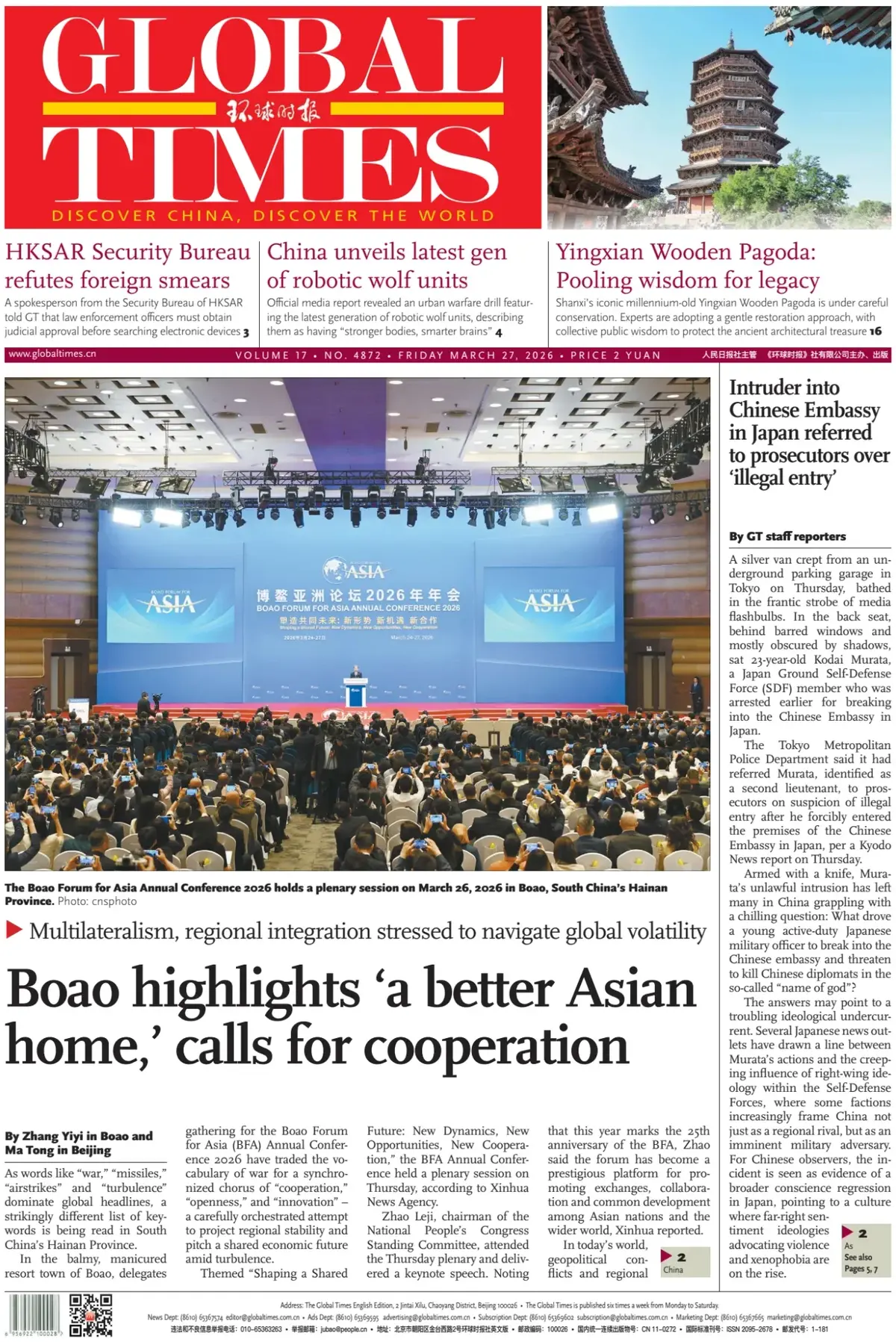
In China, the Global Times emphasises regional cooperation and global stability, with its lead story focusing on the Boao Forum’s call for stronger Asian integration and multilateral collaboration amid rising global uncertainty. The paper highlights China’s role in promoting economic cooperation and development across the region, while also addressing security concerns, including a diplomatic incident involving an intrusion at the Chinese Embassy in Japan. Technological advancement is showcased through developments in military robotics, reflecting ongoing innovation. At the same time, cultural preservation and domestic policy issues are featured, reinforcing a narrative of national strength, stability and international engagement shaping China’s position in the world.

