


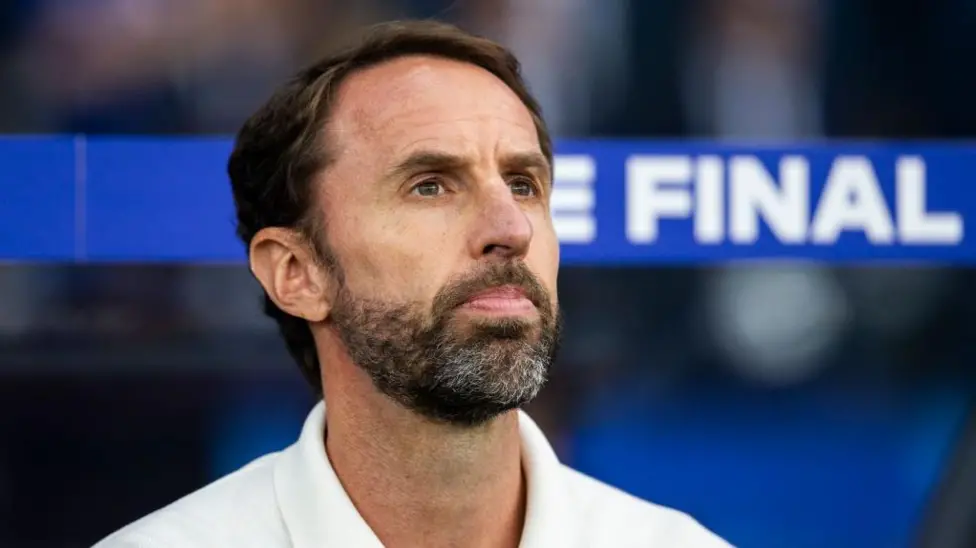
Sir Gareth Southgate has warned that the traditional authority of football managers is being steadily eroded, as modern club structures shift power away from the dugout and into boardrooms and executive offices.
The former England boss believes the growing influence of sporting directors, technical directors and executives has fundamentally changed the balance of power within clubs, even if the pressure on head coaches remains as intense as ever.
Southgate’s comments come at a turbulent time for elite football management. Since the start of the year alone, Real Madrid, Manchester United and Chelsea have all parted company with their head coaches, highlighting the fragile nature of leadership at the top level of the game.
Writing on LinkedIn, Southgate reflected on the recent departures of Xabi Alonso at Real Madrid, Ruben Amorim at Manchester United and Enzo Maresca at Chelsea. While each exit unfolded under different circumstances, Southgate argued there was a common thread.
“Power struggles either with club executives, club employees or players were ultimately the root cause of the end of each tenure,” he wrote.
At Chelsea, Maresca left by mutual consent after reportedly falling out with the club hierarchy, while Amorim was dismissed shortly after publicly criticising Manchester United’s leadership structure. “I came here to be the manager of Manchester United, not to be the coach of Manchester United,” Amorim said less than 24 hours before losing his job.
Southgate, who guided England to two European Championship finals and a World Cup semi-final, believes these situations reflect a wider trend that has been developing for years.
“The erosion of a manager’s authority has been a gradual process,” he said. “It has accelerated with the widespread introduction of football, technical, or sporting directors, who now oversee long-term football strategy, report directly to CEOs or owners, and sit structurally above the head coach.”
Despite this, Southgate was careful to stress that he does not oppose the evolution of club structures. On the contrary, he accepts that modern football has become too complex for one individual to control every aspect.
“Strategy, culture, planning and continuity are critical to success in any organisation – and a football club is no different,” he wrote. “A head coach neither has the time nor, in many cases, the specialist expertise to manage complex player contracts, oversee global scouting networks, or run sophisticated data operations.”
However, Southgate rejected the idea that the shift from “manager” to “head coach” has made the job easier. In fact, he believes the opposite is true.
The 55-year-old pointed to larger squads, expanded backroom teams, advanced analytics and relentless media scrutiny as factors that have significantly increased the demands on modern coaches. Add to that the commercial pressures and the rise of social media, and the role becomes even more challenging.
“The complexity of managing modern-day players – many of whom are effectively individual brands – alongside the financial stakes for clubs creates a significant melting pot of problems and pressure,” Southgate explained.
He argued that football should move towards a modernised version of the traditional manager, one that recognises leadership as being rooted in people management, not just tactics.
“As I once said to my bosses at England: players are not magnets on a tactics board that can simply be moved around,” he wrote. “They are human beings. And managing that reality is at the heart of modern football leadership.”
Southgate also revealed that titles matter more than they may appear. When offered the England role, he insisted on being called “manager” rather than “head coach”, believing the title better reflected the authority and influence required to lead effectively.
While he acknowledged that the change in terminology has led to a “subtle, sometimes unintentional, shift in power and status”, Southgate’s message was clear: in an increasingly complex game, clarity of leadership and authority remains essential.
As clubs continue to search for the perfect structure, Southgate’s warning serves as a timely reminder that success still depends on trusting those charged with leading from the touchline.

