


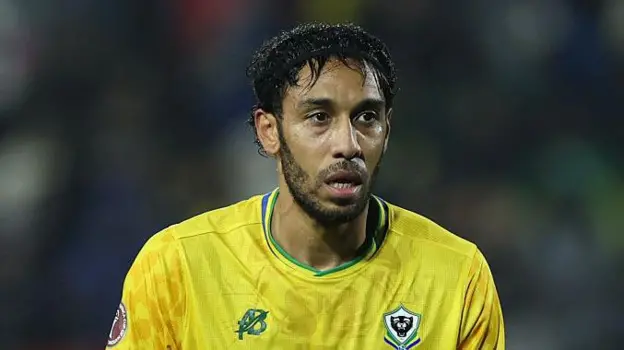
Gabonese football has been plunged into crisis after the country’s government suspended the national team, banned star striker Pierre-Emerick Aubameyang and sacked head coach Thierry Mouyouma following a disastrous Africa Cup of Nations campaign.
The dramatic decision was announced by Sports Minister Simplice-Desire Mamboula in the wake of Gabon’s 3-2 defeat by Ivory Coast on 31 December, a result that confirmed their elimination from the tournament in Morocco. Gabon finished bottom of their group, having already lost to Cameroon and Mozambique, and failed to register a single point.
Describing the performances as “disgraceful”, Mamboula outlined sweeping sanctions that go far beyond a routine managerial change. The Panthers have been suspended from international football “until further notice”, the entire coaching staff has been dissolved, and senior players Bruno Ecuele Manga and Pierre-Emerick Aubameyang have been excluded from the national setup.
“Given the Panthers’ disgraceful performance at the Africa Cup of Nations, the government has decided to dissolve the coaching staff, suspend the national team and exclude certain players,” Mamboula said in a statement that sent shockwaves across African football.
The final blow came in Marrakech, where Gabon squandered a two-goal lead against Ivory Coast to lose 3-2, encapsulating a tournament defined by defensive fragility and a lack of cohesion. Their exit had already been confirmed before kick-off, but the collapse only deepened public anger back home.
Aubameyang, Gabon’s all-time leading scorer with 40 goals and the most recognisable figure in the squad, did not feature in that final group match.
The former Arsenal and Chelsea striker had returned to Marseille for treatment on a thigh injury, a decision that has nonetheless drawn heavy criticism from officials and sections of the public.
Reacting to his ban, Aubameyang struck a defiant tone. “I think the team’s problems are much deeper than the individual I am,” he said, distancing himself from the government’s narrative that individual failings lay at the heart of the collapse.
For Mouyouma, the dismissal ends a tenure of just over two years. Appointed amid hopes of renewal, he struggled to deliver consistency or identity, and the Afcon campaign proved terminal. Yet many observers argue the coach alone cannot shoulder responsibility for a system long plagued by instability, political interference and underinvestment.
The government’s intervention has revived memories of a bygone era in African football, when poor tournament results were routinely followed by the dissolution of national teams. Such actions have become far rarer in recent years as Fifa tightened regulations to prevent state interference in football governance, often threatening suspensions for offending nations.

