


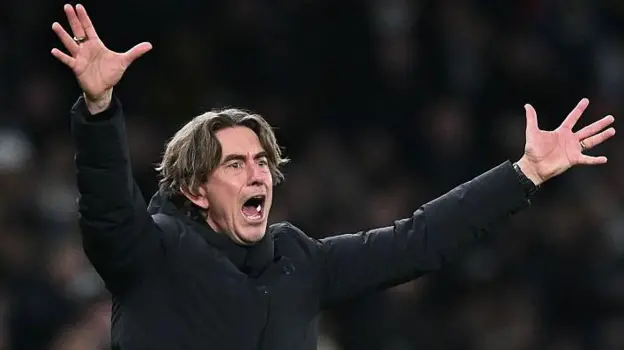
Thomas Frank cuts the figure of a man caught between expectation and reality at Tottenham Hotspur, trapped in what feels increasingly like a gilded cage. Sunday’s 1-1 draw with Sunderland at the Tottenham Hotspur Stadium was not a disaster in isolation, but it reinforced a growing sense of joylessness that continues to define Spurs under their head coach.
At full-time, the familiar sound of boos echoed around the stadium. They were not directed solely at Frank, but they carried a deeper frustration — a collective release from supporters weary of unfulfilled promise. This magnificent arena, once a symbol of ambition and progress, has become an unhappy place, and Frank has so far been unable to change that mood.
The game followed a now well-worn pattern. Tottenham were controlled and functional in the first half, dominating possession and territory without ever fully thrilling. Their superiority was rewarded when Ben Davies scored just his eighth Premier League goal in 244 appearances, offering hope of a rare home victory.
But that hope was fragile. Sunderland sensed the anxiety creeping through the stands after the break, and Spurs retreated instead of pressing their advantage. The equaliser, a thunderous 80th-minute strike from Brian Brobbey, felt inevitable. Once again, Tottenham paid the price for inviting pressure rather than imposing themselves.
For Frank, this was another reminder of the scale of his task. Spurs have now won just two of their 10 home league games this season, losing five and drawing three. The statistics paint a bleak picture: not outright failure, but persistent underachievement wrapped in uninspiring football.
Tottenham are not terrible under Frank — that may be the most damning verdict of all. They are dull. Lacking spark, creativity and cutting edge, they rarely stir supporters from their seats. And in modern football, boredom is unforgivable. Once fans decide a manager does not excite them, it is notoriously difficult to reverse that judgement.
Frank’s defenders point to mitigating factors. He inherited a side that finished 17th in the Premier League under Ange Postecoglou, despite Europa League success. Injuries have ravaged his creative core, with James Maddison and Dejan Kulusevski absent for long spells. Dominic Solanke has barely featured, while Mohammed Kudus was forced off after just 19 minutes against Sunderland. Brennan Johnson, sold to Crystal Palace for £35m, is already being missed.
There are also positives buried beneath the frustration. Spurs boast one of the league’s best away records, bettered only by Arsenal. Frank’s points return after 20 games compares favourably with Postecoglou’s final season. Yet numbers alone cannot disguise the emotional disconnect growing between manager and supporters.
Tottenham have drawn six of their 20 league matches this season — as many stalemates as in Postecoglou’s final 53 league games combined. These are not dramatic collapses, but they steadily drain belief. Each missed opportunity deepens the sense of drift.
Frank acknowledges the mood. After the match, he praised the fans for their support and insisted his players were giving everything. He spoke of intensity, positive first-half performances and fine margins. But such explanations are beginning to sound familiar, and familiarity breeds impatience.

