


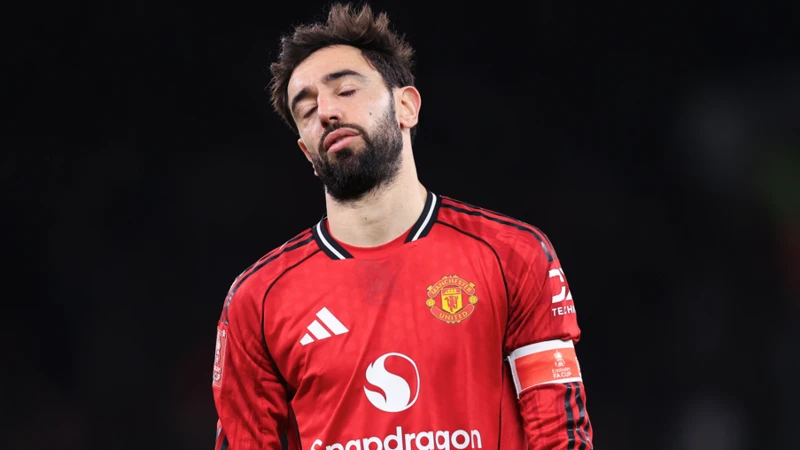
Life moves quickly at Manchester United, but rarely has it felt quite so bleak. Just 11 weeks ago, Brighton’s visit to Old Trafford ended in a third successive victory and optimism that Ruben Amorim’s reign was beginning to take shape. Now, after Brighton returned to knock United out of the FA Cup, Amorim is gone, the clouds have darkened again, and the scale of the club’s decline has been laid bare.
Sunday’s FA Cup third-round defeat condemned United to a 40-game season, the fewest matches they will have played since 1914-15. It is a statistic that borders on surreal for a club that once measured success by how far into May it was still competing. Now, United are out of both domestic cups at the first hurdle for the first time since 1981-82, leaving a barren calendar and uncomfortable questions.
The symbolism of the day was hard to miss. Grey skies hung over Old Trafford, rain fell steadily, and Danny Welbeck – a former United academy graduate – delivered the decisive blow for Brighton. It felt like a metaphor for a club stuck in a cycle of nostalgia and disappointment, haunted by its past while failing to shape its future.
With fewer fixtures come awkward consequences. A mid-season trip to Saudi Arabia, previously unthinkable, is now a genuine possibility as United stare at a 10-day gap in February and March when FA Cup weekends would normally provide focus and momentum. After already touring Asia last summer to plug a financial hole, such moves underline how far priorities have shifted.
On the pitch, matters are no better. United have won just one of their last seven games – a fortunate victory over Newcastle on Boxing Day – and only three of their last 13 matches overall. They sit seventh in the Premier League, a position that appears respectable on paper but fragile in reality. Defeats against Manchester City and Arsenal, both looming, could leave them languishing in the bottom half by the time Fulham visit on 1 February, when supporters plan a mass protest against the ownership.
Interim boss Darren Fletcher attempted to strike a hopeful note after the Brighton defeat, urging players not to “waste the season” and insisting a Champions League place remains achievable. Yet even as he spoke, there was little sense of conviction that his words would translate into action. Fletcher himself admitted he has “zero indications” about what comes next, beyond reporting to Carrington for meetings with club officials.
That uncertainty seeps through every level of the club. Manchester United are drowning in noise – opinions from former players, pundits, supporters and executives pulling in different directions. Club legends such as Gary Neville, Rio Ferdinand, Wayne Rooney, Nicky Butt and Paul Scholes watched the FA Cup defeat unfold alongside Sir Alex Ferguson, living reminders of standards that feel increasingly distant.
Amorim had suggested before his dismissal that United’s ownership was too influenced by that external noise. Yet the problem is deeper than perception. Failure has become routine, and each setback amplifies the pressure on whoever steps into the dugout next. Ole Gunnar Solskjaer and Michael Carrick have emerged as leading candidates, both familiar with the club’s culture and the unique scrutiny that comes with the job.
History offers little comfort. The last time United played so few games, in 1914-15, they were sharing fixtures with teams such as Bradford Park Avenue and The Wednesday. It took until 1948 to win the FA Cup again and 1952 to reclaim the league title, ending a 41-year drought. By the end of this season, it will be 13 years since United last lifted the Premier League – half the gap between Sir Matt Busby’s final triumph and Sir Alex Ferguson’s first.
Fletcher, visibly emotional, spoke of responsibility, care and the need for players to help themselves. His words were sincere, but sincerity alone no longer moves the needle at Old Trafford. Manchester United are not just fragile in confidence; they are fragile in direction. And unless clarity arrives quickly, this historically short season may feel even longer for a club still searching for its identity.

