


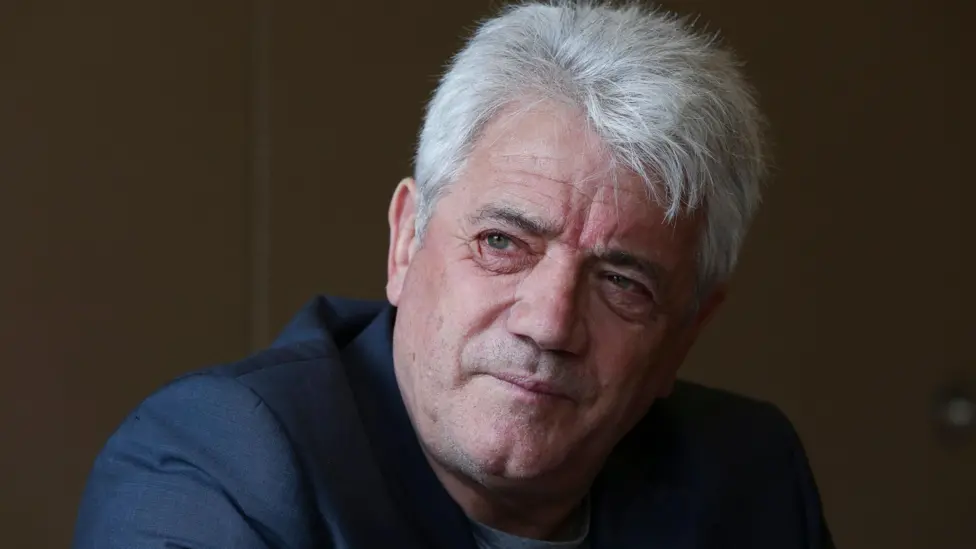
The football world has been shaken by the news that Kevin Keegan, former England striker and manager, has been diagnosed with cancer. The 74-year-old, whose career spanned decades of remarkable achievements, will now undergo treatment following recent hospital evaluations. His family released a statement, confirming the diagnosis and requesting privacy during this challenging time.
“Kevin was recently admitted to hospital for further evaluation of ongoing abdominal symptoms,” the family said. “These investigations have revealed a diagnosis of cancer, for which Kevin will undergo treatment. Kevin is grateful to the medical team for their intervention and ongoing care. During this difficult time, the family are requesting privacy, and will be making no further comment.”
The outpouring of support from across football was immediate. Newcastle United, where Keegan is revered as both a player and manager, posted on social media: “We’re with you every step of the way. Hoping for a full and speedy recovery.” Manager Eddie Howe also spoke ahead of Newcastle’s match against Leeds United, describing Keegan as “an absolute icon of this football club, not just as a player but as a manager. An inspirational figure.”
Howe reflected on Keegan’s style of football, saying: “We want to produce a similar team. We want everyone to be desperate to come and watch the team and stick with the team right until the end because you never know what’s around the corner. With Kevin’s team, that was certainly the case.”
Liverpool also extended their support. “All of us at LFC and official former players association Forever Reds send our best wishes to Kevin, his family and friends,” the club said. Manchester City added: “Sending our strength and love to Kevin and his family at this time.” The Football Association, Premier League, and numerous other clubs have followed suit with messages of support.
Keegan’s footballing career is the stuff of legend. He began as a 17-year-old at Scunthorpe United in 1968 before joining Liverpool three years later under the guidance of the legendary Bill Shankly. At Anfield, Keegan became a key figure in one of the club’s most successful eras, helping Liverpool to three league titles, the FA Cup, and two UEFA Cups. He also played a pivotal role in Liverpool’s first European Cup triumph in 1977, scoring 100 goals in 323 appearances.
Following his Liverpool tenure, Keegan moved to German side Hamburg, where he won the Bundesliga title in 1978-79 and was twice named European Footballer of the Year. He returned to England with Southampton in 1980, winning PFA Player of the Year in 1981-82, before finishing his playing career at Newcastle United in 1984. He also represented England 63 times, scoring 21 goals and captaining the national team on 31 occasions, including at the 1982 World Cup.
After hanging up his boots, Keegan turned to management, beginning with Newcastle United in 1992. He guided the Magpies to promotion to the Premier League in 1993 and delivered an attacking brand of football that captivated fans, most memorably during the 1995-96 season when Newcastle famously lost a 12-point lead to Manchester United. Keegan’s passionate outburst of “I would love it if we beat them” became iconic in football folklore.
Keegan’s managerial career also included stints at Fulham, England, and Manchester City. He returned briefly to Newcastle in 2008 for eight months. Across his playing and managerial career, Keegan was celebrated for his attacking philosophy, work ethic, and ability to inspire those around him.
As news of his diagnosis spreads, the football community has rallied around one of its most beloved figures. While the coming months will be challenging, the support of fans, former colleagues, and clubs across the globe underscores the profound impact Kevin Keegan has had on the game. Football now unites in hope, wishing King Kev a full recovery from this latest battle.
Keegan’s legacy, both on and off the pitch, will endure—marked by thrilling goals, passionate leadership, and a lifetime of unforgettable football moments.

