


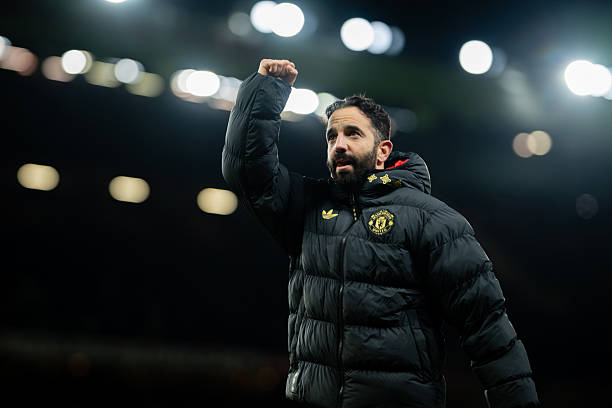
Manchester United head coach . has insisted his decision to alter the club’s tactical approach was driven by timing and necessity rather than pressure, as he seeks to guide his injury-hit squad through a demanding period of the season.
Amorim abandoned his trademark back three with wing-backs for the first time in United’s recent win over Newcastle United, instead opting for a more traditional back four supported by two holding midfielders. The shift paid immediate dividends, delivering only the club’s second clean sheet of the campaign, even if the system effectively became a back six in the closing stages as United protected their lead.
The Portuguese coach has previously been adamant about sticking to his philosophy, once remarking that “not even the Pope” could force him to change his system. However, he now says flexibility was always part of the long-term plan at Old Trafford.
“If I changed because of the media, that would be the end for me,” Amorim said. “The players would understand I was changing because of outside noise. That is the end for a manager.”
Amorim explained that a formation change could only come at a moment when the team were stable enough to understand the reasoning behind it, rather than viewing it as panic or surrender. While United had managed just two wins in their previous eight matches before beating Newcastle, he believes the broader progress justified the adjustment.
“When I came here last season, I knew maybe I didn’t have the players to play well in that system,” he said. “It was the beginning of a process. We were building an identity. Today is a different moment. We don’t have a lot of players, and we need to adapt.”
The need for adaptation has been underlined by a growing injury list. Seven senior players have already been ruled out of the upcoming home match against Wolverhampton Wanderers, who are still searching for their first league win. That number could rise if Mason Mount fails to recover from the injury that forced him off at half-time against Newcastle.
Captain Bruno Fernandes will definitely miss the Wolves game, despite pushing for an early return from the hamstring injury he suffered in the defeat at Aston Villa on 21 December. Amorim was emphatic about his decision.
“Bruno is already saying he needs to train,” he said. “But there is no chance he is going to play against Wolves. No chance. You can write that.”
Although sidelined, Fernandes remains heavily involved. Unlike many injured players who watch matches from private areas, the Portugal international observed the Newcastle warm-ups from the tunnel and continues to offer guidance to teammates and staff.
“The guy is a leader,” Amorim said. “He cannot be someone who is quiet when he’s not playing. He’s always speaking. That’s why he’s the captain.”
Amorim acknowledged Fernandes’ animated on-pitch style can divide opinion but stressed the positives far outweigh the negatives. He also highlighted the unseen work Fernandes does around the training ground, often staying to watch teammates train even after treatment sessions.
“I don’t know if he wants my job or not,” Amorim joked, “but he’s a leader.”
United’s injury concerns extend beyond Fernandes. Kobbie Mainoo, Matthijs de Ligt and Harry Maguire are also unavailable, with no clear timeline for their returns. However, there is light on the horizon. By the end of January, Noussair Mazraoui, Amad Diallo and Bryan Mbeumo are expected back after their involvement at the Africa Cup of Nations.
Amorim believes the experience of playing different systems during this period will benefit United in the long run. Once the squad is fully fit, he insists the team will not be locked into a single shape.
“We are going to be a better team,” he said. “When all the players return, we are not going to play with three defenders all the time.”
For now, pragmatism has replaced ideology at Old Trafford, with Amorim hoping tactical flexibility and strong leadership can steady United as they navigate a challenging winter schedule.

