


By Jeremiah Aminu
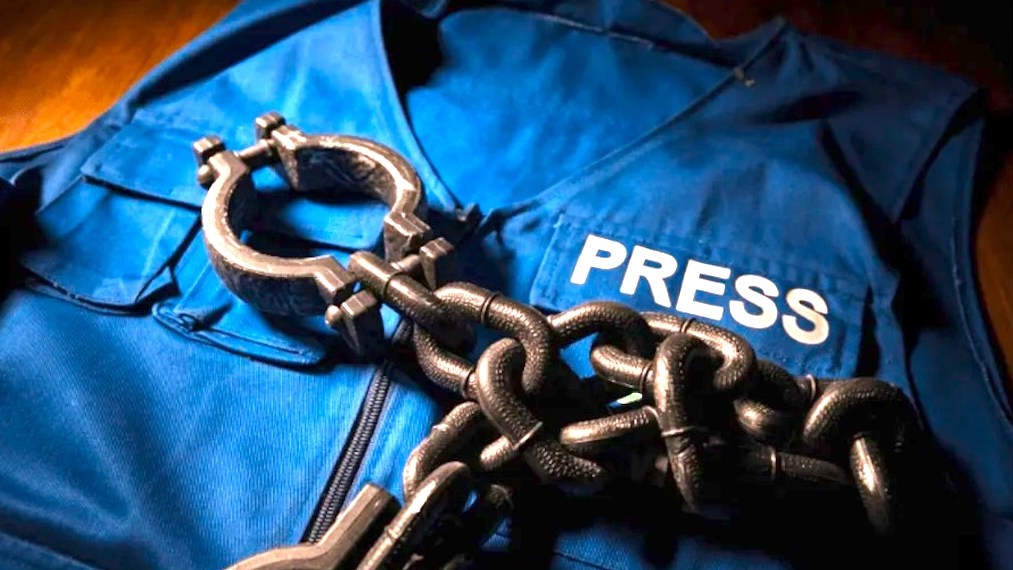
Self-censorship has, in recent years, become one of the topical issues dominating critical discourses revolving around press freedom within the Nigerian journalistic space.
While some have foregrounded the merits that accompany its utilisation, many have also underscored its dismerits, most especially the risks that it poses to the journalistic integrity and credibility of the Nigerian press.
However, before proceeding onward, it is essential to, first of all, understand the meaning of the term, self-censorship, before discussing its operations within Nigerian journalism.
Self-censorship, as defined by Merriam-Webster Dictionary, refers to “the act or action of refraining from expressing something (such as a thought, point of view, or belief) that others could deem objectionable”. In a similar vein, the English Dictionary defines it as “the act of censoring one’s own work or what one says without overt pressure from any specific party or institution of authority, often for fear of sanctions”.
In the study of these two definitions, a key driver of self-censorship is revealed. And it is FEAR—the fear of stepping on toes that are not meant to be trampled upon; the fear of offending those who are not meant to be offended within the country. It is that fear that compels journalists to exercise “self-restraint” by selectively filtering the information embedded in their publications, so as to safeguard themselves and their sources from intimidation, death threats, and legal sanctions.
To proceed, in Nigeria, there are certain contexts in which self-censorship has proven to be advantageous to the preservation of national security. In this respect, PR Nigeria recorded, in a 2017 report, how self-censorship, originating from what it described as a “systematic collaboration between the media and security agencies”, aided tactical military intelligence operations in Nigeria. In 2015, PR Nigeria published credible information on terrorist activities within the country. Less than an hour after publication, the editors were informed, via SMS, to withhold a segment of the story that mentioned “Thuraya” and substitute it with a revised version. They complied with the directive which reportedly contributed to the success of the intelligence operation.
Furthermore, in 2024, a misunderstanding arose between the GOC and members of the troop at Maimalari Barracks. In light of this case, intelligence officers appealed to the media to avoid the use of politically charged terms such as “mutiny” in place of “protest”, as a result of the life-threatening penalties that accompany charges of mutiny. Overall, all of these foreground the significant role that self-censorship plays not only in ensuring the success of military operations, but also in safeguarding the lives of individuals who are addressees of journalistic coverage.
Proceeding further, despite these merits that can be associated with the practice of self-censorship in Nigerian journalism, it also possesses its dismerits which soil the credibility and integrity of the Nigerian press.
To begin, it restricts the freedom of speech of journalists within the Nigerian media space. This restriction is often imposed by editors of media houses, for example, who, on many occasions, filter the submitted manuscripts of reporters in such a way that they differ from what was originally written. For instance, an anonymous journalist, in a HumAngle report, revealed how her article was entirely rewritten by the editor after publication without her consent or any prior information:
“My story was once altered by my editor without my consent after publishing. In fact, it was entirely rewritten, so I had to doubt the content. I had to inform them to remove my byline. Months later, I saw the advertisement of the fellow we reported on on my company’s website”, she explained.
Relatedly, another anonymous journalist narrated the unsavoury experiences that she encountered following the publication of her report which exposed the act of sexual abuse perpetrated by an indigenous chief in Ibeju-Lekki.
Although there were back-and-forth discussions between her and her editor, the story was subsequently published after months of investigation, only for the publisher to order the retraction of the report. Not only that, she (the journalist) was “transferred from the metro desk to the entertainment desk on that same day”. It was after her resignation that she realised that the decision of the publisher rested on commercial interests rather than the “sensitive and defaming nature of the report” as claimed:
“It was after I left the newspaper that I discovered that we usually take land advertisements from local chiefs in Ibeju-Lekki, and publishing the story would have cost us millions of naira. I was pained; why was I investigating the story if it wasn’t going to see the light of day?”
Now, an important question lingers: “Can we really blame journalists and news platforms that engage in the practice of self-censorship, most especially for the purpose of ensuring their security, including the safety of their sources, within a country that tends to muzzle the voice of the press?”
Addressing this concern, Ibrahim Adeyemi, HumAngle Media’s Investigations Lead, revealed how he had to forego some stories in order to ensure the safety of his sources:
“There was a time I was doing a story on how the Oyo Police Command is shortchanging officers in the state. I got sources who told me how they were being shortchanged and how some people in government were asking them to pay some bribes to be able to access their promotion letter for salary increment digitalisation.
“I had contacted all necessary sources and written the story. In the process of contacting the authorities for reactions, my sources got threatened. The officer who initially gave me the story called me to back off, saying they knew he was the one talking to me. And because of that, we backed off to protect the officer’s job”.
Remarking on this issue of self-censorship and the security of the press, Oyedeji, a recipient of the 2022 Wole Soyinka Awards for Investigative Reporting (WSAIR), explained that:
“There are times you also consider personal safety as a journalist. In the organisation I have worked in the past, we do a lot of stories on corruption and you have to drop some investigations because of the risks involved, particularly when you receive life-threatening notes from parties involved”.
Thus, to bring this discussion to a close, self-censorship is not inherently negative in nature. Instead, varying contexts determine whether it takes on a positive or negative appearance. However, one cannot deny the fact that self-censorship has acted as a threat to the freedom of speech of the press in Nigerian journalism to a considerable degree.
Because if it is not a problem, why must journalists be afraid to publish the truth for fear of being trailed, threatened, or murdered? This is to tell the public that self-censorship, although beneficial in some aspects, remains a threat to the freedom of the press and, if not effectively regulated, could damage the integrity of Nigerian journalism beyond repair.
For More Details, Visit New Daily Prime at www.newdailyprime.news

