


By Clement Abayomi
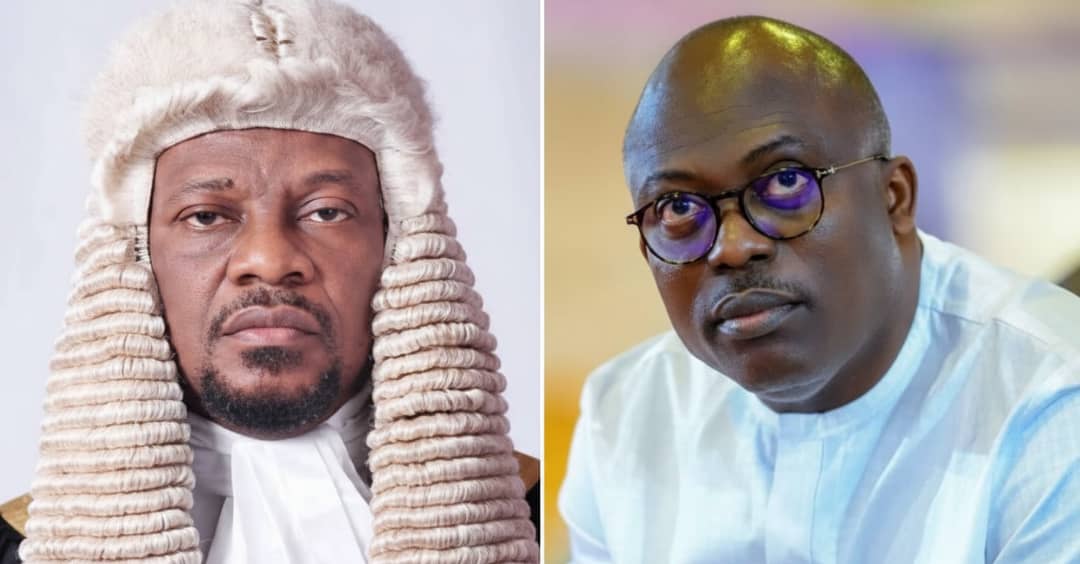
The political temperature in Rivers State has got intense as impeachment proceedings against Governor Siminalayi Fubara and his Deputy, Prof Ngozi Odu, revealed some conflicts between the government and lawmakers.
The tension has resulted in a full constitutional process, such that lawmakers insist on allegations of gross misconduct against Fubara and his deputy. In this article, the facts and reasons behind the impeachment proceedings against Fubara in Rivers State are examined.
Starting with, the Rivers State House of Assembly commenced the impeachment proceedings against both the governor and his deputy through a formal invocation of Section 188 of the 1999 Constitution (as amended).
According to a statement dated January 9, 2026 and signed by the Chairman of the House Committee on Information, Petitions and Complaints, Enemi George, the Rivers Assembly confirmed that “the two notices of allegations of gross misconduct brought pursuant to Section 188 of the Constitution against the Governor and Deputy Governor have been forwarded to them by the Speaker of the House…”.
The House stressed that the process is “fully on course in line with relevant provisions of the Constitution,” showing its claim that the action is legal.
One major reason cited for Governor Fubara’s impeachment is a series of alleged constitutional and financial violations which have been outlined in seven counts of gross misconduct.
As reported by Channels News, allegations including the demolition of the Assembly complex, extra-budgetary expenditure, withholding of funds meant for the Assembly Service Commission, and disobedience of a Supreme Court ruling on legislative financial independence have been identified. These allegations were endorsed by 26 lawmakers.
In furtherance, closely related to these allegations is the legislature’s affirmative stance that it is acting to defend its institutional integrity and financial independence.
According to the media outlet, the Assembly declared it would “stand by the people and stop infractions on the Constitution by the Governor, Deputy Governor, or any other officer of the Rivers State Government”.
Besides, Speaker Martins Amaewhule, who presided over the impeachment process during a plenary, further confirmed that the governor would be formally notified within the constitutionally stipulated timeframe. This is is to show that the House follows due process.
Of course, the impeachment crisis also extends to the Deputy Governor, Prof Odu, against whom separate allegations of gross misconduct were presented. In a report presented by Channels Television, Deputy Leader Linda Stewart accused her of reckless and unconstitutional spending, obstruction of legislative activities, and approving budgets outside the recognised Assembly.
These claims point to the belief that lawmakers view the actions of both the governor and his deputy as relatedly undermining legislative authority and constitutional order.
What is more? Rivers Assembly has also raised allegation of attempts by certain individuals to use the judiciary to obstruct the impeachment process.
In a statement reported by TVC News, the House had uncovered plots by “certain persons to utilise some Rivers State High Courts, especially outside the Port Harcourt Judicial Division, to issue ex parte orders to illegally stop the Rivers State House of Assembly from performing its constitutional duties.”
The lawmakers cited constitutional provisions that vest jurisdiction over the tenure of a governor or deputy governor in the Federal High Court and warned that impeachment proceedings “cannot be questioned in any court.”
As stated in a report on TVC News, the Assembly had cautioned: “A word is enough for the wise… I call on those concerned to exercise restraint and refrain from acts inimical to the Constitution and the rule of law”.
Apart from the Assembly’s formal allegations, political and ethical questions have been raised to intensify the controversy. TVC News, for example, reported that lawmakers accused the governor of allegedly changing state funds into dollars and paying individuals from Abuja to influence President Bola Tinubu against summoning him to present the 2025 budget before the Assembly.
And, commenting on the political implications of the impeachment proceedings, analyst Kingsley Okafor presented the following on Landslide TV:
“Impeachment was strictly reserved to remove a governor or deputy governor from the office based on established gross misconduct, not gross misconduct that is fabricated… The question here is how do Rivers people benefit from this impeachment?”
He believes the outcome of the present crisis in Rivers State would be a significant one in the county’s political sphere.
“The end game of what we are having in Rivers State is very important in Nigerian politics because whatever happens there is going to serve as a precedent to others. I’ve said it clearly that one thing that we should take very seriously is to understand that impeachment is not reserved to settle political scores between godfather and godson or between political enemies,” he said.
Meanwhile, TVC News Executive Editor, Kayode Ladeinde, argued that many allegations deserve serious answers.
“I want to believe the governor should rather respond to gross misconduct because… a good number of the issues raised need answers,” he maintained.
These contentions, alongside the APC’s rejection of the process as “destabilising and unnecessary”, as reported by Channels Television, reveal why Fubara’s impeachment crisis has become one of the political battles in Rivers State today.
For More Details, Visit New Daily Prime at www.newdailyprime.news

