


By Sakariyah, Ridwanullah
In early January 2026, reports of a U.S. military operation in Venezuela triggered global debate and sharp diplomatic reactions, including in Nigeria, where politicians, civil society groups and legal experts weighed in on questions of sovereignty, international law and the limits of military power.
Although details of the incident remained contested, Nigerian commentary reflected broader anxieties in the Global South about unilateral intervention by powerful states.
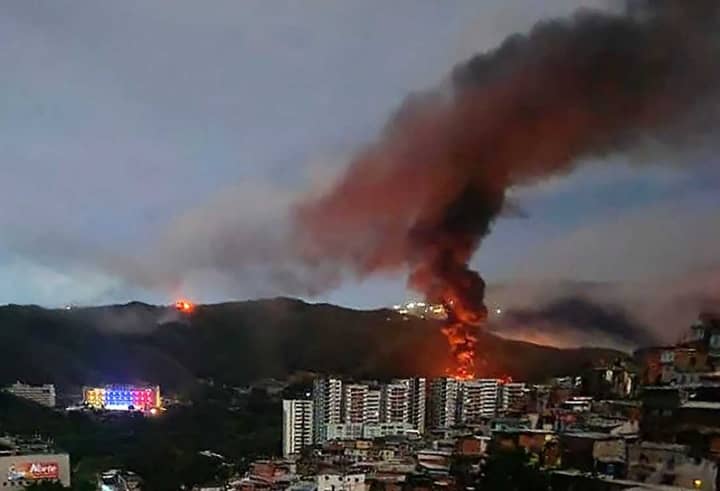
On 3 January 2026, international news organisations including Reuters and The Guardian reported that U.S. authorities said American forces had carried out military strikes in Venezuela. According to the reports, the U.S. action followed years of tension between Washington and the government of President Nicolás Maduro, which the United States has accused of narcotics trafficking and security-related offences. Venezuelan officials rejected the U.S. account of the operation, while several governments called for restraint and sought clarification of the circumstances surrounding the strikes.
Reuters reported that regional powers, including Brazil, criticised the action and warned that it could destabilise Latin America. The Guardian described the episode as one of the most serious confrontations between Washington and Caracas in recent years, raising renewed concerns about the use of military force without broad international support.
In Nigeria, reactions were swift and largely critical. Civil society organisations were among the first to respond. The Venezuela Solidarity Campaign in Nigeria, a coalition of labour and rights groups, issued a statement carried by Tribune Online condemning what it described as external military aggression against a sovereign state. The group warned that foreign military interventions often lead to prolonged instability and humanitarian suffering, urging Nigeria and other African countries to oppose such actions through diplomatic channels.
In the same vein, human rights activists echoed these concerns. Sahara Reporters reported that Omoyele Sowore, a Nigerian activist and former presidential candidate, criticised both the reported U.S. action and the United Nations, arguing that global institutions had failed to restrain powerful countries. Sowore described the episode as another example of selective enforcement of international norms, a view that resonated with segments of Nigerian public opinion sceptical of Western foreign policy.
Going forward, Legal voices also entered the debate. In a statement reported by The Guardian (Nigeria), human rights lawyer and Senior Advocate of Nigeria, Femi Falana, criticised the reported U.S. military action against Venezuela, describing it as a violation of international law.
Falana argued that the use of force against a sovereign state, particularly any action involving the arrest or detention of a sitting head of state, would be unlawful unless authorised by the United Nations Security Council.
He maintained that political or ideological disagreements with a foreign government could not justify unilateral military intervention, warning that such actions undermine the principles of sovereignty and the international legal order.
Interestingly enough, not all Nigerian reactions were uniformly condemnatory. For example, an opposition political party, the African Democratic Congress (ADC), offered a more nuanced response. In a statement reported by Premium Times, the party said the developments in Venezuela sent “a strong message to the Nigerian government and any other government that lacks legitimacy,” while reaffirming its support for the principles of national sovereignty and non-interference as enshrined in the United Nations Charter.
ADC spokesperson Bolaji Abdullahi emphasised that international governance doctrines should not be invoked to provide a safe haven for tyranny or the systematic denial of a people’s right to choose their leaders, suggesting that political legitimacy and accountable governance were at the core of the crisis. This position underscored how domestic political perspectives can shape interpretations of international events.
On the same matter, former government officials also offered own commentaries. For instance, Bashir Ahmad, a former media aide to ex-President Muhammadu Buhari, criticised what he called Western double standards in the framing of military interventions in Venezuela. On social media, Ahmad wrote: “When Russia attacked Ukraine, it was rightly called a crime. Now the United States attacks Venezuela and suddenly it’s described as ‘liberating the people.’ What a staggering hypocrisy!” These remarks were reported by Africa-Press and First Daily Nigeria, reflecting a sentiment of long-standing distrust of global power politics among many Nigerians.
Regional and international reactions also featured in Nigerian media coverage. Several outlets reported that the African Union restated its long-standing position in favour of respect for state sovereignty and the peaceful resolution of disputes, while urging dialogue over escalation in Venezuela.
This stance was presented within the broader context of the AU’s consistent opposition to unilateral military actions and its preference for multilateral approaches to conflict resolution under international law.
On the international level, reactions reported in the media varied. Several outlets, including The Guardian, noted that countries such as Brazil expressed strong objections, warning that unilateral military action could set a dangerous precedent for the region.
Representatives of Russia and China also criticised the reported U.S. operation, emphasising that the use of force should have broad international backing and adhere to established norms of sovereignty and international law.
These statements reflect the cautious stance of multiple governments in response to actions perceived as bypassing multilateral processes.
Across Nigeria, the discussion about Venezuela went beyond distant geopolitics and touched on the country’s own experience with foreign intervention. Opinion pieces and commentary in Nigerian media, including BusinessDay and The Nation, linked the crisis to broader questions of international rules and the role of powerful states.
Analysts noted that actions like those reported in Venezuela could weaken protections for smaller countries and stressed the importance of strong international institutions and respect for the United Nations Charter.
At the same time, Nigerian reactions were not uniform. Civil society groups and legal experts focused on the effects on international law and human rights, while some political figures and foreign policy commentators pointed to governance issues within Venezuela and the larger geopolitical context. Together, these responses showed that global events are often understood through local politics, history, and perspectives in Nigeria.
From the foregoing, it is crystal clear that the reported U.S. action in Venezuela, regardless of how events ultimately unfolded, struck a sensitive chord in Nigeria. It revived enduring debates about power, law and legitimacy in the international system, and underscored how closely Nigerians continue to watch global affairs for lessons that may one day apply closer to home.
For More Details, Visit New Daily Prime at www.newdailyprime.news

