


By Clement Abayomi
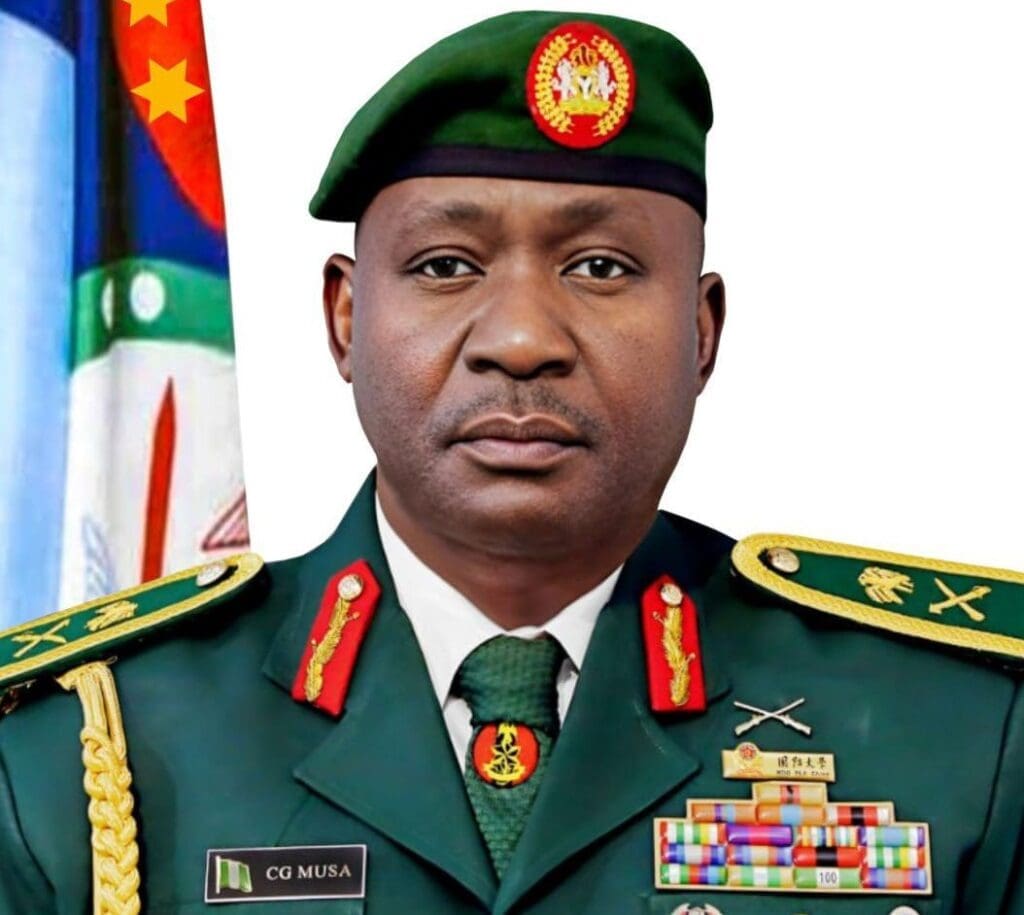
National attention has heavily turned to the appointment of former Chief of Defence Staff, Gen Christopher Musa, as Nigeria’s new Minister of Defence. His appointment has generated strong attention among Nigerians, analysts, and security experts who have begun to express both optimism and heightened expectations amid increased terrorism, banditry, and kidnapping in Nigeria.
Gen Musa’s return to national service has been seen by many as a critical moment, especially at a time when insecurity has a firmer grip on communities across the country. His transition from Chief of Defence Staff (CDS) to Minister can be seen as a significant shift in Nigeria’s security leadership. Many Nigerians are now anticipating a more coordinated, intelligence-driven, and results-oriented defence administration. On this account, this article examines the expectations of Nigerians from General Christopher Musa as Nigeria’s new Minister of Defence. Will he be able to turn the narratives of insecurity around?
A recent interview with Developmental Policy Analyst Olakunle Oreofe reveals aspects of General Musa’s experience and competence. Oreofe described Musa’s [re]emergence as “a new chapter in Nigeria’s security architecture,” noting that his previous tenure as CDS “brought a noticeable level of sanity and renewed vigour to the nation’s fight against insurgency.”
As Oreofe reiterated, General Musa’s “firm, coordinated, and professional” approach earned him widespread admiration, particularly among northern Christians who regard him as disciplined and uncompromising. In addition to that, Oreofe explained that Musa’s Senate screening further revealed “a clear, strategic vision for the defence sector” and demonstrated the depth of knowledge that makes him “one of the most respected military figures in the country.”
Speaking on operational experience and balanced strategy, Oreofe stressed the fact that Musa’s years of service, especially in the Northeast as Commander of Operation Hadin Kai, equipped him with vital experience in combating “terrorism, asymmetric warfare, and cross-border criminality”. He then described Musa as a results-driven leader who prioritises “intelligence-led operations, inter-agency collaboration, and modernised military strategy.”
In fact, Oreofe noted Musa’s belief that insurgency “cannot be defeated by force alone,” explaining that his philosophy synergises kinetic operations with non-kinetic measures such as community engagement, deradicalisation, troop welfare, and trust-building between civilians and security agencies.
“General Musa is positioned to spearhead meaningful reforms within the defence sector. His blend of operational expertise and strategic insight offers a rare opportunity to strengthen Nigeria’s defence capabilities in a holistic and sustainable manner. I wish General Musa the very best as he begins this new chapter. Millions of Nigerians are counting on his experience, courage,” Oreofe concluded.
Security comments and national expectations were further articulated on NTA Live News by hosts Claire Adelabu Abdulrazak and Victor Azu. Abdulrazak emphasised that the new Defence Minister must show “genuine commitment to defeating terrorism by strengthening investigation, prosecution as well as accountability”.
As stated by Azu, Nigerians expect General Musa “to disrupt terror financing networks, track masterminds of violent attacks and ensure ongoing counterterror operations are guided by intelligence-driven strategies.” These expectations remind the minister of the urgent need for systemic improvements in counterterrorism governance and operational monitoring.
On military performance and communication, former Director of Defence Information, Major General Chris Olukolade stated that Nigerians anticipate swift and decisive military action.
“I believe that Nigerians are expecting that the military should be so swift and deliver a very big bang that will get us better results in the security situation of the country,” he said.
In a follow-up contribution, he added: “There’s need for more coordination… from the defence this time”. This emphasises improved information dissemination, better interaction with the public, and strengthened communication of the military’s needs.
Olukolade also affirmed Musa’s strengths.
“One thing we can give to this General is the fact that he is exposed and… has intellectual depth to adapt to every situation, even to manage the political demands of his office,” he said.
Besides, Professor Ehiz Odigie Okpataku, a behavioral change and regimental effectiveness consultant, bordered on General Musa’s operational competence and battlefield exposure.
“By virtue of having worn the uniform and then also being a Chief of Defence Staff and being a Nigerian who has seen things on the battlefield… you have that experience,” she remarked.
Okpataku stressed that security must be viewed as a shared responsibility.
“We should not limit it to just the military now. By virtue of his office as the Minister of Defence, it is creating bridges for other agencies to come on board… to create a comprehensive strategy,” she said.
Again, security expert Muhammed Ali from Kaduna lent his voice to the significance of Musa’s professional military background as he explained that although General Musa now occupies a political office, he remains “a military man in civilian garb” with the expertise to tackle insecurity. He noted that Musa possesses the “intellectual and technical capability to really deliver,” unlike the previous minister who “was a two-time Governor and a trained accountant” without a security background. Muhammed Ali expressed strong belief that Musa “will really cap it up and do the best he can to ensure that Nigerians begin to have a sigh of relief from the ravages of banditry, kidnapping.”
From the perspective of Political Affairs Analyst Sonny Adenuga on TVC News, Nigerians are primarily demanding results.
“They want safer roads. They want safer schools. They want protection for every community… Nigerians can’t wait. They want it swift,” Adenuga said.
He insisted that Musa’s leadership must involve intelligence-driven military operations and maintain transparency. emphasising that “the military under the new Minister of Defence should ensure there is a regular update on progress.” He further expressed trust and confidence that Musa can deliver on these expectations.
“Like many Nigerians and myself, I have very little doubt that General Musa will not be able to deliver… for Nigerians,” he said.
To end with, Nigerians are hoping that Musa’s experience, courage, and integrity will help to bring back stability and renew confidence in the security agencies of the nation. General Musa is considered as capable of turning the current narrative of insecurity around by bringing the reforms necessary to improve the defence sector in a sustainable manner—provided adequate resources, political will, and institutional collaboration are available.
The convergence of expectations from analysts, former military officials, and the Nigerian public establishes a demanding yet essential standard for the new minister, whose leadership is now at the core of the people’s hope for security.
For More Details, Visit New Daily Prime at www.newdailyprime.com

