


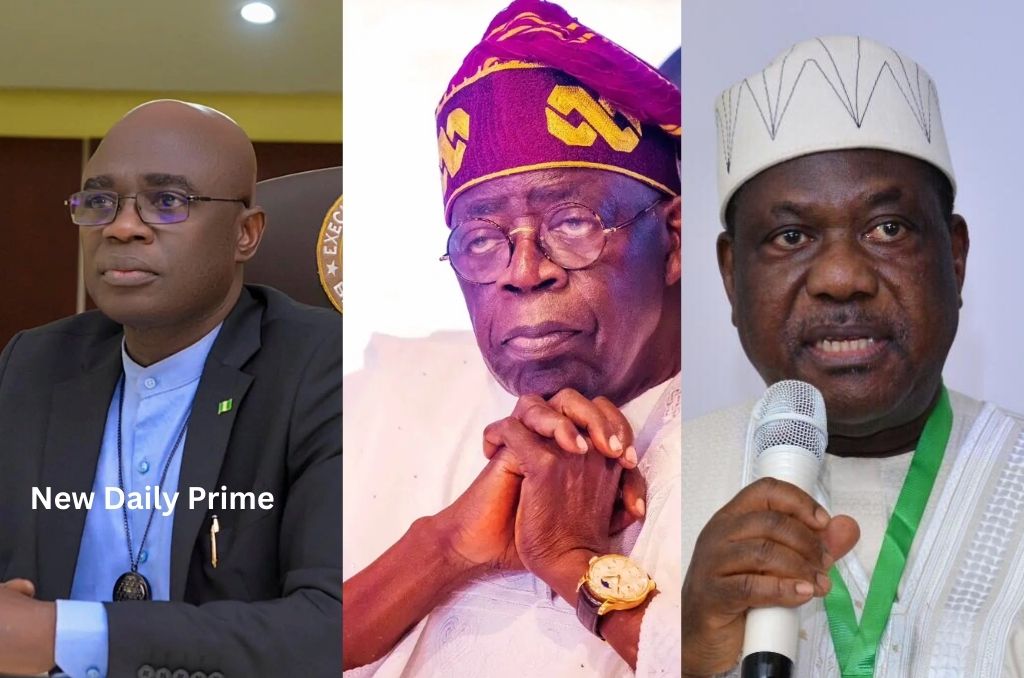
President Bola Ahmed Tinubu has constituted a high-powered reconciliation committee to resolve the deepening crisis within the All Progressives Congress (APC) in Benue State between the Secretary to the Government of the Federation, George Akume, and Benue State Governor, Hyacinth Alia, as the party battles internal divisions ahead of the 2027 general elections.
The committee, chaired by the Speaker of the House of Representatives, Tajudeen Abbas, is expected to mediate the prolonged cold war between the two leaders, a rivalry that has fractured the party’s structure in the state.
Other members of the reconciliation team include Yobe State Governor, Abdulaziz Yari, former Speaker of the House of Representatives, Yakubu Dogara, the Senior Special Assistant to the President on Political Matters, Ibrahim Mazzen, and the Chief of Staff to the Speaker, Jake Dan-Azumi, who will serve as secretary.
Mandate and Expectations
The committee has been tasked with addressing the root causes of factionalism within the APC in Benue, engaging key stakeholders, proposing structural and procedural reforms, and recommending measures for sustainable peace and political cohesion to the President.
Read related news from New Daily Prime:
Muslim, Christian clerics unite in Lagos to pray for Tinubu’s second term
SGF George Akume marries ex-Ooni’s wife, Queen Zaynab
Benue govt denies rumours of Governor Alia leaving APC
Its intervention comes at a critical moment, as the crisis between Akume and Alia has split the party into rival factions—one loyal to the SGF and the other aligned with the governor—raising concerns about the party’s electoral viability in the state.
The crisis assumed a more troubling dimension during the Tiv Day celebration at the J.S. Tarka Stadium, Gboko, in December 2025, when supporters of the rival camps clashed openly, leading to the stabbing of an alleged supporter of the SGF. The incident unfolded in the presence of APC National Chairman, Nentawe Yilwatda, who pledged to intervene.
According to Daniel Ihomun, publicity secretary of the Austin Agada-led State Working Committee loyal to Akume, the crisis stemmed from what he described as the governor’s failure to recognise established party stakeholders.
He said the disagreement led to the emergence of parallel party executives, prompting the National Working Committee to dissolve the structures and install a caretaker committee chaired by Benjamin Omale.
However, James Orngunga, publicity secretary of the caretaker committee loyal to Governor Alia, countered that the crisis arose from stakeholders’ refusal to accept the constitutional role of the governor as leader of the party in the state.
“The governor is the leader of the party in the state and cannot share that authority,” Orngunga said, citing repeated affirmations by Vice President Kashim Shettima.
Political analysts in Benue say the crisis reflects a recurring pattern in the state’s politics. Analyst Timothy Akeh noted that Akume has previously fallen out with governors he helped into office, including Gabriel Suswam and Samuel Ortom.
“Once they get to office, the relationship collapses—like Chinua Achebe’s Things Fall Apart,” Akeh observed, attributing the fallout to what he described as Akume’s overbearing influence.
Former lawmaker and APC stakeholder Godwin Ikereve echoed similar concerns, warning that excessive interference in governance by political godfathers often leads to instability.
“Once you help someone into office, allow him to exercise his mandate. Power-sharing only breeds conflict,” Ikereve said, urging the reconciliation committee to remain neutral and avoid imposing outcomes.
Former state lawmaker Bem Mgutyo said the prolonged cold war between Akume and Alia has adversely affected governance and party unity, urging both leaders to set aside ego in the interest of Benue State.
“The state is suffering because of this conflict. There must be a meeting point,” Mgutyo said, adding that Akume should reflect on why successive governors have distanced themselves from him after assuming office.
Despite the deep divisions, both factions have expressed readiness to engage with the reconciliation committee. Orngunga described the committee’s formation as a welcome development, noting that peace between Akume and Alia would automatically reunite their supporters.
Similarly, Ihomun said the Agada-led faction was committed to reconciliation, stressing that the survival of the APC in Benue depended on unity.
With some party faithful describing the APC in Benue as “on life support,” the reconciliation committee faces a defining test. Its success or failure could determine not only the party’s survival in the state but also its prospects in the 2027 elections.
For now, all eyes are on the committee as it attempts to heal deep political wounds and restore cohesion to a party at a crossroads.
For more details, visit www.newdailyprime.news

