


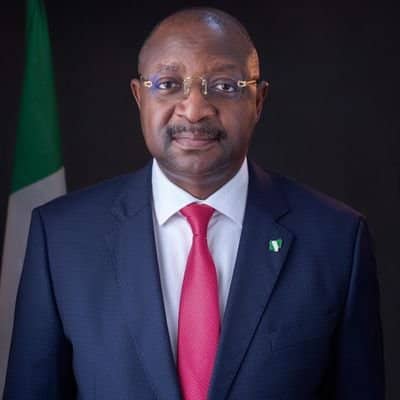
President Bola Tinubu’s Special Adviser on Media and Public Communication, Sunday Dare, has criticised former presidential candidate Peter Obi, describing him as a politician trapped by personal ambition and disconnected from Nigeria’s political realities.
Dare made the remarks in a statement titled “Imprisoned by ambition: Welcome to 2027, Peter Obi’s reckless misreading of politics and power”, in which he dismissed Obi’s reported defection from the Labour Party (LP) to the African Democratic Congress (ADC) as inconsequential and lacking political significance.
According to Dare, Obi’s move failed to generate the momentum or excitement that would ordinarily accompany a major political realignment. He argued that if the defection was intended to disrupt Nigeria’s political landscape or signal a new phase in opposition politics ahead of the 2027 general elections, it fell “completely flat”.
“The defection did not shake the political space,” Dare said, adding that the development was met largely with indifference by the public. He described the move as predictable, noting that it followed a familiar pattern Nigerians have seen repeatedly in the past.
Dare further contended that Obi’s political message had become exhausted, insisting that the switch to the ADC did not represent a fresh vision or strategy. Instead, he characterised it as the end of a worn-out political narrative that no longer resonates widely with the electorate.
The presidential aide also accused Obi of using the defection to launch what he described as routine and unoriginal attacks against President Tinubu. Dare argued that such criticism only highlighted the contrast between both politicians, portraying Tinubu as a leader with deeper political influence, experience and historical relevance.
According to him, President Tinubu governs through policy direction, institutional engagement and long-term planning, rather than what he described as “public outbursts, manipulation or populist rhetoric”.
Dare suggested that Obi’s recent comments reflected a misplaced sense of self-importance. He questioned the strength of Obi’s democratic credentials and argued that his presidential ambitions were not backed by a carefully constructed national coalition that reflects Nigeria’s political, regional and cultural diversity.
He maintained that leadership at the national level requires broad alliances, political depth and the ability to navigate complex power structures, qualities he implied were lacking in Obi’s approach.
The statement comes amid ongoing political manoeuvring among opposition figures as the 2027 elections draw closer, with shifting party loyalties and talks of new alliances reshaping the political conversation.

