


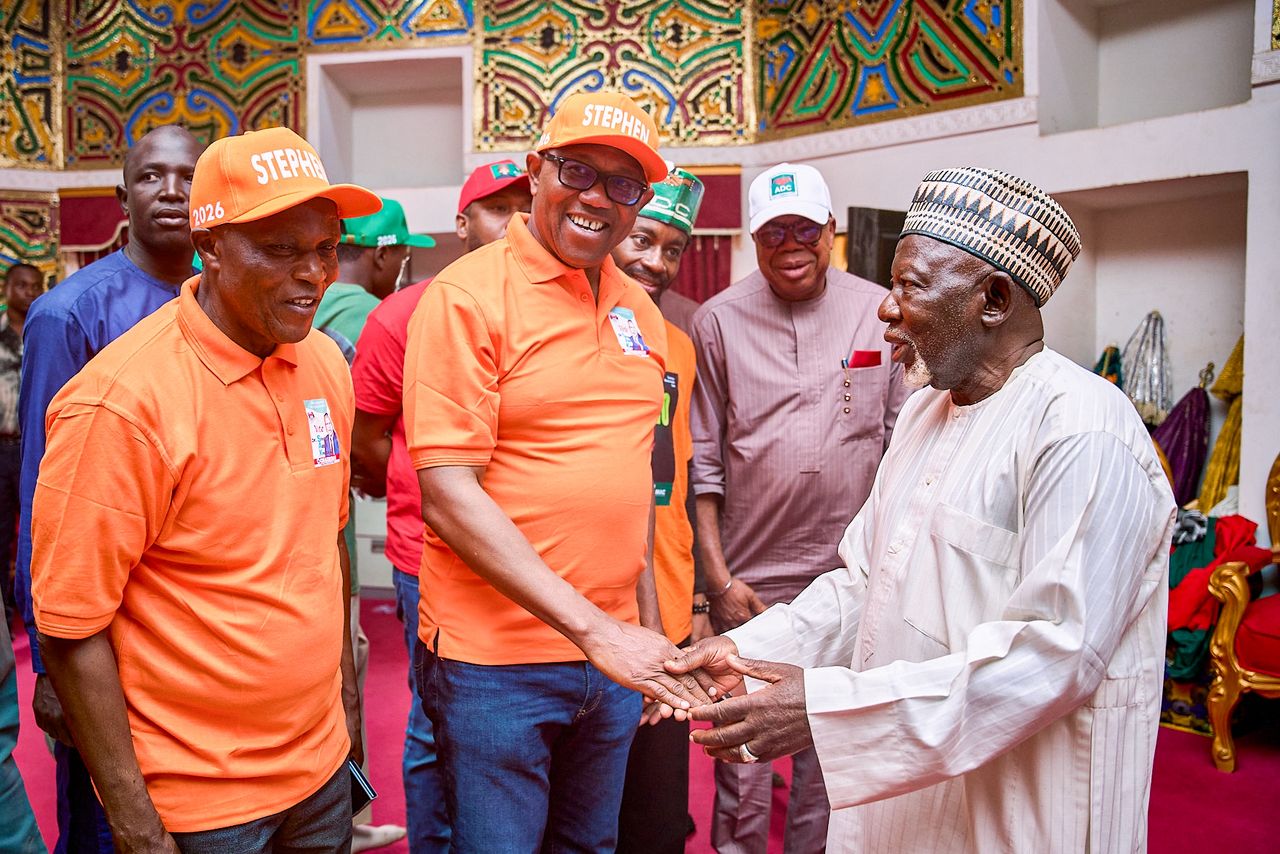
Former Labour Party presidential candidate, Mr Peter Obi, on Thursday embarked on an early morning grassroots outreach across several Area Councils in the Federal Capital Territory (FCT), Abuja, as part of efforts to promote people-centred leadership ahead of the forthcoming Area Councils’ elections.
Obi disclosed this in a statement, noting that he began the exercise at about 6:30 a.m. from his office in the Abuja Municipal Area Council (AMAC). According to him, the visit was driven by a deliberate mission to engage directly with ordinary citizens and reinforce a leadership philosophy rooted in accessibility, empathy and service.
His first stop was the Abaji Area Council, where he campaigned alongside Dr Mohammed Ibrahim, the African Democratic Congress (ADC) chairmanship candidate for the area. Obi said he spent about an hour walking through the community, listening to residents, understanding their concerns and aspirations, and reaffirming his belief that leadership must be grounded in the lived realities of the people.
From Abaji, the former Anambra State governor proceeded to Kwali Area Council, where he supported Hon. Jeremiah Badoji, the ADC chairmanship candidate. Obi again undertook a one-hour walk through the community, engaging residents directly and emphasising that leadership is not a distant or abstract idea, but one built through presence, endurance and genuine connection with the people.
He later travelled to Zuba, where he campaigned for Pharmacist Iko Danjuma, the ADC chairmanship candidate for Gwagwalada Area Council. Obi also visited the busy Dei-Dei Market, one of Abuja’s major commercial hubs, where he interacted with traders and residents while canvassing support for Dr Moses Paul, the ADC chairmanship candidate for AMAC.
During the engagements, Obi reiterated his commitment to inclusive development that reaches every segment of society, stressing that sustainable progress can only be achieved when leaders remain close to the people they serve.
He concluded by restating his long-held message of hope and reform, describing a new Nigeria not merely as an aspiration but as an achievable reality, anchored on responsible leadership, grassroots participation and collective commitment.

