


The Federal Government (FG) has described the 2026 fiscal year as a pivotal “turning point” for Nigeria, with the upcoming budget designed to cement the economic gains recorded under President Bola Tinubu’s administration.
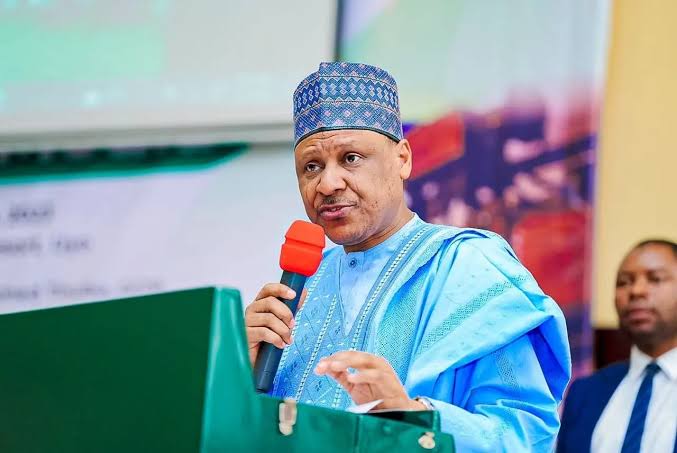
In a comprehensive op-ed titled “A Defining Moment for Nigeria: Why Staying the Course Matters,” published on Monday, the Minister of Information and National Orientation, Mohammed Idris, asserted that the “Budget of Consolidation, Renewed Resilience, and Shared Prosperity” is the vehicle that will translate reform numbers into lived realities for citizens.
Idris noted that the difficult economic decisions made over the last 31 months are finally bearing fruit.
READ ALSO: Youth empowerment programmes not for political interests, says Idris
He highlighted several indicators pointing to a stabilising economy, including expanding business activity and growing investor confidence.
He also noted signs of monetary stability, with inflation gradually easing and Nigeria’s external reserves strengthening.
According to him, these gains were not merely statistical improvements but formed the foundation for lasting enhancements in the quality of life of all Nigerians.
“The 2026 budget is a commitment to double down on what is working,” Idris stated. “We have laid a new foundation. Now, we must build the house together.”
The minister outlined several high-impact projects and social interventions that would remain the administration’s top priorities in the new year.
These include strategic infrastructure projects such as the ongoing construction of the Lagos–Calabar Coastal Highway, the Sokoto–Badagry Expressway, and the Ajaokuta–Kaduna–Kano (AKK) Gas Pipeline.
He also highlighted direct relief measures, including the expansion of the Student Loan Programme (NELFUND) and the Presidential Compressed Natural Gas (CNG) initiative, both aimed at reducing transportation costs.
In addition, the minister said the government would scale up youth empowerment programmes such as LEEP, the Jubilee Fellows Programme, and the 3MTT (3 Million Technical Talent) initiative.
On food security, he noted that efforts were underway to recapitalise the Bank of Agriculture and promote large-scale mechanisation to drive down food prices.
Addressing the nation’s security concerns, Idris cited the recent successful rescue of abducted students in Kebbi and Niger States as proof of a “renewed focus.”
He credited Tinubu’s “calm and decisive leadership,” particularly in strengthening anti-insurgency ties with the United States, for the improved security architecture.
While acknowledging the “reform fatigue” felt by many Nigerians, the Minister urged citizens to reject misinformation and engage constructively with the government.
READ ALSO: Bandits abduct 25 students in fresh Kebbi attack as Governor Idris calls for unity, prayers
He reaffirmed that the ministry of Information will remain “open, accountable, and consistent” in its communications.
“Nation-building is a shared responsibility,” Idris concluded, calling on Nigerians to protect public assets and stay focused on the long-term benefits of the current reforms as the 2026 budget implementation phase begins.
For more details, visit New Daily Prime at www.newdailyprime.news

