


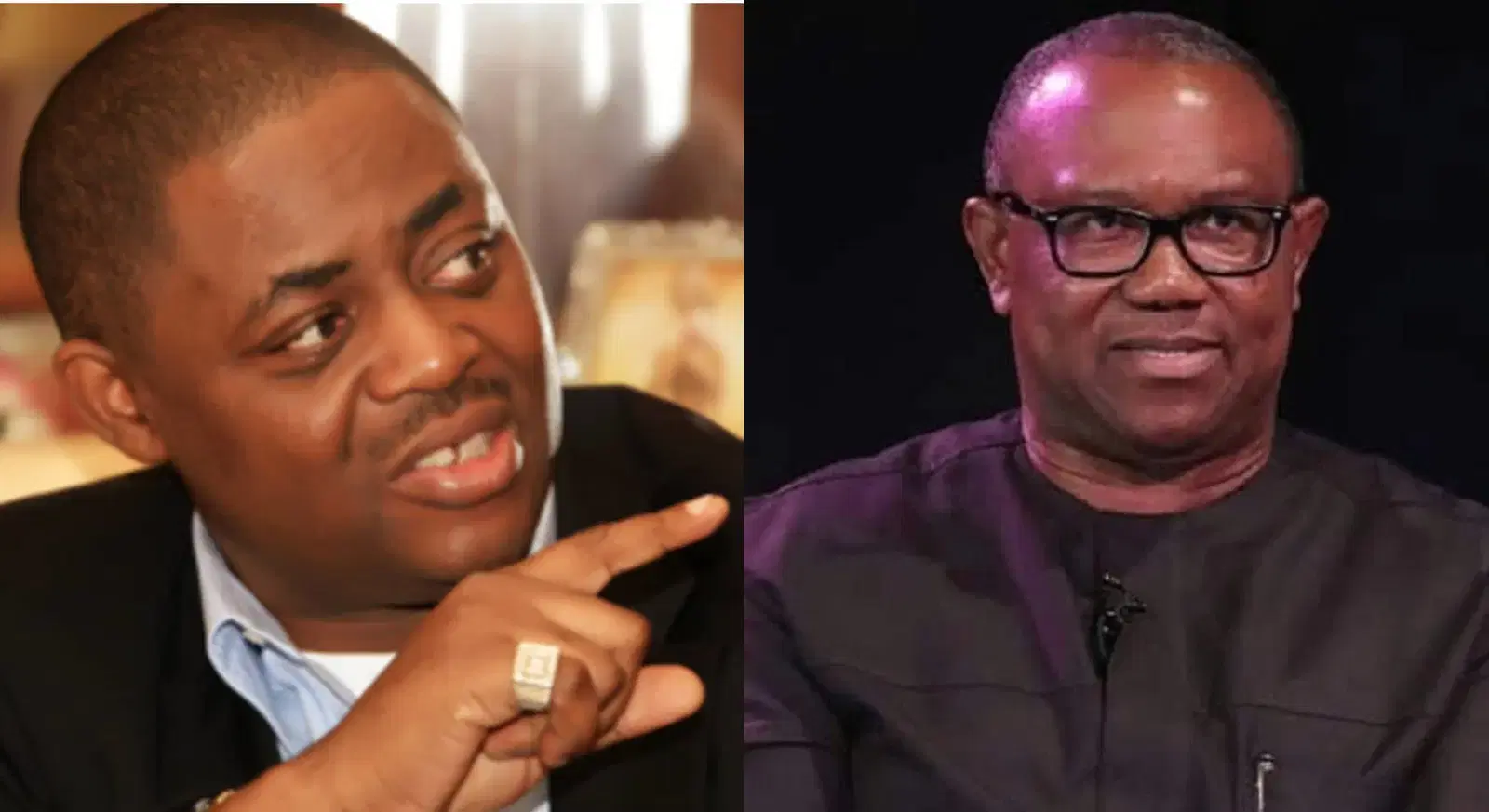
Former Aviation Minister Femi Fani-Kayode has launched a scathing attack on Peter Obi, the Labour Party’s presidential candidate in the 2023 general elections, declaring that he would never lead Nigeria.
Fani-Kayode’s criticism followed comments made by Obi in which the former Anambra State governor compared present-day political actors—particularly those once involved in pro-democracy struggles—to the late military ruler Sani Abacha.
In a post shared on X on Friday, Fani-Kayode described Obi’s remarks as deeply offensive and insensitive, especially to those who suffered during Nigeria’s years under military rule.
According to him, Obi’s statement went beyond political discourse and amounted to an affront to the memory of those who fought and died for democracy.
“To mock the memory of those that died fighting for democracy in the June 12 struggle and sacrificed their lives and liberty as members of National Democratic Coalition in this way is unacceptable and unforgivable. Simply put, it is despicable,” he wrote.
He further declared that Obi’s political ambitions were effectively over, stating emphatically: “You shall NEVER become President of our nation.”
The reaction was in response to Obi’s earlier post, in which he criticised what he described as a historical contradiction involving some former pro-democracy activists. Obi argued that individuals who once opposed dictatorship are now governing in ways that contradict the ideals they previously championed.
“What an irony of history, that the acclaimed defenders of democracy and human rights who claimed to have fought for democracy during the era of General Sani Abacha now find themselves worse than the man they opposed,” Obi wrote.
He went further to suggest that Abacha could be viewed as more respectful of human rights than some present-day leaders, adding, “Power indeed reveals character.”
Although Obi did not mention any specific individuals, his remarks have sparked widespread reactions and controversy across Nigeria’s political landscape.
The exchange comes amid heightened political tension ahead of the 2027 general elections, with opposition figures raising concerns about democratic practices and internal party disputes, particularly within the African Democratic Congress (ADC).
While the All Progressives Congress (APC) has denied allegations of interference in opposition affairs, the ongoing debates underscore deepening divisions and intensifying rhetoric within the country’s political space.

