


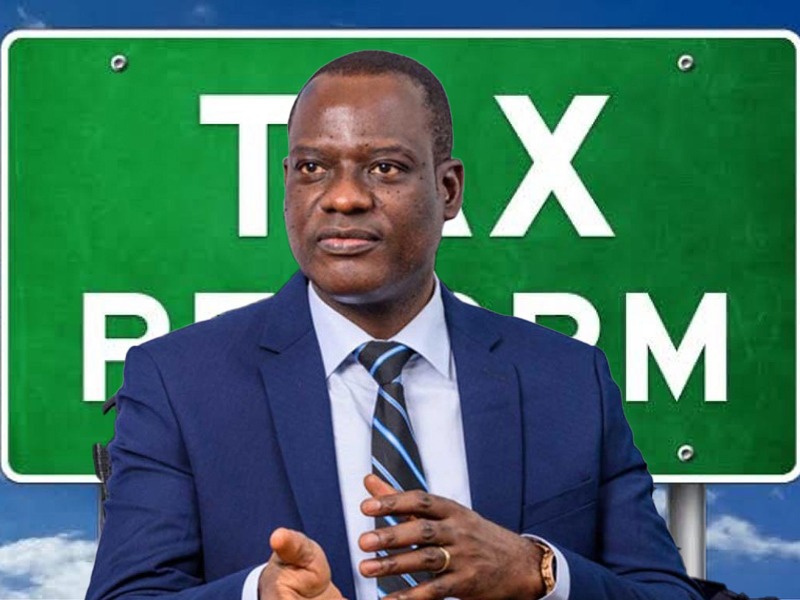
Chairman of the Presidential Fiscal Policy and Tax Reforms Committee, Taiwo Oyedele, has pushed back against reports claiming he admitted flaws in Nigeria’s newly introduced tax laws, even as a circulating video shows him discussing “problems we identified” during the legislative process.
On April 10, the committee issued a statement indicating that errors had arisen from manual processes and multiple layers of review during the drafting of the laws. It added that corrective measures were already being pursued through a proposed finance bill.
However, in a follow-up statement shared on his official X account on Sunday, the committee described claims that Oyedele had “finally admitted errors” as misleading and a distortion of his remarks.
“These publications misrepresent the Minister’s statements, falsely alleging that he urged Nigerians to await the outcome of a ‘legislative probe’, a process that has long been concluded and the gazetted copies certified by the National Assembly published since early January 2026,” the statement read.
“This twisted narrative is unhelpful as it risks distorting public understanding and misleading the very people the reforms were designed to benefit.”
The committee clarified that Oyedele’s comments were made during a fireside chat at the NBA-SLP conference in Lagos, where he outlined early gains from the reforms. According to him, tax registrations have surged from under 10 million individuals to more than 100 million, while more informal businesses are now registering with the Corporate Affairs Commission.
He also emphasised that legislation is an evolving process, noting that engagement with stakeholders would help address any shortcomings.
“Ongoing stakeholder engagement is essential to identify and address any errors or gaps for appropriate legislative updates through Finance Bills as part of a continuous improvement process,” the statement added.
In the widely shared video, Oyedele acknowledged weaknesses in the law-making process, describing it as vulnerable to inconsistencies due to repeated manual edits across different stages.
“When this allegation of alteration was made, it didn’t come to me as a surprise because my surprise happened before then. My surprise is, being very much involved with the lawmaking process, I wasn’t impressed,” he said.
“This process cannot guarantee quality assurance. There are just too many stages of manual editing, updating.”
He went on to explain how drafts move through various committees, undergo harmonisation between the House and Senate, and pass through multiple institutions before being signed and gazetted.
“In each of those stages, if you know how many versions I reviewed, it was a nightmare,” he added.
Oyedele noted that although his team flagged and corrected many discrepancies, not all issues were resolved before the law was finalised.
“At that point, about 90 percent of the problems we identified had been corrected but not all of it, and that was already three months. So I said, if you want to wait to have this thing to be perfected, we will not have the transition period,” he said.
Reflecting on the controversy over alleged alterations, he expressed disappointment that the situation was not used to reform the legislative process.
“When they raised the issue of alteration, I said to myself, maybe someone will pay attention that this is a process problem, and let’s use the opportunity and the national embarrassment to fix this problem once and for all. That never happened.”
The debate over the integrity of the tax laws intensified in December 2025 when Abdussamad Dasuki, a member of the House of Representatives from Sokoto State, alleged that the versions of the laws available to the public differed from those passed by the National Assembly.

