


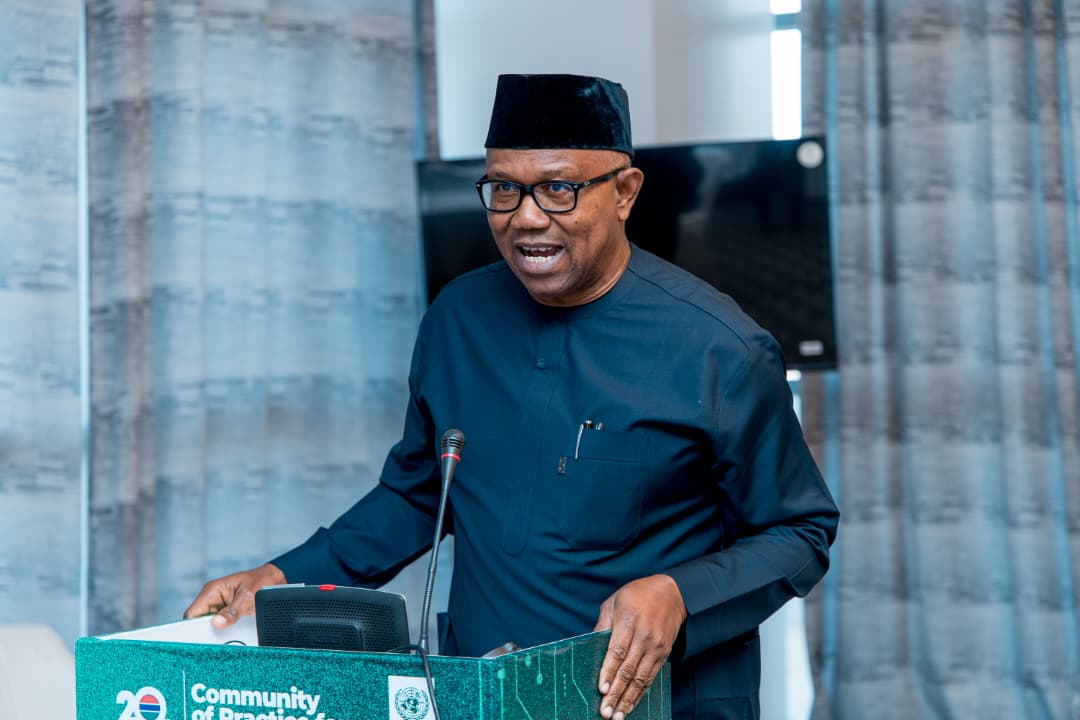
A former presidential candidate, Peter Obi, has described the recent directive by the United States Department of State to evacuate non-essential staff from its embassy in Abuja as a “bad omen” for Nigeria.
In a statement released on Thursday via his X account, Obi warned that the development should be treated as a national emergency, particularly for a country grappling with insecurity and struggling to attract foreign investment.
The US government, in a travel advisory issued on 8 April, authorised the departure of non-essential personnel from its Abuja embassy and urged American citizens to reconsider travel to Nigeria. The advisory cited concerns including crime, terrorism, kidnapping, and civil unrest.
It classified Nigeria under “Level 3: Reconsider Travel”, while placing several states under “Level 4: Do Not Travel”, including Plateau, Jigawa, Kwara, Niger, and Taraba, bringing the total number of high-risk states to 23.
Reacting to the advisory, Obi said the move reflects growing international concern about Nigeria’s security situation. He noted that the country currently ranks high on the Global Terrorism Index and warned that insecurity continues to escalate, with communities under persistent threat.
“The directive is deeply worrisome and signals declining confidence in our national security architecture,” Obi stated. He added that a nation where citizens cannot live, work, or travel safely would struggle to achieve economic progress or attract investment.
The former governor also criticised what he described as a lack of effective governance, accusing political leaders of prioritising political manoeuvring over the safety and welfare of citizens.
According to him, the primary responsibility of any government is the protection of lives and property, a duty he said Nigerian leaders have not adequately fulfilled.
Following the advisory, the United States Mission in Nigeria announced the suspension of visa appointments at its embassy in Abuja, although operations at the Lagos consulate remain unaffected.
In response, the Federal Government, through the Minister of Information, Mohammed Idris, reassured both citizens and the international community that Nigeria remains stable. He described the US advisory as a routine precaution based on internal protocols, insisting that public institutions and economic activities across the country continue to function normally.

