Across continents, the front pages of newspapers present a vivid snapshot of a world in flux, where politics, conflict, economy and society intersect in real time. From Washington to Lagos, London to New Delhi, headlines are dominated by rising geopolitical tensions, particularly in the Middle East, alongside deepening domestic political rivalries ahead of key elections. Economic uncertainty also runs through global coverage, with slowing growth, currency pressures and energy shocks shaping policy debates and everyday life. At the same time, social change—from protests in the United States to governance concerns in Africa and Asia—reflects a growing demand for accountability and reform. Yet amid these pressures, stories of innovation, resilience and community continue to emerge, offering balance to the global narrative. Together, these front pages provide a powerful daily record of a world grappling with instability while searching for direction and opportunity.
United Kingdom
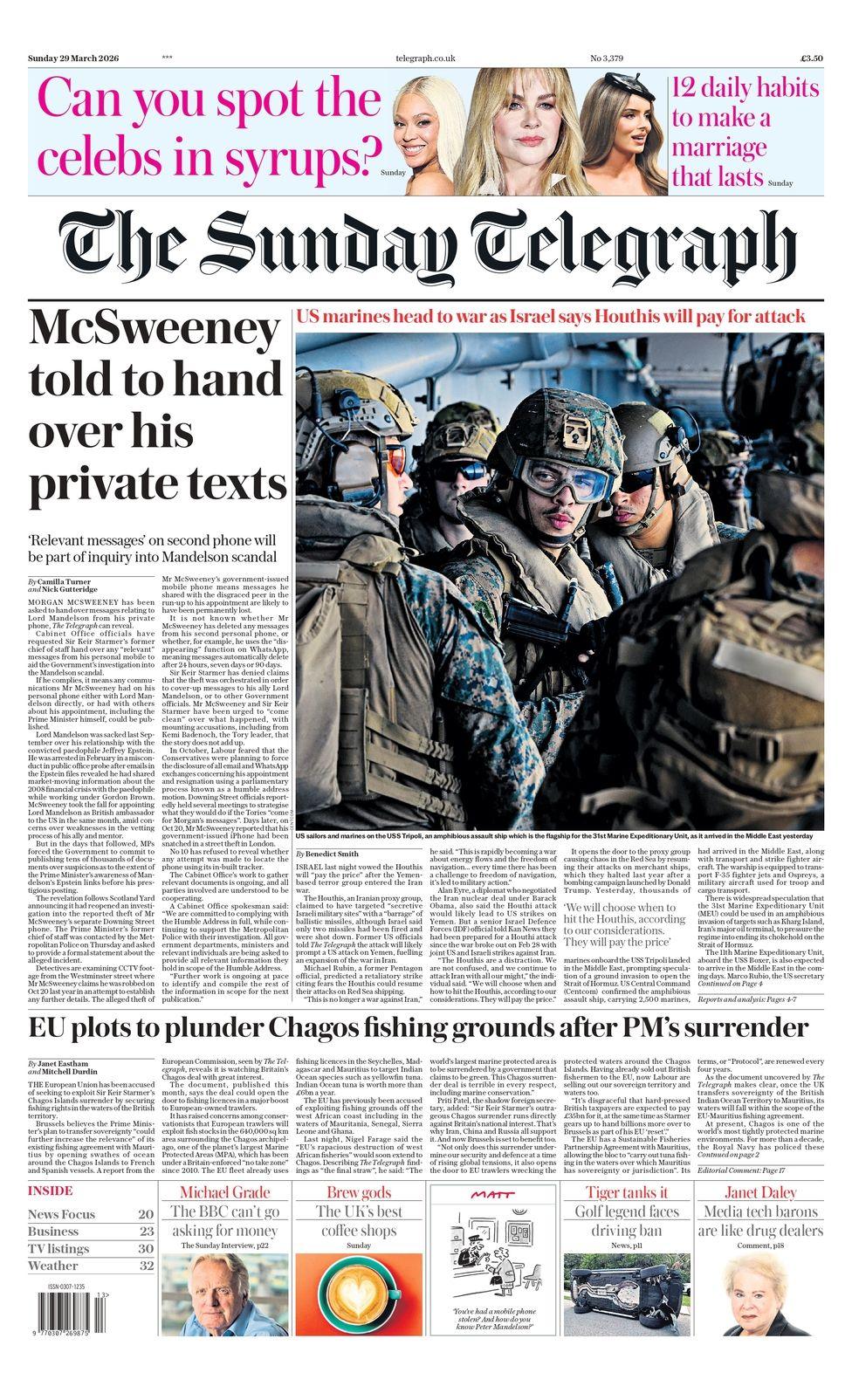
The front page of The Sunday Telegraph reflects rising political and geopolitical tension in the United Kingdom and beyond. Domestically, the spotlight is on a growing political controversy as McSweeney is ordered to hand over private messages as part of an inquiry, signalling deepening scrutiny within government circles. On the global stage, the paper highlights escalating conflict in the Middle East, with US marines preparing for possible military action following threats linked to Houthi attacks, underscoring fears of a wider regional crisis involving Israel and its allies. Meanwhile, tensions also emerge in international diplomacy and trade, as the European Union is accused of targeting fishing rights in the Chagos Islands after what is described as a concession by the UK Prime Minister. Together, these stories paint a picture of a nation grappling with internal political pressure while navigating complex global security and economic challenges.
The front page of theSunday Mirror in the United Kingdom is dominated by a strong political message centred on protecting children from the harmful effects of social media. The headline pledge to “stop antisocial media” reflects Prime Minister Keir Starmer’s push for stricter regulation, including potential limits on screen time and tougher controls on platforms accused of contributing to addiction among young users. The paper frames the issue as urgent, warning that failure to act could have lasting consequences for future generations. Alongside the political focus, the front page balances lighter content with celebrity and lifestyle features, including a personal story involving Kym and promotional offers aimed at families. Overall, the edition blends serious policy debate with human-interest content, highlighting growing concern in the UK over the impact of digital platforms on children’s wellbeing.
The front page of The Sun on Sundayin the United Kingdom is driven by entertainment and celebrity-focused stories, led by speculation that Miranda Hart could become a key figure in the popular BBC show Strictly Come Dancing. The headline suggests she is a leading choice for a major role, with reports of ongoing talks with the broadcaster. The paper also highlights a separate celebrity story involving Olivia and a reported “fake wedding” controversy, adding to the tabloid’s mix of drama and intrigue. Alongside these, promotional offers such as discounted holidays are prominently featured, reflecting the paper’s blend of entertainment, lifestyle, and consumer-driven content. Overall, the edition prioritises showbiz exclusives and light-hearted news, appealing to readers interested in celebrity culture and television developments.
United State America
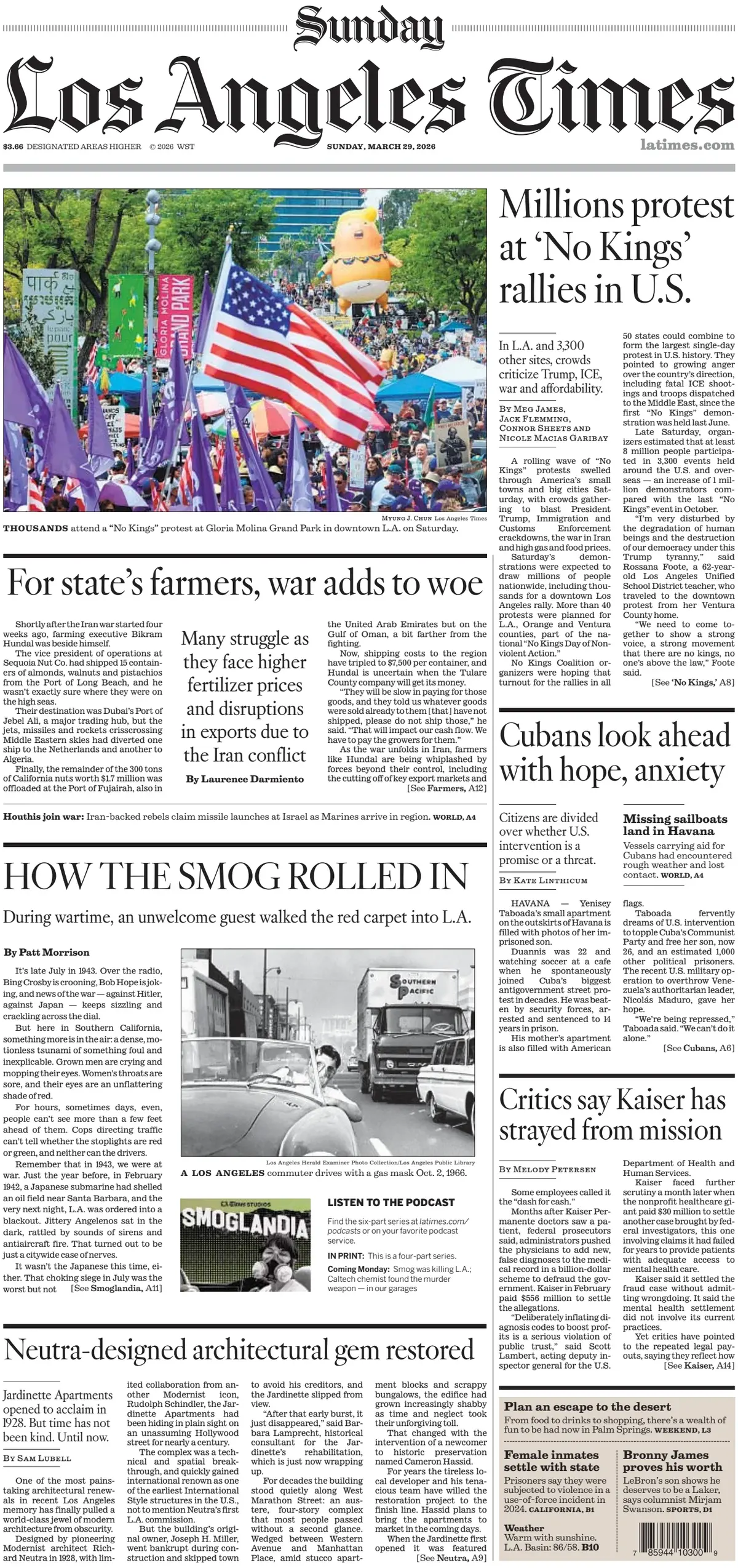
The front page of the Sunday Los Angeles Times in the United States presents a wide-ranging snapshot of political unrest, economic pressure and global uncertainty. The dominant headline focuses on mass “No Kings” protests sweeping across the country, with demonstrators voicing opposition to policies tied to immigration enforcement, economic hardship and governance. The scale of the rallies highlights growing political tension nationwide. Alongside this, the paper underscores the economic ripple effects of global conflict, particularly how tensions involving Iran are worsening conditions for farmers through rising fertiliser costs and disrupted exports. International coverage extends to Cuba, where citizens face a mix of hope and anxiety amid shifting U.S. policy and ongoing hardship. The edition also blends historical reflection and investigative reporting, including a feature on Los Angeles’ smog history and criticism of healthcare practices involving Kaiser. Overall, the newspaper captures a nation dealing with internal division while navigating broader global challenges affecting livelihoods and policy direction.
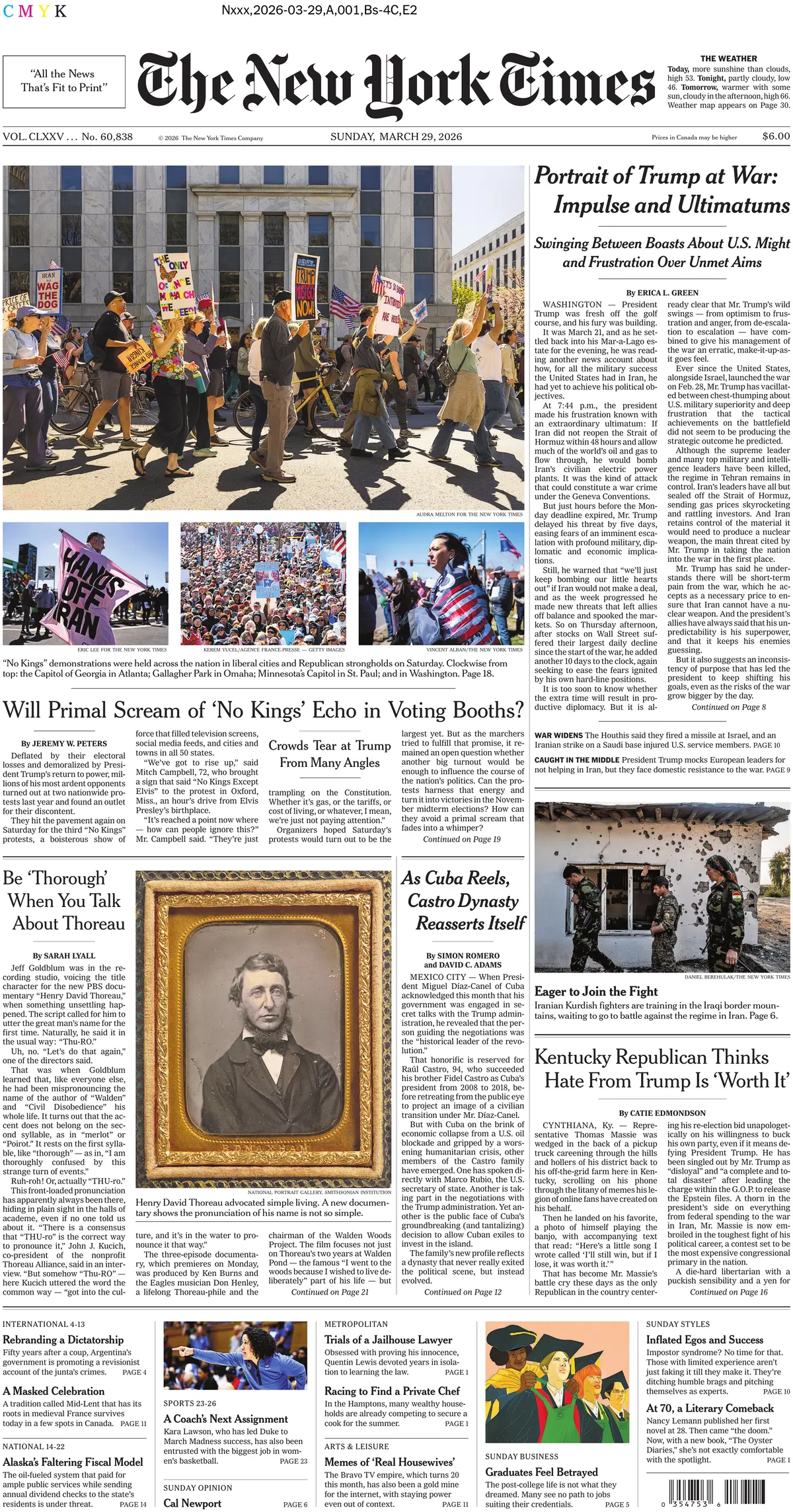
The front page of The New York Times in the United States presents a sharply analytical view of politics at home and conflict abroad. The dominant story examines Donald Trump’s wartime posture, portraying a leadership style marked by shifting threats, abrupt decisions and unresolved strategic goals in the Middle East. Alongside this, the paper highlights the growing “No Kings” protest movement, questioning whether the widespread anger seen on the streets will translate into real political consequences at the ballot box. Coverage reflects deep divisions within American society, with criticism emerging from both political opponents and some within Trump’s own party. International reporting adds further weight, particularly from Cuba, where economic strain and political continuity under the Castro legacy are shaping public sentiment. Military tensions in the Middle East also feature prominently, with reports of fighters preparing for escalating conflict. Overall, the newspaper frames a moment of uncertainty, where domestic unrest, political polarisation and global instability are closely intertwined, leaving both voters and policymakers facing difficult choices.
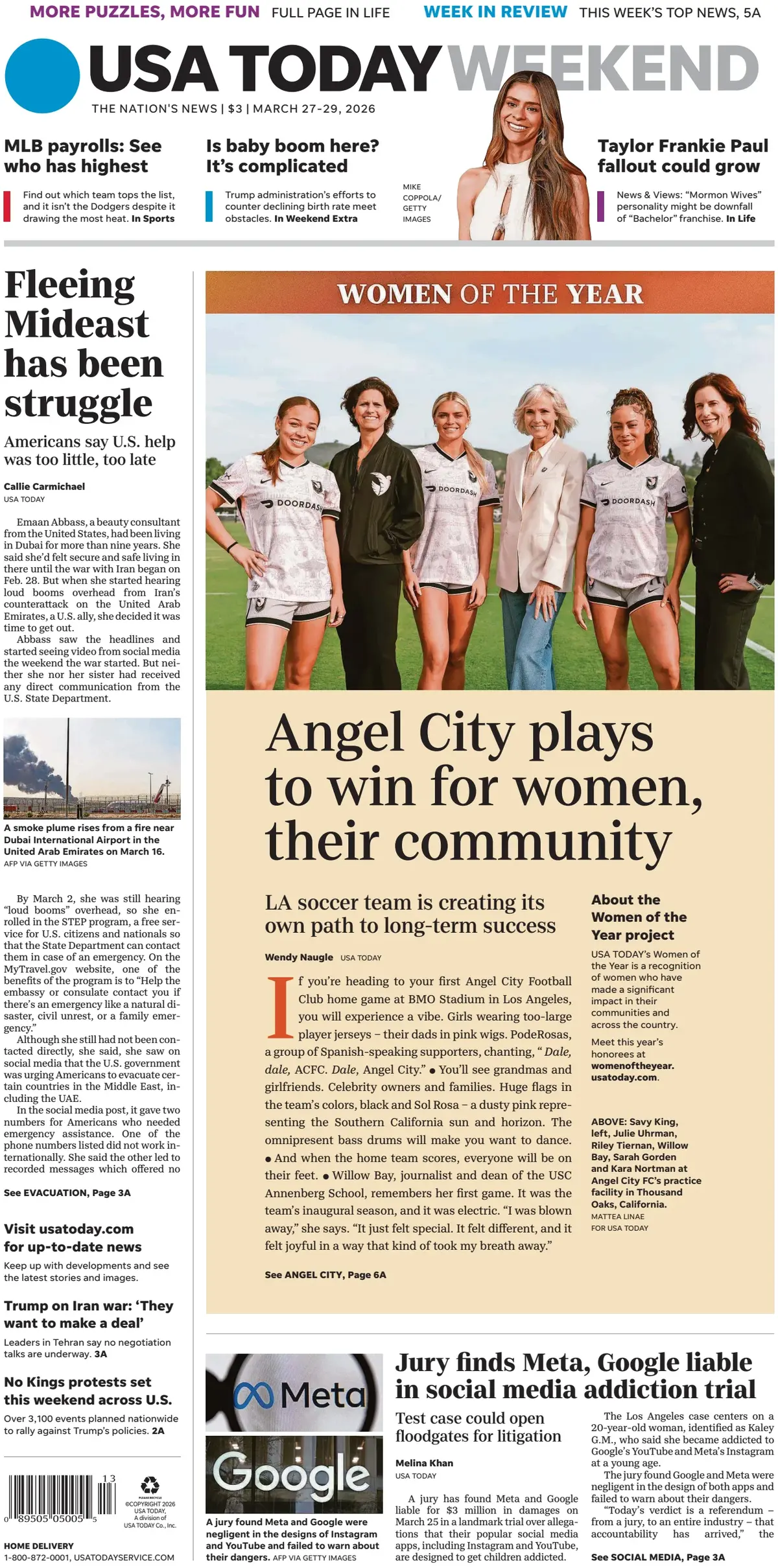
The front page of USA Today Weekendin the United States blends global conflict, domestic debate and human-interest reporting. The lead story focuses on Americans attempting to flee the Middle East amid escalating tensions, with many saying government support has been slow and insufficient. At the same time, the paper highlights a contrasting story of progress and community through women’s football, where Angel City FC is portrayed as a symbol of empowerment and long-term social impact. Technology and accountability also dominate coverage, with a landmark court ruling finding Meta and Google liable in a case tied to social media addiction, raising fresh concerns about digital safety. Political tension remains a key thread, with references to Trump’s stance on Iran and planned nationwide “No Kings” protests signalling continued unrest and division. Overall, the edition captures a mix of uncertainty and resilience, reflecting both the pressures of global crises and the evolving social and cultural landscape in the United States.
Nigeria
Canada
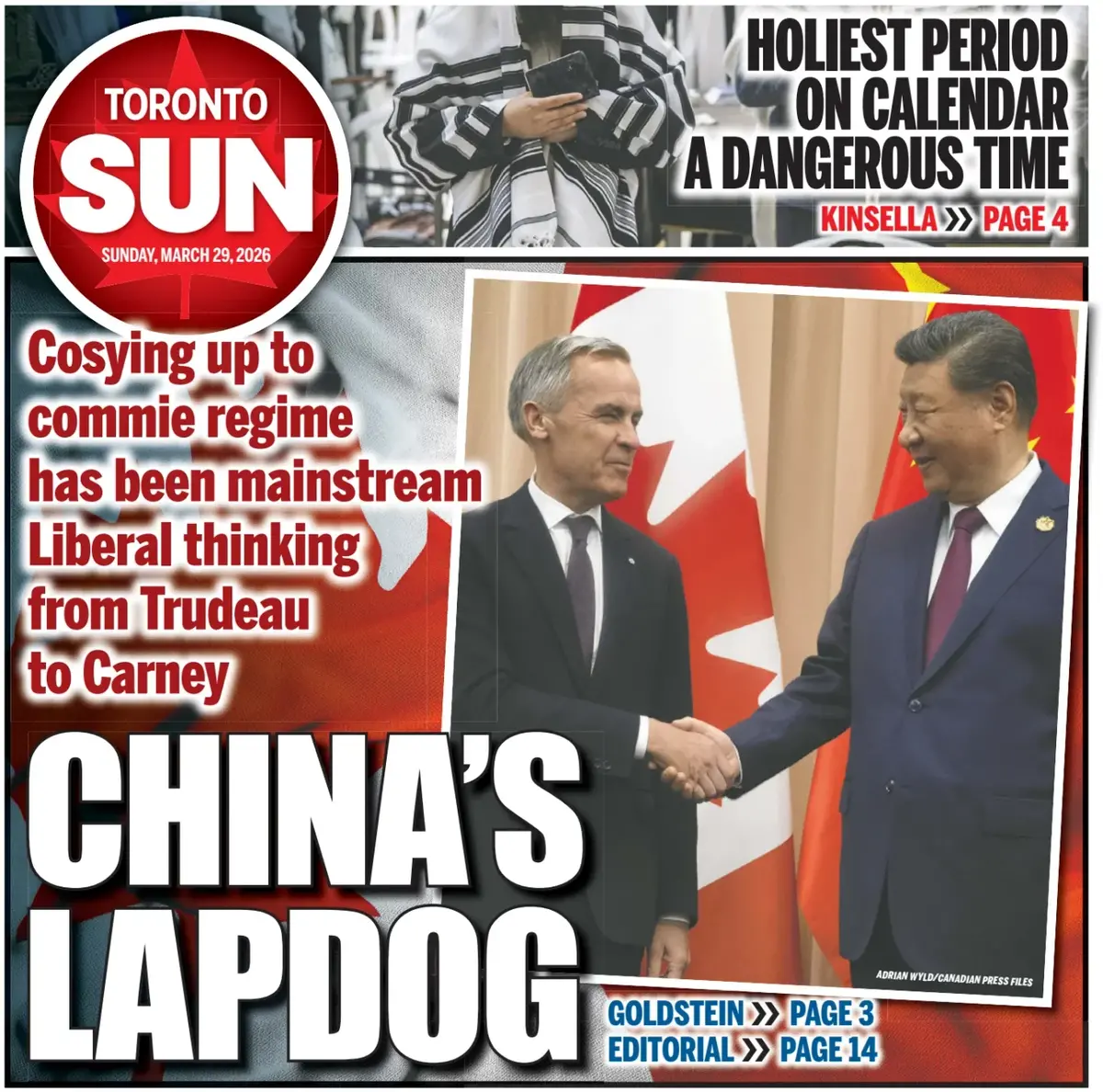
The front page of Toronto Sun in Canadaadopts a strongly opinion-driven tone, focusing on foreign policy and domestic political criticism. The dominant headline takes a sharp stance on Canada’s relationship with China, accusing Liberal leadership—from Justin Trudeau to Mark Carney—of being overly accommodating to Beijing. The framing suggests growing concern among critics about national sovereignty and political alignment, particularly in the context of global tensions. Accompanying commentary reinforces this perspective, highlighting ideological divisions within Canadian politics and reflecting a broader debate about how Western democracies engage with China. In addition, the paper features a secondary headline warning about security risks during a major religious period, signalling concerns around public safety. Overall, the coverage is confrontational and editorial in style, emphasising political accountability, national interest, and geopolitical caution while appealing to a readership attentive to strong, clear-cut positions.
India
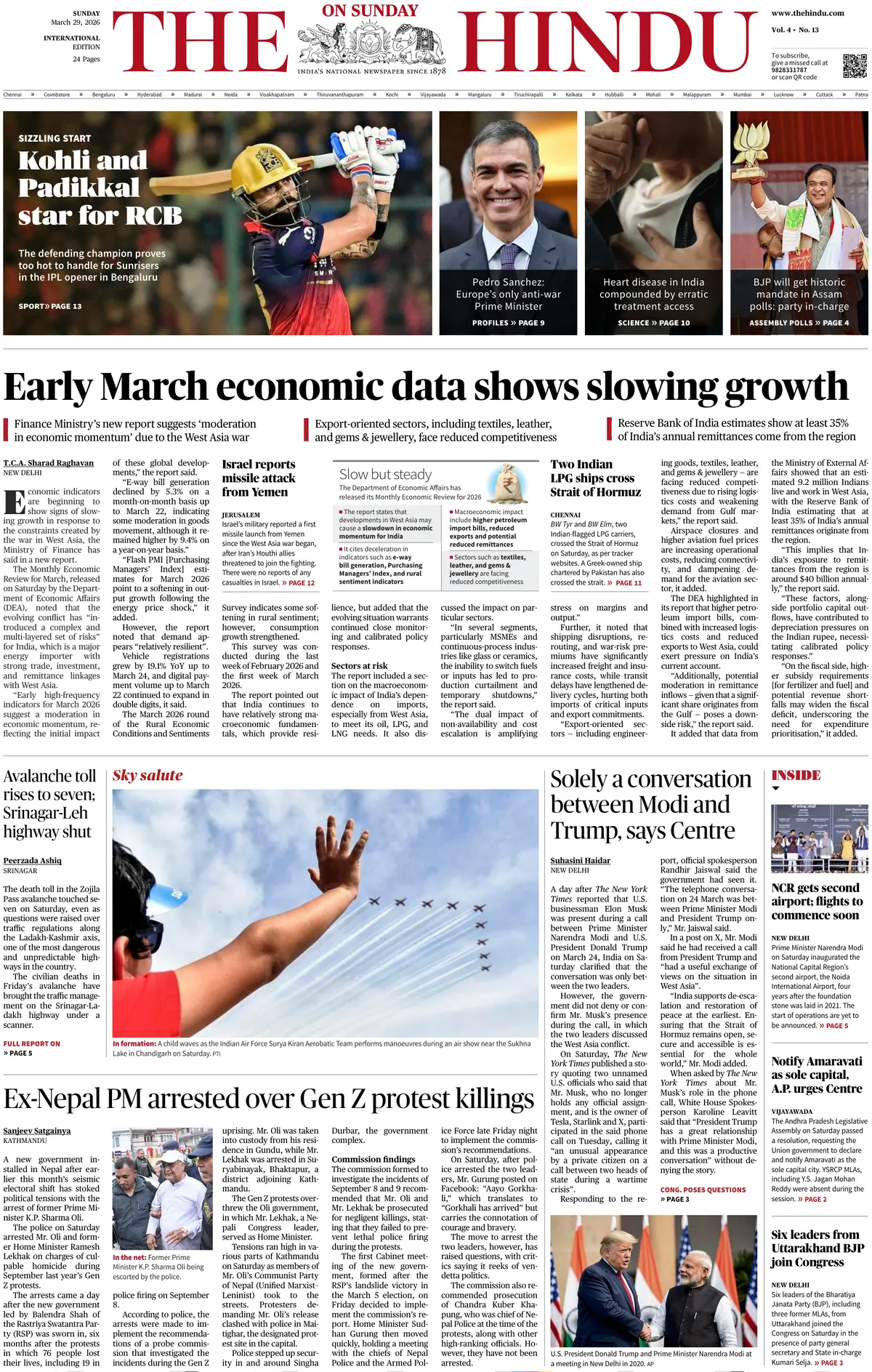
The front page of The Hindu in India presents a comprehensive mix of economic, political and regional developments with a measured and analytical tone. The lead story points to slowing economic growth in early March, with official data suggesting moderation across key sectors, particularly those linked to exports and global demand. This signals growing concern about the broader economic outlook, especially in the context of international instability. Political coverage highlights diplomatic engagement between India and the United States, clarifying that recent interactions between Prime Minister Narendra Modi and Donald Trump were limited in scope, even as global tensions remain high. Regional and international stories add further depth, including the arrest of Nepal’s former prime minister over protest-related violence, and reports of escalating conflict in the Middle East affecting trade routes such as the Strait of Hormuz. Domestic challenges also feature prominently, with natural disasters like avalanches disrupting critical infrastructure in northern India. Overall, the newspaper captures a moment of economic caution and geopolitical complexity, where India’s domestic priorities are increasingly shaped by external pressures and regional developments.
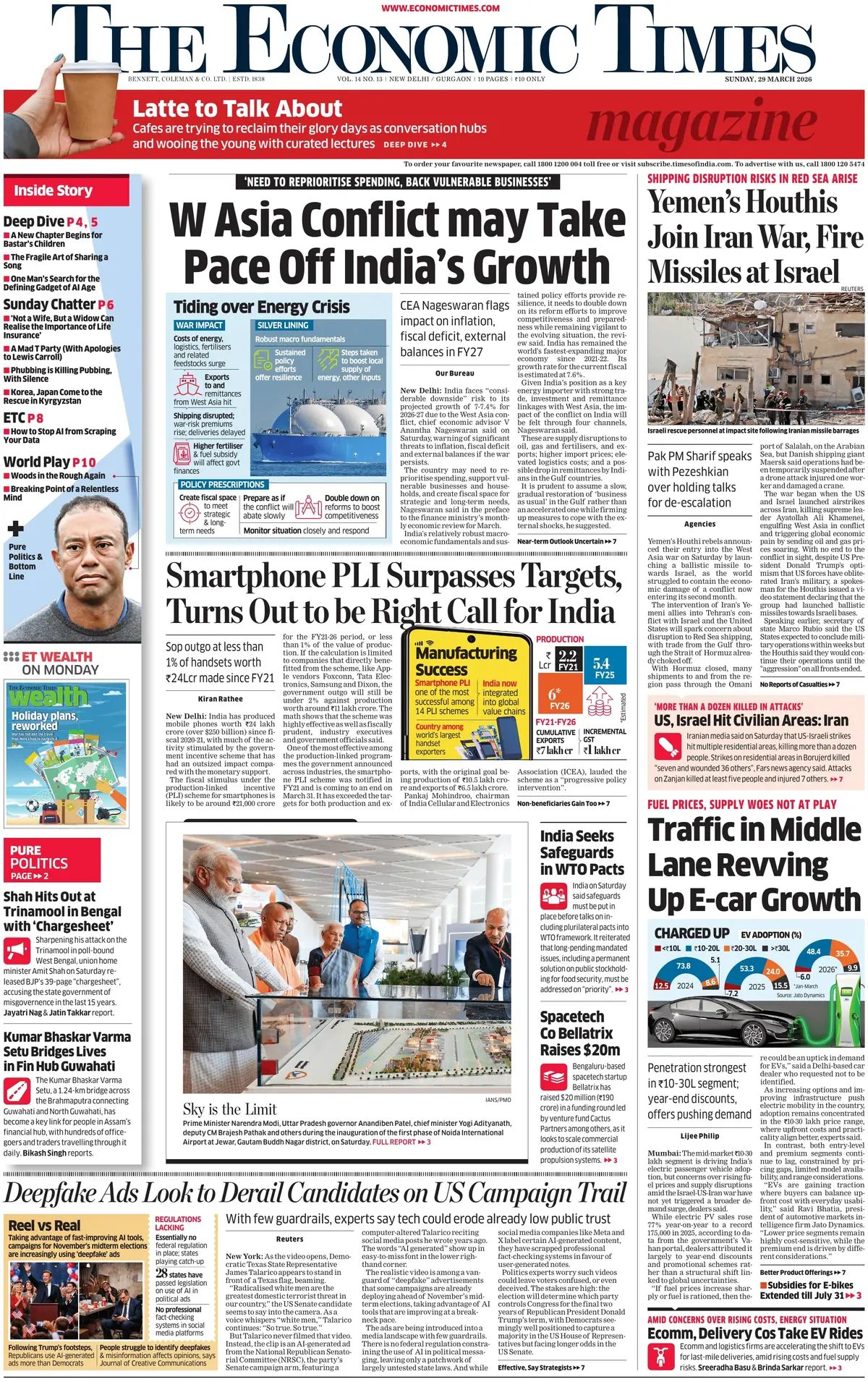
The front page of The Economic Times in India centres on the economic consequences of geopolitical tensions, particularly the escalating conflict in West Asia. The lead story warns that instability in the region could slow India’s growth by disrupting energy supplies, trade routes and inflation dynamics. This concern is reinforced by reports of Yemen’s Houthi forces joining the Iran-linked conflict and launching missile attacks, signalling broader risks to global markets. Despite these external pressures, the newspaper highlights areas of domestic economic strength, including the success of India’s smartphone production-linked incentive (PLI) scheme, which has exceeded targets and boosted manufacturing output. Emerging sectors such as electric vehicles are also gaining momentum, driven by policy support and rising demand. On the policy front, India is seeking stronger safeguards in global trade agreements, reflecting a cautious approach to international economic integration. Meanwhile, concerns about misinformation and technology misuse appear in coverage of deepfake advertisements influencing political campaigns abroad. Overall, the edition presents a balanced picture of resilience and risk, where India’s economic progress is increasingly shaped by global uncertainty and strategic policy choices.