


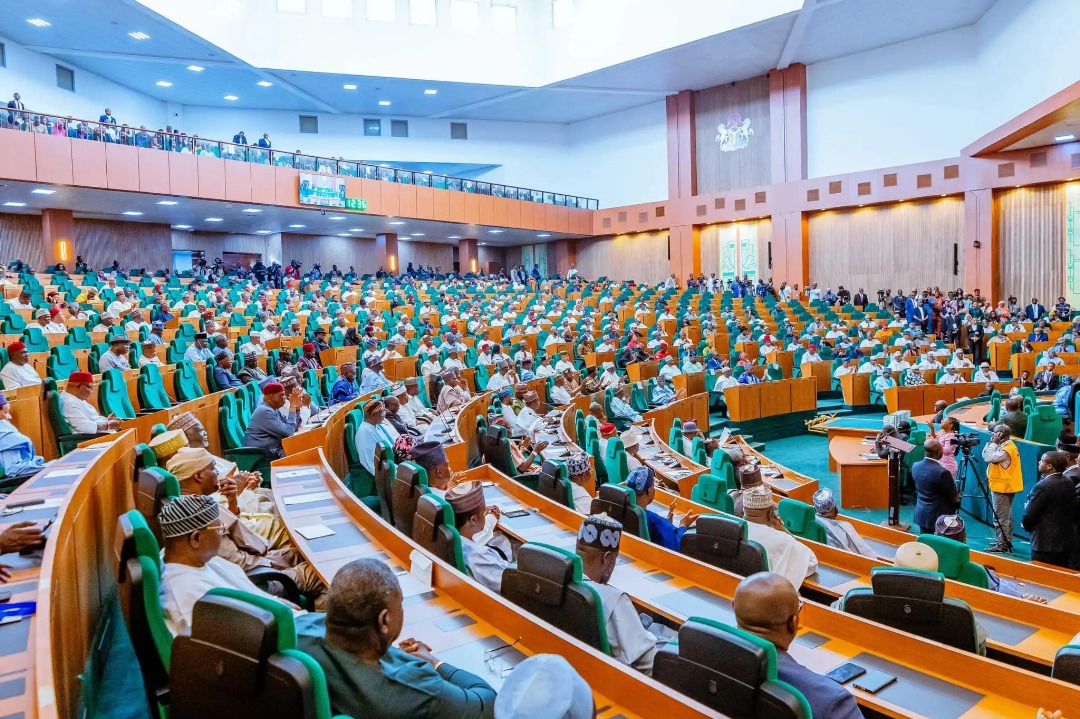
The House of Representatives has expressed alarm over what it called persistent underfunding of the Office of the Auditor-General for the Federation (OAuGF), cautioning that the situation could weaken Nigeria’s anti-corruption framework and erode public accountability.
The issue came up on Wednesday during the OAuGF’s 2026 budget defence before the House Public Accounts Committee at the National Assembly, chaired by Bamidele Salam.
Lawmakers scrutinising the proposed N15.88bn allocation observed that it amounts to just about 0.027 per cent of the N58.47tn federal budget for 2026. They argued that the figure falls far short of what is required for an institution constitutionally mandated to audit more than 1,000 Ministries, Departments and Agencies (MDAs), as well as other federally funded bodies nationwide.
Salam questioned how the Auditor-General’s Office could effectively oversee a proposed expenditure of N58.47tn with such limited resources. He revealed that funding shortfalls in previous years meant the Office audited only five of roughly 100 Nigerian foreign missions.
The Osun lawmaker also decried the poor release of funds in the 2025 fiscal year, noting that just four per cent of the Office’s capital allocation was disbursed, severely limiting its operations.
According to the 2026 proposal, N5.3bn is allocated for personnel costs, N5.6bn for overheads, and N4.8bn for capital projects.
Citing global standards set by the International Organisation of Supreme Audit Institutions, committee members stressed that national audit bodies must have adequate, independent and secure funding to discharge their duties without interference. They further highlighted the need for budgetary autonomy, explaining that audit institutions should ideally present their budget proposals directly to the legislature or a designated parliamentary committee to protect their independence.
“This is associated with weak institutions, which have contributed to the corruption ravaging our country,” Salam stated.
The committee consequently called on the Federal Government and other relevant authorities to “prioritise adequate appropriation and full release of funds to the Office of the Auditor-General for the Federation to enhance its capacity to perform its constitutional mandate effectively and proactively prevent corruption, waste, and mismanagement of public resources.”
Under Section 85 of the 1999 Constitution (as amended), the Auditor-General is empowered to audit and report on the public accounts of the Federation, including all federal offices and courts.
Despite this critical role, the Office has long grappled with financial constraints, delayed fund releases and limited operational independence. Observers in the accountability sector warn that inadequate funding hampers timely audits, investment in modern audit tools and professional development.
With the proposed N58.47tn 2026 budget ranking among the largest in Nigeria’s history, analysts say strengthening the funding and autonomy of the Auditor-General’s Office is essential. Without meaningful reforms, they caution, efforts to enforce fiscal discipline and curb corruption may continue to face serious limitations.

