


US President Donald Trump on Saturday said American oil companies would be allowed to enter Venezuela and exploit its vast crude reserves following a dramatic US military operation that resulted in the arrest of President Nicolás Maduro.
In the early hours of Saturday, US forces launched coordinated airstrikes on Caracas. Maduro and his wife were taken into custody and flown to New York City, where they are expected to face charges related to drug trafficking and weapons offences.
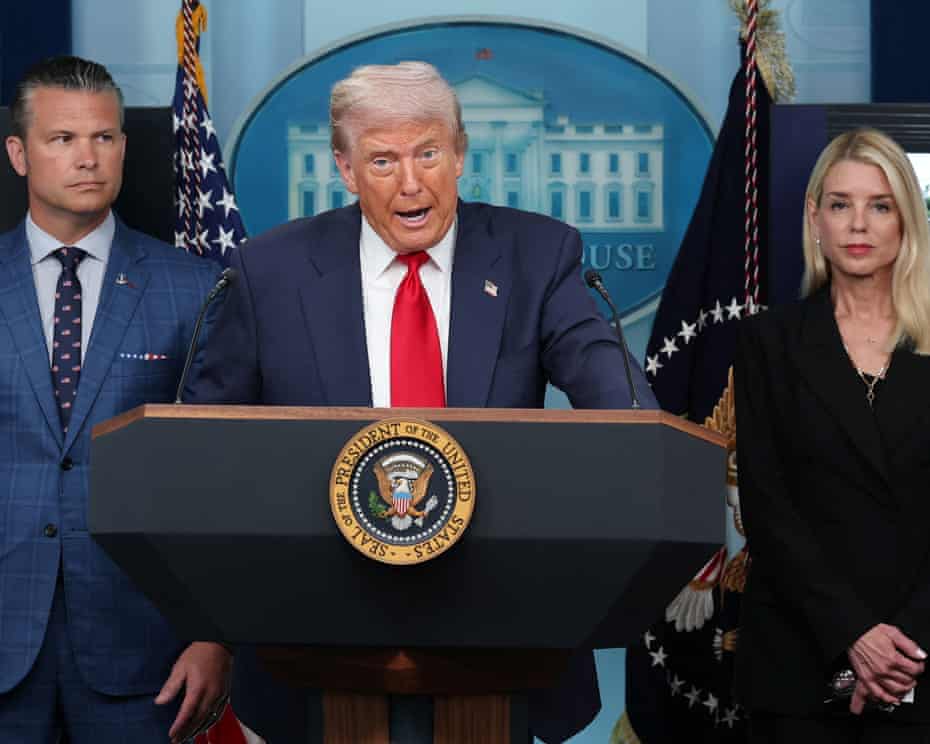
Speaking at a news conference in Florida, Trump said US energy firms would play a central role in rebuilding Venezuela’s oil sector.
“We’re going to have our very large United States oil companies, the biggest anywhere in the world, go in, spend billions of dollars, fix the badly broken infrastructure, the oil infrastructure, and start making money for the country,” he said.
Despite this plan, Trump stressed that Washington’s punitive measures remain unchanged, noting that “the embargo on all Venezuelan oil remains in full effect.”
The United States first imposed sweeping economic sanctions on Venezuela in 2017, followed by direct oil sanctions in 2019, severely restricting the country’s ability to sell crude on global markets.
According to the Organisation of Petroleum Exporting Countries (OPEC), Venezuela currently produces just under one million barrels of oil per day, with much of it reportedly sold through illicit channels at heavily discounted prices.
Trump has accused the Venezuelan government of diverting oil revenues to fund criminal activities, alleging that Caracas bankrolls “drug terrorism, human trafficking, murder and kidnapping.”
After returning to office for a second term in 2025, Trump revoked licences that had allowed several multinational energy companies to continue operating in Venezuela despite sanctions. US-based Chevron was the lone exception.
Chevron currently runs four oil fields in partnership with Venezuela’s state-owned oil company, PDVSA, and its subsidiaries.
In addition, Washington has enforced a full blockade on tankers linked to sanctioned Venezuelan oil shipments, further tightening pressure on the country’s energy exports.
Although Venezuela holds roughly 17 per cent of global oil reserves, according to the International Energy Agency (IEA) in 2023, years of corruption and poor management have left it far from being a top producer.
Much of Venezuela’s crude is heavy and low-grade, typically refined into diesel or industrial byproducts like asphalt rather than petrol. US refineries along the Gulf of Mexico are among the few designed to process this type of oil.
Still, analysts say access to Venezuelan crude is not essential for Washington. “The United States is doing just fine without Venezuelan oil,” Stephen Schork of the Schork Group told AFP last month, arguing that US policy toward Caracas is driven more by politics than energy needs.

